Grant Thornton plans $2 billion in junk bonds at a steeper price than CBIZ was paying.
By CPA Trendlines Research
After a mountain of debt sent tax and accounting consolidator CBIZ looking for a suitor, Grant Thornton stepped up. Now Grant Thornton itself is looking to place $2.25 billion in junk bonds to help pay for the $5 billion deal.
MORE Special Report on the CBIZ-Grant Thornton Deal:
GT’s new junk-bond load comes on top of more than $7 billion the firm is reportedly already carrying and costs about 4 points more than the CBIZ bank debt it’s replacing.
The CBIZ saga, begun in the first rollup era of the 1990s, comes to a head next week when shareholders vote on the $55-a-share cash offer from Grant Thornton Advisors, the private equity-backed nonattest platform.
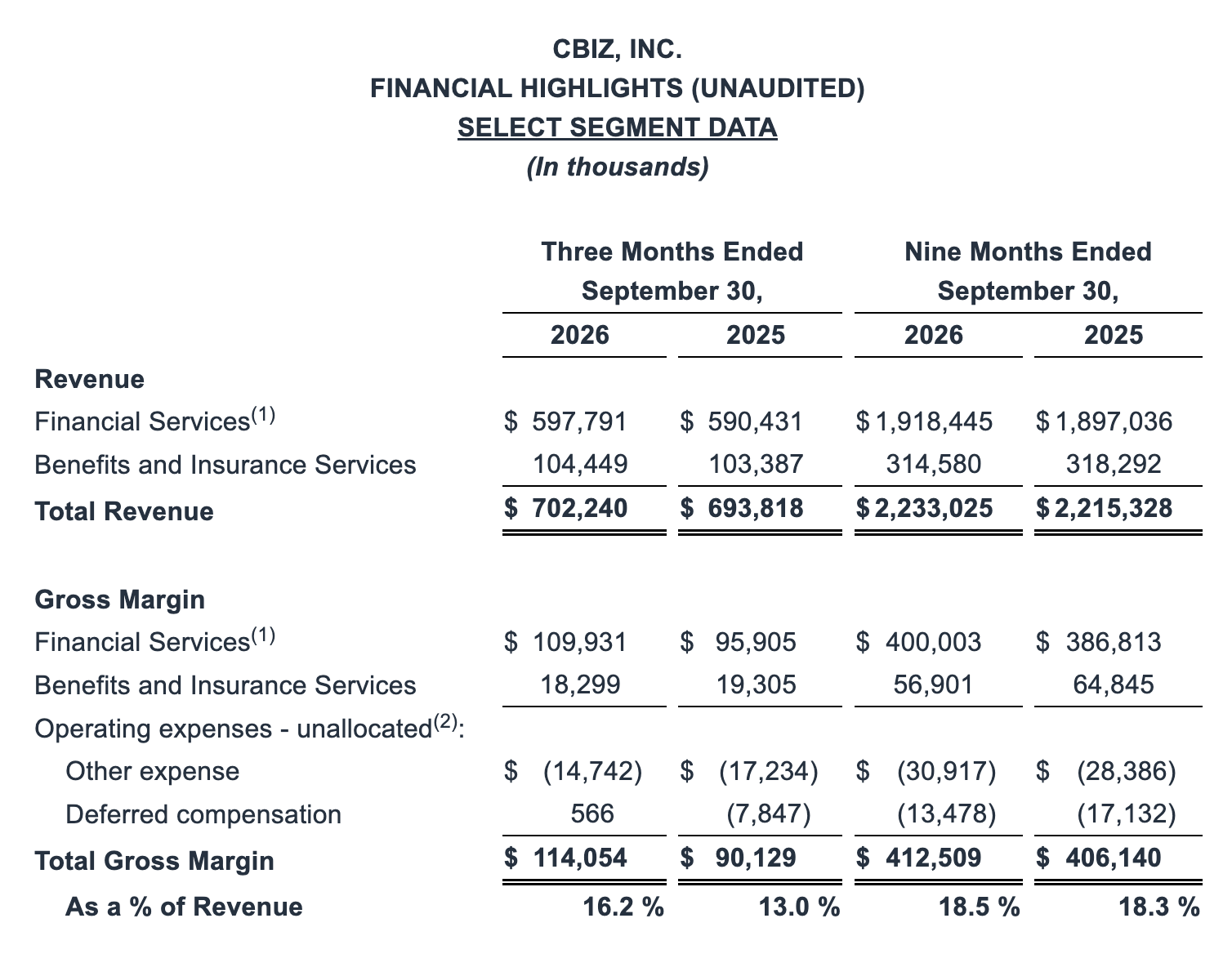
In the just-released third-quarter report, CBIZ’s profit rises sharply as the company works off expenses from its costly 2024 Marcum deal.
If the transaction closes, public shareholders take cash and give up any share of what comes next. Grant Thornton Advisors and its investors take on the job of turning greater scale, technology spending and integration into returns, with new notes marketed at yields well above what CBIZ paid on its bank debt as a public company.
CBIZ’s latest quarter shows that profit can recover as acquisition costs fade, even while revenue barely moves. The financing leaves the combined business facing a familiar demand: generate enough cash to keep investing while carrying the debt used to get bigger.
GT’s first junk-bond foray calls for $1.75 billion of dollar notes and the equivalent of $500 million in euro notes, according to Wall Street sources. Grant Thornton Advisors and backer New Mountain Capital are now borrowing far more to absorb the business into a larger platform. GT clears away CBIZ’s debt only to take on new obligations, even as Fitch rates GT speculative.
The irony is not lost on observers. They note that CBIZ’s debt rose sharply with the Marcum acquisition and stalled its historically aggressive acquisition program, eventually forcing the company into a sale. They also note that GT is now paying roughly 4 percentage points more in interest than CBIZ had been paying.
Marcum enlarged the business and the borrowing.
CBIZ’s Marcum acquisition transformed its scale. Revenue rose 52.1% in 2025 to $2.758 billion, but newly acquired operations, net of divestitures, supplied $914.2 million of the $944.5 million increase, or about 96.8% of the gain.
Borrowing under CBIZ’s credit facilities reached $1.472 billion at the end of 2025, compared with $312.4 million under an unsecured facility two years earlier. Annual interest expense rose to $107.2 million from $34.4 million in 2024.
After Marcum, the company named paying down debt to a net leverage ratio below 2.5 times as its second priority, behind funding organic growth. The definitive merger proxy lists the stand-alone alternatives the board weighed, including “using divestiture proceeds to reduce indebtedness and create capacity for share repurchases or strategic acquisitions.” The board also notes that the company’s actual results had recently fallen short of its projections.
Progress on the debt had been slow. Gross credit-facility borrowings stood at $1.454 billion on Sept. 30, down $18.4 million from year-end, and the revolver balance was higher than in December. In the first half alone, CBIZ spent about $70 million repurchasing its own shares.
Reference Equity made leverage central to its activist campaign this summer, urging CBIZ to raise equity, cut leverage and restart acquisitions. After the deal was disclosed, portfolio manager Ryan Bunn called management’s decision a “capitulation.” Still, Bunn profited on CBIZ’s stock appreciation.
The sale talks also run on their own clock. According to the proxy, the board contacted Goldman Sachs in March for a preliminary view of the company’s valuation and strategic alternatives. A Grant Thornton representative called CEO Jerry Grisko on March 20, and Grant Thornton and New Mountain submitted a $55-a-share indication of interest on June 8. That bid was their fourth, and it came a week before Reference’s June 15 letter, which the proxy does not mention.
The buyer’s capital has a cost.
The financing behind the $55 offer is mostly borrowed. The proxy puts the total needed to complete the merger, including fees, at about $5.235 billion. Against that sit committed debt facilities of $4.4 billion plus a $200 million revolving credit line, and up to $835 million of equity from New Mountain funds, including $200 million of convertible preferred equity with warrants. Bond proceeds reduce the $1.75 billion bridge loan dollar for dollar.
The dollar notes are being pitched at a yield of about 10.5% and the euro notes at about 9.5%, both due in five years, according to Bloomberg, which cites a person familiar with the matter. For comparison, CBIZ’s bank borrowing carried a blended average rate of 6.56% in 2025.
The ratings set the terms of the bet. Fitch assigns Grant Thornton Advisors a first-time BB- issuer rating and projects pro forma leverage of about 5.5 times EBITDA. The ratings “also reflect reliance on synergy execution to drive deleveraging,” Fitch says. Moody’s keeps its B2 rating with a stable outlook. Bloomberg counts more than $7 billion in loans and other financing in Grant Thornton Advisors’ capital structure.
New Mountain describes itself in the deal announcement as a firm that “emphasizes business building and growth, rather than debt.” Grant Thornton Advisors’ case is that scale pays for itself.
“Scale is going to matter because this is expensive,” CEO Jim Peko has told the media, discussing AI investment. He also rejects the market’s skepticism of the sector: “The market has it wrong. We’re seeing margin expansion in our business, and we’re also taking share.”
That sets up a continuing financial test. Access to financing makes the acquisition possible, while repayment and the firm’s $1 billion, three-year technology program both depend on the cash the enlarged operation generates.
A better quarter, built mostly on costs that are fading
CBIZ’s Oct. 19 results complicate the picture of a consolidator struggling after its largest acquisition, though less than the headline numbers suggest.
In the third-quarter report, revenue increases 1.2% to $702.2 million, while net income rises 56.7% to $47.2 million. Most of that gain comes from outside day-to-day operations. Pretax income rises $27.2 million. Lower Marcum integration costs account for $11.3 million of the increase, a one-time credit correcting the employee stock purchase plan accounts for $5.9 million, and lower interest expense accounts for $4 million. Adjusted EBITDA, CBIZ’s measure of underlying operating profit, contributes $7.8 million. A higher tax rate absorbs part of the gain.
On that adjusted basis, the improvement is modest. Adjusted earnings before interest, taxes, depreciation and amortization increase 6.3% to $131.9 million, and the margin widens to 18.8% from 17.9%. Financial Services, the accounting and advisory core, supplies the operating gain, while Benefits and Insurance adjusted EBITDA declines. CBIZ originally reported third-quarter 2025 adjusted EBITDA of $120 million, before it began adding stock-based compensation back to the measure this year. Revenue and adjusted earnings per share also come in below analysts’ consensus estimates.
Buybacks give per-share results a further lift. Diluted shares fall 4.3% from a year earlier, so GAAP earnings per share rise 64.6%, faster than net income.
The improvement follows a second quarter in which adjusted EBITDA fell 14.3%. The latest figures show quarterly profitability recovering while revenue growth remains modest.
For the first nine months, CBIZ revenue rose 0.8% to $2.233 billion. Before it withdrew its 2026 guidance on July 29, CBIZ projected full-year revenue growth of 2% to 5%. Nine-month adjusted EBITDA declines 1.2% to about $479 million.
The cash exit and the work that follows
2 Responses to “Billions in Debt Decisions Dog CBIZ-Grant Thornton Deal”
Timbuktoo
Accountants trying to play deal makers. Yuck. The debt service on those 10%+ junk bonds will strangle the value out of this investment. CBIZ shareholders should be ecstatic. CBIZ employees better get their resumes ready ASAP, for the Turk will soon be knocking on your cubicle door. The only way to pay for all that debt will be to replace the workers with some cheap Chinese AI which will soon flood the market.
Frank Stitely
Welcome back to the 1990’s when pretty much all the consolidators except for CBIZ fell apart.