Know How Korner, hosted by Donny Shimamoto, aims to translate peer-reviewed findings into practical actions for firms. In a recent episode, Shimamoto interviews Katelynn Hopson, assistant professor of accounting at Arkansas Tech University, whose dissertation quantifies a deceptively soft concept—hope—and links it to how public accountants experience stress and consider leaving their firms.
Hope, in the research literature, is not vague optimism. Psychologist C. R. Snyder frames it as goal-directed cognition comprising agency (“the will”) and pathways (“the ways”). Hopson studies state hope—how hopeful someone is about a specific time frame or event—rather than broad personality-level trait hope. State hope moves; it can be built or eroded by experience and context.
“People who have higher levels of hope are more likely to want to stay and less likely to feel burned out,” Hopson explains.
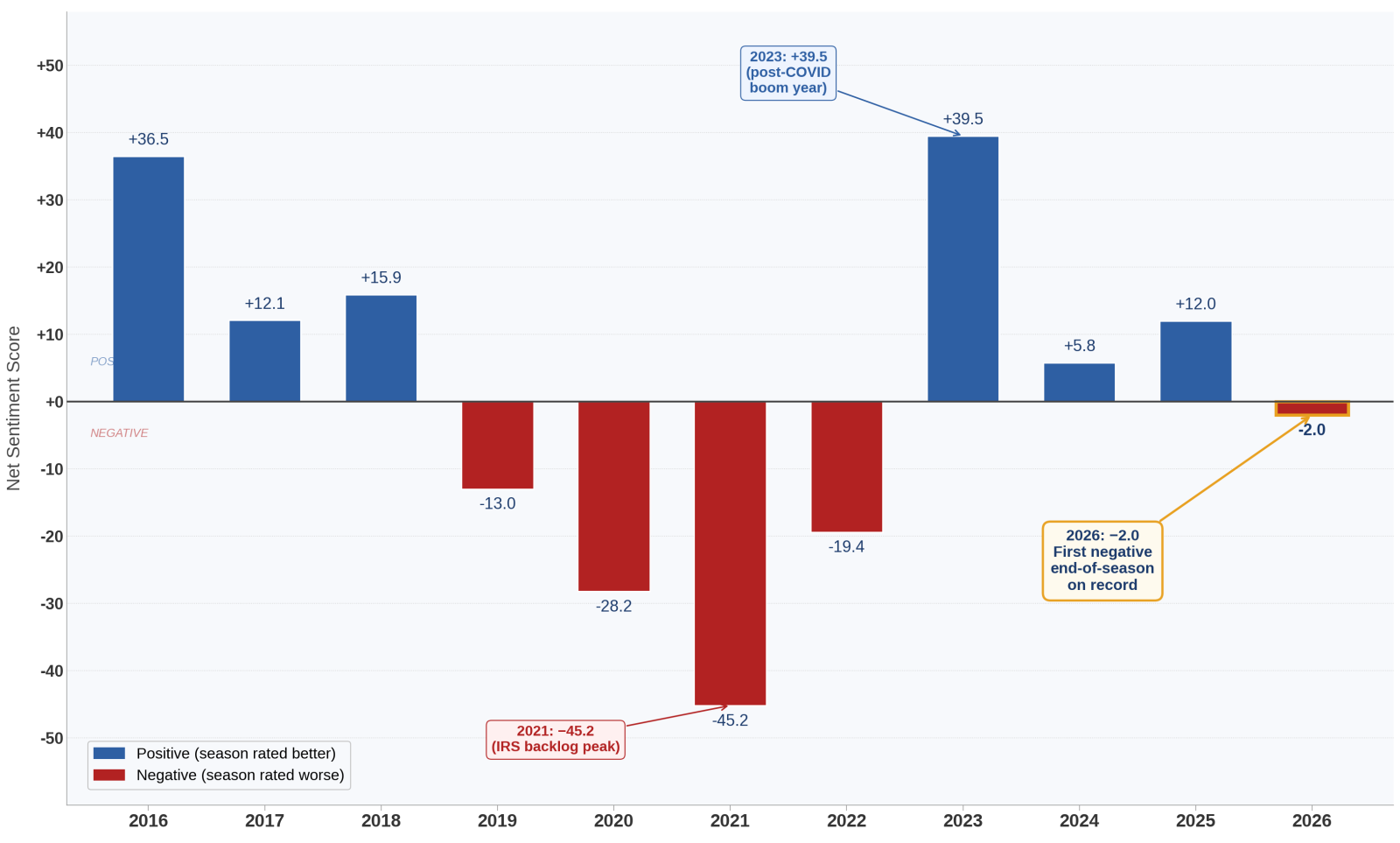
Heading into 2026, problems from the past several filing seasons are still unresolved.
By CPA Trendlines Research
The coming 2026 filing season is shaping up to be another high-stakes test of the Internal Revenue Service’s capacity to serve taxpayers and practitioners, with new reports from the Treasury Inspector General for Tax Administration offering an unusually candid look at the agency’s most vulnerable operational seams.
Taken together, the findings forecast a filing season characterized by incremental improvements in training but overshadowed by enduring structural constraints in telephone service, submission processing, identity verification, and staffing.
CPA Trendlines Research
With Chelsea Summers
Inside Public Accounting
The firms in the 2025 IPA 500 are redefining what it means to grow in the accounting profession. Yes, many are getting bigger—but more importantly, they’re getting sharper. Growth without a plan is no longer enough. The firms pulling ahead are the ones making intentional choices about who they serve, how they work, and where they’re headed.
“This year’s IPA 500 firms had a really strong year,” Chelsea Summers, executive director of Inside Public Accounting, says in a new webinar report, hosted by CPA Trendlines founder and CEO Rick Telberg. “But it wasn’t by accident. The firms that are winning right now are the ones doing things with purpose. It’s about making strategic choices—not just reacting to change, but leading it.” READ MORE →
I’ve been focusing on the leadership accounting firms need to succeed in a future driven by seismic disruptors. We began with strategy, then empowerment. This post will address the critical element that makes empowerment work – accountability.
A characteristic of a great “Edge” leader is the ability to empower everyone and understanding that as a leader, your responsibility is to lead and not manage. If you are the type of leader that manages, you own accountability since you can’t manage and empower at the same time. As I defined it in my previous post, a simple definition for empowerment that applies to all organizations is, “Authority or power given to someone to do something.” READ MORE →
MOVE Like This With Bonnie Buol Ruszczyk
For CPA Trendlines
MOVE Like This host Bonnie Buol Ruszczyk sits down with Sarah Elliott, CPA, co-founder of Intend2Lead, to unpack what conscious leadership looks like in accounting—and why the profession’s newest partners may be the most vulnerable leaders in the firm.
Elliott, a former audit partner who left public accounting in 2014 to become an executive coach, argues that real change happens in a precise order: mindset, then skill set, then habits. Her “conscious leader” model centers on leaders who share power, elevate others, and stay curious, even when uncertainty invites fear.
“Our best leaders are human-centric first,” Elliott says. “In a world of accelerating tech and change, we have to start with people—always.”
Intend2Lead recently surveyed 110 newly promoted partners (2023–2024). The results spotlight avoidable gaps that push rising leaders toward burnout—or out of public accounting altogether. READ MORE →
The accounting profession is evolving rapidly. New business models are emerging, and firms are uncoupling themselves from the constraints of a partnership structure, from outdated service offerings, and from time-based pricing practices.
You may be asking yourself: “What business am I truly in?” or perhaps, “What business should I be in?” Before answering these questions, consider that you may ultimately be in the relationship business more than you’re in the tax, accounting or bookkeeping business. It doesn’t matter which training, certifications or acronyms you have following your name. If you’re moving into financial planning – or thinking about doing so – you might want to ask yourself: “Am I really in the human business?” READ MORE →