Expanding access while maintaining rigorous standards.
This is a preview. The complete episode is first available exclusively to PRO Members | Go PRO here
Sponsored by The Balanced Millionaire: The Advisor Edition by Dr. Jackie Meyer | See Today’s Special Offer
Subscribe to CPA Trendlines podcasts anywhere: Apple, Google/YouTube, Spotify, iHeart, Deezer, Amazon Music, Audible, Player FM, Audacy, RSS.
Gear Up for Growth
With Jean Caragher
For CPA Trendlines
“This legislation has real consequences – positive consequences – for the health of firms, corporate accounting departments, and the broader economy,” says Aiysha “AJ” Johnson, CEO and executive director of the New Jersey Society of CPAs, during her appearance on Gear Up for Growth with Jean Caragher of Capstone Marketing. “I like to think that we’re opening doors.”
More Jean Caragher here | Get her best-selling handbook, The 90-Day Marketing Plan for CPA Firms, here | More Gear Up for Growth | More CPA Trendlines videos and podcasts here
Johnson highlights New Jersey’s new legislation signed by Governor Murphy, creating an additional pathway to CPA licensure, a move designed to expand access while maintaining rigorous standards. It will take effect Feb. 11, 2026.
She emphasizes that both licensure pathways require six years of combined education and experience, offering flexibility without compromising quality and helping remove cost and time barriers that have historically limited entry into the profession.
Johnson shares insights on two other critical issues shaping the profession today:
1. Early Career Awareness Is Critical to Rebuilding the Pipeline
Johnson underscores the importance of reaching students early, particularly those with little or no exposure to accounting.
“If a student hasn’t had any background or exposure to accounting, they’re less likely to actively seek it out,” she says. “We have to bring relevance into the classroom and help students envision themselves in the profession.”
Through high school outreach and member-led classroom visits, NJCPA is reshaping perceptions of accounting as a career that offers impact, flexibility, and diverse opportunities across industries.
2. State CPA Societies Play a Vital Advocacy Role
Johnson stresses the importance of strong state CPA societies in representing the profession at the grassroots level.
“We’re the only organization in our state exclusively representing the needs of the profession,” she says. “While our members are serving clients, we’re working behind the scenes with lawmakers and business leaders to support them.”
She notes that advocacy efforts, including licensure reform and initiatives to recognize accounting as a STEM discipline, are essential to sustaining the profession and supporting economic growth.
Other highlights include:
Johnson emphasizes alignment and collaboration among state societies nationwide to support the profession.
A major challenge for CPA state societies is the changing demographics and the enrollment cliff, driven by declining college enrollments across all disciplines and the long timeline from enrollment to CPA licensure. NJCPA hosted small-firm and sole-practitioner roundtables to address practice management, technology adoption, and staffing and resourcing at smaller scales.
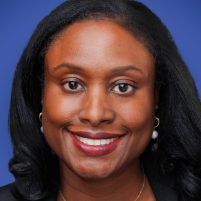
About AJ Johnson
Aiysha (AJ) Johnson is the CEO and Executive Director of the New Jersey Society of CPAs, a role she began in June 2023. Prior to that, AJ served as the executive director of BKR International’s Americas Region and Director of its Worldwide Office in New York City. She’s been named to the Accounting Today Top 100 Most Influential People list and No. 1 on the NJBIZ Accounting Power 50 List.
Transcript
Jean: Hello. Thank you for joining Gear Up for Growth, powered by CPA Trendlines. I’m Jean Caragher, president of Capstone Marketing, and your host. Today’s guest is Aiysha “AJ” Johnson, the CEO and executive director of the New Jersey Society of CPAs, a role she began in June 2023. She has been honored as the number one on the NJBIZ Accounting Power 50 list, and named one of the Top 100 Most Influential People in Accounting by Accounting Today for the past two years. AJ, welcome to Gear Up for Growth.
Aiysha: Thank you so much, Jean. I appreciate you having me today.
Jean: Yes, I’m excited too, and we’ve got some great happenings to talk about during this episode. But let me first ask you, you’ve been the CEO of the New Jersey Society now for two and a half years. What is the biggest surprise that you have found in this role so far?
Aiysha: I think the biggest surprise is actually a positive surprise, just the strength of community. And I talk about that a lot. So, I think about my neighbors, New York, Pennsylvania, across the country, not just from a national perspective, but hyper-local perspective as well. We’re all trying to work together as much as we possibly can to find common ground, to find possibilities for alignment. And I think that’s just been a very pleasant, welcome surprise to be able to work with so many people who care about the profession, not just in the state of New Jersey, but across the country. So, I really feel like this is a great opportunity to serve.
Jean: Right. That’s wonderful because there’s a lot of things going on in the public accounting profession, and we’re going to touch upon some of those today. So, let’s start off about the talent pipeline and how a recent ruling, your 150-hour rule was signed by your governor. And we’ll start. I know, you deserve a smile. That’s what’s going to be effective February 11th about this new 150-hour rule change. So, tell our audience about that.
Aiysha: The process and just how that works?
Jean: I know you’ve been advocating a long time to make this happen. How do you think this change is going to impact the talent pipeline for recruiting? Not so much the step-by-step of how it passed, but what does it mean now for the state of New Jersey?
Aiysha: Well, the legislation has real consequences, positive consequences, quite frankly. So, when we think about the health of firms and staffing for corporate accounting and finance departments as well as the broader economy, laws like this will shape the future in terms of how you can enter the profession. So, this is providing an additional pathway to 150-hours, which I’ll talk about. I like to think that we’re opening doors. And so, we are within the first half of the states, if you will, who have passed similar bills. And that’s what I meant when I talked about some alignment across the country and just making sure that we’re all on the same page. So, I think about opening doors.
So, this type of legislation will help aspiring CPAs, and also, those who have already been working in accounting. And they may not have seen the opportunity to take the additional 30 hours of education that may have been viewed as a barrier for them, both cost and time, especially if they’re already working in a firm or corporate accounting and finance, leading busy lives, family, all of that. So, it also opens the door to those individuals who already have plenty of experience, and now, could qualify, you know, to become licensed under this additional pathway, if you will.
Jean: Right. That’s wonderful because, from the public accounting perspective, there’s been a talent crisis for quite a while. And that extra education, just like you were saying, and the time and the cost of it, has probably prevented whatever percentage of students to decide, “This is not the path that I want to take. I won’t be in an accountant. I won’t be a CPA. I’ll do something else.”
Aiysha: That’s correct.
Jean: And now that they’re able to, I don’t want to say it’s not a shortcut, it’s just a different way of getting the ability to take that exam and earn their designation.
Aiysha: Yeah. So, it’s definitely not a shortcut pathway. So, both pathways are the equivalent of six years. So, the first pathway is 150-hours. And so, that’s approximately five years of education. Many have taken that through graduate program. And then we have done work for credit programs. And then you can also sign up for the additional 30 hours plus one year of experience. And then you, you know, obviously will need to take the CPA exam. So, this additional pathway is also six years because we’re talking a bachelor’s degree, plus two years of experience, and the CPA exam. So, it’s just a different mix, if you will, for us to be able to open doors to those individuals who, like I said earlier, may have viewed the education requirements, the cost, all of those things as a barrier.
And to your earlier point, in terms of folks, young people, students in general, potentially changing their major, that’s something that we’ve been tracking. So, as of the fall, there’s some data that was published that said there was an increase in accounting programs in the enrollment. We’re starting to see that go up a bit. So, we hope that through those enrollments, that students and those coming through the pipeline would be encouraged to stay in accounting, and then obviously, aspire to take those steps that are needed to become licensed as a CPA.
Jean: Right. Now, I know the New Jersey Society is doing many other things to attract students to major in accounting and become accountants and become CPAs. I just recently saw a post about the visits to high schools by New Jersey Society members and talking about the benefits and career opportunities of being a CPA. Tell us a bit more about that program.
Aiysha: Yeah, so it’s career awareness. And it’s very important that we get CPAs, those practitioners who are doing the work in a variety of settings from firms, corporate accounting and finance to show the depth and breadth of opportunities within the profession. And so, that’s very important because we want students to be able to imagine and envision themselves in accounting and understand the various opportunities that are out there.
We know from research that if a student hasn’t had any background in accounting, any exposure in accounting, they don’t know a CPA, what have you, that they’re less likely to just actively seek, what is accounting? So, we have to bring that relevance into the classroom. We have to talk about that. And then we need to share that you can have impact not just in the profession, but in your community because we know that young people want to have impact, and they also want flexibility. So, those are conversations that our members can go into the classroom and have real impact. So, we’re very proud of that.
Jean: If they don’t know accountants or have friends or parents of their friends or whoever, they probably think being an accountant is pretty boring. Just because a lot of times, I think the profession gets a bad rap.
Aiysha: Exactly.
Jean: Yeah. And I don’t know about you, but I’ve met a lot of really funny, really big personality CPAs in my lifetime. So, I’m here to vouch for accountants, that accounting is not boring. Actually, a lot of people talk about it as the foundation for businesses and growth, and it’s such a bigger role than a lot of people might think.
Aiysha: The opportunities, there are so many opportunities out there. And that could be a conversation just on its own, from the technologies that accounting, the profession is looking at, emerging technologies, and the workforce, and how to create those opportunities for growth where it’s not just you’ve been, let’s say, a first year associate, and then you go to second year. But just really looking at the next steps and how to maybe get real experience as client-facing experiences. And then also, the fact that accountants and CPAs, our practitioner support all industries. So, I think it’s about telling that story also, where they understand those opportunities. And so, we need to tell a positive story and help students to understand that the opportunities are endless.
Jean: Right. Now, CPA firms, especially the smaller ones, they’re facing a lot of change these days. You just mentioned a couple about technology and talent and client expectations and we could go on and on. So, how is the New Jersey Society helping its public accounting members stay competitive or independent? And that’s another point that I’d like to delve into with you for a little bit. So, how is the society helping members to stay competitive?
Aiysha: Okay. So, to stay competitive, number one, I want to mention that we have recently hosted small firm sole practitioner roundtables, and we did that in the fall. We had a very nice reach. I think we had maybe 15 or so, 20 people in each round table and we did three. So, we had a nice reach and then, you know, blend of sole practitioners, small firms. The reason I mentioned that is because we understand that small firms still need to think about how to differentiate and how to be competitive.
And we recently developed, established a new community for our sole practitioners and small firm leaders to discuss practice management issues at their scale. So, we know that they’re looking at technology. We know that they’re thinking about how to resource their, you know, firm. It may be at a smaller scale, maybe two professionals or five professionals, most likely under 10, right? But they’re still thinking about those things. It may look a little bit different, some per diem work, some interns. You know, it’s going to vary, obviously, for each situation. So, we really want to provide those additional resources as the state society to smaller practitioners so where we think that’s important.
Jean: Right. So, let’s change the path a little bit. So, when you look into the future as it relates to state societies of CPAs, what do you see the future role of these state societies to be?
Aiysha: So, that’s a great question. I think it’s very important to support state societies because we’re literally the only organization in our state exclusively representing the needs of the profession. So, if you don’t support your state society and we lack the resources to be front and center with our lawmakers, with businesses, it’s really hard for us to promote and advocate for our voice at the table. And then it’s also difficult to have the backing for such bills that we just passed, which have real impact on the future and the lives of people. And we also look very closely at issues that could threaten the license as well.
You know, so it’s critically important. And I always say that the work that we do allows us to work side by side with our members. While they’re serving clients, we’re working behind the scenes on these threats, and we’re working behind the scenes with lawmakers, with business leaders, so that we can help to make our members’ lives easier and supporting their pain points while they’re working with clients and environments to serve their customers and their clients.
Jean: It’s interesting because I recently recorded an episode with Jan Lewis, and she spoke about, when she’s doing her visiting with practitioners all across the country now in her national role, she’ll have feedback from big firms, “Oh, the AICPA is not for me.” And the small folks, “Oh, the AICPA is not for me either.” She’s like, “It’s for everybody, people. There are resources no matter what size.” So, looking at it from a state society aspect, you probably get similar feedback. And I can’t imagine that you could over communicate the benefits that they receive by being members of their state society, that it comes back to them in other ways.
Aiysha: Absolutely. So, AICPA has a role, but the state societies have a role. Because we’re local, we’re hearing grassroots from our members and we’re out with local business leaders. We’re promoting and advocating on behalf of the profession. I really serve as the voice, right? Making sure that we have representation for our CPAs to be in the room, to be a part of those talks as it relates to not just specific issues related to the profession, but to the overall health of our state economy and how our members play a role. So, when you look at the support, I feel that it’s best if our members would support both. AICPA, obviously, but not to dismiss what happens grassroots, locally, to keep the profession strong in the state, which is critically important.
Jean: So, what do you see as the biggest challenge for state CPA societies going forward, let’s say in the next five years?
Aiysha: I think for state societies, we have to think about just the changing demographics. So, we know that there’s been a dip in enrollments, college enrollments. That’s not just in accounting, that’s overall. So, it’s an enrollment cliff. And we basically hit it or expecting that peak, and then it goes down. And that’s just simply based on birth rates, sentiment around education and cost, right? All of those things that are really outside of our control.
But what we see is that we have to pay attention to the trends, obviously, and understand where the opportunities are to share those positive stories about the pipeline. Because the last thing that we want is to be challenged to fill roles where work needs to be done. And when you think about government, academia, maybe filing of financials, reports, all of those things, if that happens on a large scale, then it’s safe to say that our business landscape would shift to the negative if we don’t have folks doing the work to support, like you said, the backbone, the work that needs to be done. So, that’s a challenge because we have to see how those trends, hopefully, we’ll see an uptick with the increased college enrollments.
But it’s going to take time for actual graduations. It’s going to take time to track the number of students in programs to the point of graduation, to the point of studying for the exam, and then, obviously, becoming a CPA. So, the process is not a two-year process. We’re talking bachelor’s degree plus your experience, all of that. So, it’s something that we need to be critically aware of and try to spread positive messages as much as possible. I think we’ll spend a lot of time on that. Whereas in the past, I would say, when we had a robust pipeline, our organization was a lot different in that we were supporting so many members with just maybe the day-to-day request and folks who joined. But now, as a state society, we have a very active role in promoting the profession as a whole and bringing those young people in and showing the relevance.
Jean: Right. Because in the past, you were getting your share of students who wanted to be accountants and wanted to take the exam and be CPAs, but now, it’s really much earlier in their education that you’re providing some promotion or information to share. This kind of brings us back to the start of our conversation about really explaining what it’s like to be an accountant and to be a CPA. And there’s many different ways that you could do that.
Aiysha: Correct. Correct. So, we’ve had conversations about high school and the fact that at the point of high school, we have a lot of students who may say, “Oh, yes, I want to be an accountant,” or another profession or even a trade, whatever the case may be. So, we need to reach those students very early on with messages minimally of awareness.
Jean: So, you had the big win with the new pathway, the 150-hour rule. What would you say are the other top advocacy priorities that you’re working on now?
Aiysha: So, one of the things that we’re actively working on is a state bill for STEM. I mentioned this alignment. So, on the national level, we’ve been looking to get accounting recognized as a part of, you know, STEM. And that’s important because we want accounting to be considered again, awareness, right, but under the technology focus. And that may not be the first thought for people, but we’re thinking of it in terms of the technologies that the accounting profession is currently dealing with today, looking at AI and automation. Some cases, you know, they’re going beyond AI. Maybe there will be an impact with quantum computing and other things, but we just understand that accounting is still on the cutting edge in terms of looking at ways to be efficient, streamline, to create opportunities, you know, in audit advisory services, you name it. So, it’s an opportunity for us to educate accounting as part of STEM as an example.
On the federal level, proposed bills haven’t really gone anywhere, even though we’ve been pushing for this for a long time. And on the state level, we drafted a bill around this. And we do have support, you know, to introduce the bill. But we’re still in the early stages. But that’s something that we’ll work on to see if we can expand the definition of STEM here in the state to open up opportunities for students to maybe get some additional funding and benefit from the STEM designating.
Jean: Right, right. So, lots of work to do there, AJ, at the New Jersey Society. My last question is a bonus question. So, when you’re not focused on the future of the accounting profession, how do you spend your time, you know, to get your battery charged?
Aiysha: So, for me, I don’t really focus on work-life balance because I think that that varies for each individual. But what works for me is just finding a time to reset. So, depending on the day, what that may look like is a 15-minute break to take a walk, to clear my head before a meeting, and to just simply hit the pause button and refresh, you know. So, that’s how I look at it. I look at it, like, day-to-day opportunities. What can I do? Because I may start my day at 8 a.m. and depending on what I have to do, I may not get home until 10 p.m. on a particular day, you know. And depending on the week, I may have several days like that. But then hopefully, you know, I will find a way to have that balance that I need.
And so, your question reminds me, I was on a panel and we were talking about work-life balance. And at the end of the day, there’s no perfect formula. But if you have, you know, child care responsibilities and you have to pick up young children or you have to coordinate with family members, that’s all going to, you know, depend on your life, like, what can you do to adjust and find that balance? So, that’s not a simple thing.
Jean: I think that’s great advice. Yeah. What I’m hearing is that, you know, you’re purposeful about it. And you’re looking at it a day at a time and not, “I’m going to go here or there for any specific period of time.” It’s just that you’re taking care of yourself on a daily basis. Maybe that’s the bottom line of it.
Aiysha: I think that’s the best way to summarize it.
Jean: Well, I’ve been speaking with AJ Johnson, the CEO and executive director of the New Jersey Society of CPAs. AJ, it was wonderful having you on the show and thank you for sharing your insights with us today.
Aiysha: Thank you, Jean. It’s a pleasure.
Jean: And thank you for tuning in to “Gear Up for Growth”. Be sure to check back next time when we focus on another topic crucial for accounting firms aiming for smart growth in today’s competitive marketplace. I’ll see you then.