And why culture matters more than ever.
Sponsored by True Advisor: The Definitive Success Guide for Client Advisory Services by Hitendra Patil
Subscribe to CPA Trendlines podcasts anywhere: Apple, Google/YouTube, Spotify, iHeart, Deezer, Amazon Music, Audible, Player FM, Audacy, RSS.
Gear Up for Growth
With Jean Caragher
For CPA Trendlines
Alan Whitman isn’t trying to build a better CPA firm. He’s trying to replace it.
At Nichols Cauley, the former Baker Tilly CEO is recasting the traditional accounting practice as a “financial services company”—a structure that blends tax, insurance, risk, and transaction advisory into a single, continuous client relationship.
MORE ALAN WHITMAN: PE Deal Tracker Update: Alan Whitman Plants a Flag in the Private Equity Landscape | Breaking the Mold with PE Backing | Build Culture on ‘Progress,’ Not Change | Moss Adams-Baker Tilly Merger: Bigger Isn’t Better. Better Is Better.| Unlocking the Secrets to Smart Growth
MORE Jean Caragher here | Get her best-selling handbook, The 90-Day Marketing Plan for CPA Firms, here | MORE Gear Up for Growth | MORE CPA Trendlines streaming videos and podcasts here
The goal, he tells Jean Caragher in this episode of Gear Up for Growth, is not to expand services around the edges, but to collapse them into one integrated model designed to “manage, protect, and grow” client wealth in a recurring loop.
The shift reflects a broader rethinking across the profession, in which private equity capital, client demand for one-stop advisory services, and advances in AI are pushing firms beyond the partnership model that has defined accounting for decades.
Having previously led transformational growth at Baker Tilly, Whitman rejects the notion that rapid growth damages culture.
“That’s hogwash,” he says. “Culture comes down to one word: trust.”
“If we achieve the quantitative result by being a bad egg in the ecosystem, that’s a problem,” says Whitman. “When trust matches strategy, and matches the ability to execute, magic happens.”
He defines trust both horizontally – peers helping peers, and vertically – employees trusting leadership to “have their back.” With Nichols Cauley backed by Madison Dearborn Partners, Whitman says that quantitative performance must align with qualitative outcomes.
Whitman discusses two other key priorities shaping Nichols Cauley’s trajectory: integrated platform strategy and frictionless operations powered by AI.
Building an Integrated “Manage, Protect, Grow” Platform
Rather than operating as a traditional CPA firm with add-on advisory services, Nichols Cauley is structured as a financial services company that delivers accounting, insurance, risk, and transaction advisory services through a unified model.
“Our delivery model is a continuous loop,” says Whitman. “We manage, we protect, we grow, and then we do it again. It’s not cross-selling. There’s no crossing. It’s one company, one flywheel.”
The firm is focused on serving small- and mid-sized family-owned businesses in second- and third-tier Southeast markets, companies Whitman believes are underserved and seeking integrated solutions under a single relationship.
Investing in AI to Eliminate Human Friction
While many firms speak broadly about technology investments, Whitman is focused on a specific outcome: reducing unnecessary manual intervention.
“What we need to invest in are ways to eliminate human friction,” Whitman says. “We don’t need to touch a tax return four times during the process. Touch it once, or twice.”
Nichols Cauley’s first strategic hire ahead of closing its private equity partnership was a senior leader dedicated to AI and technology transformation. The goal: create seamless internal workflows and faster client connections.
“Strategy is not the results,” Whitman says. “We’re here to serve our clientele, be relevant to our people, and be sustainable.”
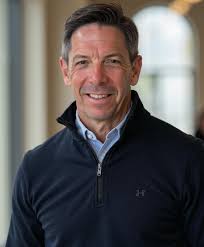
About Alan Whitman, CPA
Alan Whitman, CPA, is the CEO of Nichols Cauley, an integrated platform spanning accounting advisory, insurance and risk, and transaction advisory.
During Whitman’s time as CEO of Baker Tilly US, the firm tripled in size, expanded into 15 new domestic markets, and successfully integrated more than 20 domestic and international organizations through mergers and acquisitions.
Whitman is also the author of “Break the Mold: How to Achieve Transformational Change, Scale and Growth Simultaneously.“
Contact on Linkedin
Transcript
Jean: Today’s guest is Alan Whitman, CEO at Nichols Cauley. Alan is also the author of “Break the Mold: How to Achieve Transformational Change, Scale and Growth Simultaneously.” Alan, welcome to “Gear Up for Growth.”
Alan: Thanks, Jean. It’s great to be back with you. Look forward to our conversation.
Jean: Yes, I should have said welcome back, right? Because you’re kind enough to come on again here to “Gear Up for Growth.” And as we’ve talked, just earlier, I have lots of questions to ask you, so we’re gonna dive in.
Alan: All right.
Jean: So, it has been three years since you retired from Baker Tilly. And since then, you formed ADW Advisory, became an investor and strategic advisor to three companies, chairman of the board of another one, wrote your book, “Break the Mold,” and was just recently named CEO of Nichols Cauley. Alan, you sound like a guy that really needs to stay busy.
Alan: Yeah. I’m a little, I get bored pretty quickly, when I’m doing many different things. Look, I love what I do, and I’ve been afforded wonderful opportunities to continue teaching, and counseling, and challenging the status quo. So, it’s been a great last three years.
Jean: Wonderful. And it’s nice when you’re in control of what you’re doing, and what you decide to do, and what you don’t wanna do, right?
Alan: Well, yeah, on one hand, maybe… Yes. Although juggling a couple of calendars is not so easy. I’ve got a new appreciation for project management.
Jean: I can imagine. So, I’ve got a few questions first for you about the book, “Break the Mold.” What was the biggest aha moment, if you will, that inspired you to write this book?
Alan: Well, everybody has that dream. You know, “I wanna go to law school. I wanna run a marathon.” You know, I wanna, I wanna, I wanna. And, you know, when I left, when I retired from Baker Tilly, when I left Baker Tilly, I still yearned to do more. And the story that we have at Baker Tilly is more about…less about the numbers, that’s what everybody sees, and more about the transformation of an organization, a very successful, steeped-in-tradition organization, and the great work that we did on changing mindset, and getting people to do things differently after having such success doing things one way for such a long time, to me, needed to be told. And then more than that, there aren’t really, there aren’t that many books out there on professional services. And then lastly, I’ve learned so much from reading books from other CEOs, Benioff from Salesforce, and Reed Hastings from Netflix, and David Cote from Honeywell, etc., etc., etc. I’m like, well, you know what? I got a great story to tell. And it’s not necessarily my story. I was certainly at the helm. It’s a story of a lot of people doing a lot of great things, and so let’s share it.
Jean: Right. So, if you could summarize, just, like, that essential purpose of the book, of “Break the Mold,” if you could summarize that in one sentence, what would it be?
Alan: Wow. As you know, you know me somewhat, it takes me a little while to get one sentence together. I think the premise of the book is the art of the possible. I think it’s that simple. The art of the possible. You know, the idea of doing things that you never would have known you could have done, especially in the face of success, historical success, previous success. That, to me, is the premise of the book.
Jean: Which chapter was the hardest for you to write, and why? Oh.
Alan: Wow.
Jean: I didn’t expect that reaction.
Alan: Yeah. You know, the “Words Matter” chapter was easy. I think the “Commonalities” was a difficult chapter to write, using my past and my present experiences to craft it into a chapter. The other chapter that was hard, although it seemed easy as we were living it, was the chapter about building engines. You know, to do things with, for, and sometimes in spite of our own desires or our own biases. That was a really hard one, because it seemed so simple to me as we were going through it, but then actually, to put it into words, and then trying to explain it to other people, that was a hard chapter to crystallize into something that was tangible and understandable for people.
Jean: Right. We talked about engines the first time you were on “Gear Up for Growth,” as it related to business development and marketing. Maybe when you know something so well, it is hard to just, to get it down on paper.
Alan: Well, I would…yes. I would also say, Jean, that I’m a guy that can live in the abstract. I’m a guy that doesn’t have to have sharp, you know, defined edges. And so, I get concepts. And, but there’s a lot of people, and certainly professional services technicians, which are, wonderful what they do, that they need it more defined, and more tangible. Crystallized. And so, that’s the difference between me and everybody else. And if I have to write to everybody else, because they’re not, you know… Those that are like me can get it like that, and they can make it what they want. But if I’m really gonna convey it to people that are more disciplined or structured in their thinking, I’ve gotta depart from my biases of, “eh, it just is what it is.”
Jean: What kind of reaction have you received from the book?
Alan: I’ve had quite a few reactions. One, a lot of thank-yous for writing it. And a lot of, as people have written me, “I’m nodding my head as I’m reading this, Alan. This is great.” You know, it’s, I’ve spoken to maybe a half a dozen organizations who have bought the book for their principals. And, you know, funny story, you know, it’s the old adage of don’t answer a question when you don’t know the answer. So, I was trying to be a little humorous in one session. I said, “Well, who found the typo?” I didn’t know if there was a typo in the book. And they raised their hand. Two people raised their hand, and they found the typo. And so we’ve been having some fun with it. Look, so, people are associating with what I’m talking about. And the great part about this book is it’s on the ground. It’s real-life examples. I’ve got a partner, a new partner of mine at Nichols Cauley, who’s reading it. I mean, he’s texting me at 9:30 at night, “I’m halfway through this chapter, I’m associating what you’re writing with this, this, and this, and what we’re doing.” And so, seeing William, who is a great, become a great friend of mine, great, great business development guy, great thinker, take on the principles of the book is just, for me, has been really rewarding. And so, people are reading it and the heads are nodding, and so I. You’re not gonna like everything I say in there. And I hope they respect it, and they use it to think about where they are in their career, in the evolution of their company, in a different way.
Jean: Right. Well, it wouldn’t be fun if they agreed with everything. [crosstalk 00:08:04]
Alan: No, that’s not my… You know me. That’s not my style.
Jean: Right. So, let’s make the jump to Nichols Cauley, which is positioned as an integrated platform. Right, I got this off of your website, right?
Alan: Yeah.
Jean: “Integrated platform, spanning accounting advisory, insurance and risk, and transaction advisory.” What made this CEO role the one you couldn’t ignore? You know, you’ve said that you’ve had, you know, many people speak to you about different opportunities. What was different about this one, and what were the non-negotiables that had to be in place for you to accept it?
Alan: Oh, wow. Alignment of the leaders. The fact that this was a thesis that they came up with on their own, rather than an investor or somebody telling them what the thesis should be. The fact that there are three distinct businesses, versus practices. The fact that the advisory piece is a significant part of the engagement. And this is not a CPA firm with advisory services. This is a financial services company, that’s a platform for growth. All of those things were uber-interesting to me. What’s more, it’s sizable enough to have a base, yet it’s not built where I’d, in order to… I wouldn’t have to break the mold again. I’d use the principles of what we did in “Breaking the Mold” to advance the company, and to scale it, and to improve it, and all those things, all those results. But I wouldn’t have to break it. Because a lot of the things that I’m gonna be bringing, we’ve been bringing to the discussion table, have never really been considered in the past. It’s not that our people aren’t bright. They’re very bright. But they haven’t seen it in the way we’re bringing it to consideration.
Look, when you come from an organization that has been through the gauntlet of breaking the mold, and defining what good should be, etc., now coming into this organization, yes, it’s much smaller, it’s much more profitable, and it’s much more inviting of new ways of doing things. On one hand, it’s kind of like a startup. And all the ideas that we’re bringing are new to the equation, and so we are on a journey, Jean, to build this company the way everybody talks about building a professional services company: horizontal, not vertical, engines, ours, not mine, compensation programs that work across the organization. So, I’m so excited for this one, because we all are making it what everybody envisions it’s gonna be. The problem is many of these organizations that have been around for so long have to break the mold first to get to the other side, and that’s really challenging, as evidenced by my experiences. Albeit we did it at Baker Tilly, it was hard work.
Jean: So, what I’m hearing is that the leaders are aligned in what they see the future of this new platform. So, you’re skipping the need to change their mindset, that they’re already there in what they want to grow or build.
Alan: Yeah. Look, there’s gonna be some change in mindset, because some of the things that we do at Nichols Cauley have been ingrained in us, on, just not nearly as much as partner-led organizations have, at their core. There’s a lot of friction in breaking the mold, and changing mindset. I’m not gonna sit up and say there’s no change in…of course there is. However, they set out to do something very unique, not really knowing how to get to the end place, and that’s where I come in to say I know what good looks like, because I’ve been there. And so, with your gumption for something transformational, my experience and some of the people that have come with me from my past, to help me, it’s a great marriage. It’s a great combination. And so, look, it’s gonna be hard. Everything that’s worth it is difficult. It’s just not gonna be…it’s gonna be less impossible.
Jean: So, how does your role now differ from what you built at Baker Tilly. Or is it different? And what do you get to do at Nichols Cauley that you couldn’t do at Baker Tilly?
Alan: Wow. All right, now you’re getting into it. There’s not much that’s different. It’s, look, it’s people. It’s process. It’s technology. It’s changing mindsets, it’s winning hearts and minds, it’s communicating, it’s spending time developing people. So, the basic tenets are the same. You know, it’s interesting, everybody’s…well not everybody, a number of people have said, “What in the world are you doing? This is, like, one office, in the old Baker Tilly.” Well, yeah. However, we acquired 20-some-odd acquisitions during my tenure, and a lot of them were Nichols Cauley, so I know exactly what Nichols Cauley’s all about, because I bought a bunch of them, or I led the acquisition of a bunch of them. So, I feel very comfortable in the organization, and I feel very comfortable running the play, albeit tailored to Nichols Cauley, because I’ve done it before. You know, this isn’t a science project. Somebody actually called it a science project. Like, this isn’t a science project. This is working. You know, we worked. Somebody, I was in a restaurant the other day, and a competitor CEO said, “Well, I hope it works.” And I’m like, “Well, what do you mean you hope it works? It already did.”
So, look, a lot of the activities are similar. What can I do at Nichols Cauley that I couldn’t do at Baker Tilly? Well, look, size is a big thing. Moving a battleship or a aircraft carrier takes a lot of time. Moving a speedboat, you know, is much more, which is much more nimble. So, I think speed to implementation, speed to trying things, is something that’s easier in this platform. I think building separate businesses, versus practices, partner-led practices, is different here than it was in a traditional…and this is not about Baker Tilly. This is about a traditional, a progressive conglomerate into one company versus a traditional CPA firm. So I don’t want this to, this should not be taken as an affront on Baker Tilly. I’ve consulted with a number of CPA firms, and as progressive as they are, they’re still steeped in their tradition. So, this is the tradition versus the progressiveness of what we’re trying to build. And so, in a progressive organization, you can run faster, you can jump higher. Again, this company is sponsored by Madison Dearborn. We’ve got a great partner, one of the largest firms in the PE ecosystem, one of the oldest. And so, the partnership is just that. It’s a partnership. And so, I didn’t have that while I was leading Baker Tilly, and I’m very proud of what we did on our own backs. You know, we tripled it the old-fashioned way, and now I’ve got kind of nitrous, gasoline, what have you, with me, and we can go faster.
Jean: Right. Okay. So, you just mentioned Madison Dearborn partners. So, they’ve backed, you know, the Nichols Cauley platform. So, in the next 12 to 18 months, where is the investment gonna go? Is it talent, tech? [crosstalk 00:16:25]
Alan: Yeah. Yeah. You know, let me make one comment before we get into that question, and that is, I met this group in April. And we were in another negotiation with another investor, and that just, it just didn’t work for us. So we moved on. I stayed with the… I was introduced by that other investor. I stayed on with the leaders, and we then reached out to four other firms, one of which was Madison Dearborn. So, when they arrived on the scene, they see this platform, this thesis, they see that I’m part of it, and it’s like, “Oh, my gosh.” So, it was the trifecta, right? The leaders put the thesis together, they brought the guy who had the experience in scaling, and has the persona in the marketplace, and then they’ve got a great platform. So, it all just came together so perfectly.
Where are we going to invest? We’re going to invest in expanding our geographies, our capabilities, and our knowledge. A lot of people will say, “Well, you gotta invest in technology.” Yeah, we do. And technology and AI. I’m gonna take a different spin on that. What we need to invest in are ways to eliminate human friction. Eliminate human intervention in getting the work done. We don’t need to touch a tax return four times during the process. Touch it once, or twice, or two and a half times. And so, the first hire I made, even before we closed, was a young man, came out of the big four, and recently was in a consulting firm. And his job is AI…tech transformation and AI. His name is Greg, Greg Stone, young man. His job, solely, is to look for the outside in. He’s an employee, he’s a senior employee of the organization, a team member, and his job is to find ways to eliminate human friction in what we do. Whether it’s moving data, whether it’s moving paper, or virtual paper, whether it’s being more seamless and speedy in how we connect with clients, and our people across the organization. So, yes, are we investing in technology? Of course. Of course. That was the first hire. The other thing that we’re gonna invest in is strategy. We’re gonna invest in really understanding what our strategy is. And maybe that’s not monetary investment. Maybe that’s mindshare investment. We’re gonna slow down, to build the strategies, because one of the successes, or critical success factors in the Baker Tilly story, is all roads lead to and from strategy. We’re gonna replicate that. And what’s interesting is that’s really different than what I see in other organizations. Other organizations define strategy as the results. The revenue, the metric. No. The strategy is what you do to get the results.
Jean: Right.
Alan: Results result.
Jean: Right.
Alan: Results aren’t the input. And so, we’re gonna invest in strategies, we’re gonna invest in technology, or ways to eliminate friction, and we’re gonna invest in bringing on more talent, whether it’s their geographic. You know, right now, we’re working on one, two, three, four, five acquisitions. One, two…two, three geographic, and two specialty.
Jean: Interesting. Okay. So, and we’re gonna be, oh, gosh, we’re gonna be reading and hearing so much more about this journey that you’re taking. It’s gonna be so interesting. So, how do you think Madison Dearborn Partners define success, for them, you know, from their perspective? When will they know that this is a good investment?
Alan: So, let me back up a little bit to answer that question. The thesis here is for us to concentrate our geographic footprint in the Southeast, in the second and third-tier markets.
Jean: Okay.
Alan: So, we don’t need to be in the Atlantas, even though we have an office in the outskirts. We don’t need to be in the Chicagos of the Southeast, or the New Yorks. We, we wanna be in the country, so to speak, where the hidden wealth resides. This is, like, the backbone of the economy, right? The contractors, the excavators, the ag, farmers, you know, there’s plenty of wealth in the country. That’s where we wanted to stay.
Jean: Right.
Alan: And our commitment and our charge is to manage, protect, and grow our client’s wealth. Manage, protect, and grow. And so, we’re gonna build the service continuum, the solution continuum, to be able to manage, protect, and grow. We’ve got accounting services solutions, we’ve got risk and insurance solutions, we’ve got investment banking solutions, we’re looking for more technology solutions, more tax solutions, etc. How will Madison Dearborn know when it’s successful? Well, certainly, the way you measure things are numerical, right? The KPIs.
Jean: Right. Right. Yeah.
Alan: What was really interesting in… Look, I knew Madison Dearborn pretty well before we got into diligence. I gained an enormous amount of respect for them when they started having calls with me on equity, equality. They want the workforce, you know, ESG, diversity with a little d. They’re very concerned and interested in not what we do, but how we do it vis-a-vis the people aspect of the business. Their investors are very focused on that, knowing that we also, we have a business to run, so there’s a nice balance between the two. I was very impressed with that, because normally, you don’t think about that when you think about investors. You think all they care about is the numbers. And so, this is both the quantitative result and the qualitative result. If we achieve the quantitative result by being a bad egg in the ecosystem, well, that’s a problem. And so, we want people to succeed, we want people to advance, and I think that’s one of the main drivers that Madison Dearborn saw in this opportunity.
Jean: Right. That warms my heart a little bit, the way you describe that. Because it usually is all about the numbers and how much money are we gonna get back, and how, you know, it…yeah. I’m hearing, you know, with PE in general, even some good stories, but then some that really aren’t so great, you know, of how this has been working so far.
Alan: Yeah, look, a couple things. Yes, Madison Dearborn is in the business of generating returns for their investors. That’s what they do. They’re investors. The question is, how are they gonna do that? Are they just gonna hit it with a hammer, or are they gonna hit it with a mallet, not just a hammer? Look, I’ve heard of a lot of examples of stories gone wrong, or acquisitions gone wrong. And frankly, I don’t blame the PE firms on that. I really don’t. I blame the leaders of the organizations that have lost their way vis-a-vis communication, and doing things with people. Look, we did 20 deals. We wanted to make money too, when I was leading Baker Tilly. Now, we didn’t have an external advisor, or an investor, but guess what? I had 600 partners breathing down my neck for results, because they wanted compensation, and retirement value.
Now, is it different? Of course it’s different. It’d be foolish to think anything and to suggest anything different. I’d be disingenuous. Regardless of whether you’re sponsor-backed or you’re, I think the word they use now is independent.
Jean: Yeah, yeah.
Alan: Communication, and doing things with people, is still important. And so, that’s the responsibility of leadership. That’s the responsibility of management leadership. And so, if you forget that, that’s when these things go wrong. It’s not because the investor is saying, “Thou shalt not communicate with the people down in” whatever state or over there. They don’t say that. I’ve never heard once, Madison Dearborn suggest that we shouldn’t be gracious to our people. In fact, they want it to be both, because they know if the people aren’t happy, the results don’t result. So it’s like, I think we gotta be careful who we blame for some of this stuff.
Jean: Right. Right. And this is, well, first of all, I think it’s impossible to over-communicate within a firm. It just, there could always be more communication, and leadership might be very familiar, and think that everybody knows what’s going on, or they are communicating with their people, but it needs to be so repetitive. And I think every firm could do a better job with that.
Alan: [inaudible 00:25:30]
Jean: So, how are you going to balance the growth of Nichols Cauley between M&A and organic?
Alan: Well, we’re gonna work hard. Look, we’re gonna do both independently, and then we’re gonna connect the dots, of course. Look, once you acquire a company, you wanna make sure they’re taking advantage of the platform, the engine. We’re focusing very intently on organic growth. And so, they’re gonna be running parallel paths. You know, a lot of people ask me what are my views on the balance? I think that we will overachieve in the acquisition bucket, because of our size, because of what we have to offer. You know, when, during my last leadership post, it was 50-50. And we didn’t set out to do 50-50, but that’s how it happened. You know, and then that last leadership post, we had a lot of work to do to get organic growth up to a level that it needed to be, so we invested a lot of time. It wasn’t very impressive when I first became the CEO. We had lost our way, you know, for a variety of reasons, what have you. We are a good organic growth engine as it is, and we’re gonna enhance it. We’re gonna supercharge it. So, we’ve got people that are focused on the organic side, and we’ve got people that are focused on the inorganic side, and we’re gonna run both plays. I would suggest, though, that the inorganic will outpace the organic, just by virtue of size. You know, we bring out, you know, a $10 million or a $15 million company into the mix. You know, that’s a big jump at… We’re $75 million. You know, so, right now, we’ve got a, one of the firms we’re talking to is $10 million. One of the firms we’re talking to is $15 million, and one of the firms we’re talking to, gonna go visit with them, is $20 million. And then the other is… So, you know, you do two or three of those in a year, and it dramatically changes the landscape of the organization, whether it be by scale, size, whether it be by capabilities, knowledge, or geography.
Jean: Right. Right. So, where do you expect the biggest synergies to come from in this platform? Is it referrals? Is it bundling services, new services, being able to work faster? How do you see it?
Alan: Well, look, I [inaudible 00:28:01] use the word bundling. I believe that our delivery model is unique. It’s a continuous loop. Manage, protect, grow, manage, protect, grow, manage… So, it’s not, you know, we don’t talk about cross-sell. We’re not crossing anything. There’s no crossing. We’re one company, and everybody has an undivided interest in, the shareholders have an undivided interest in the entire company, so there’s no crossing. Ours is a loop. We manage, we protect, we grow, then we manage, we protect, we grow. And that, it’s a flywheel. So, I think that the business acumen of the people leading the organization is gonna help us. Look, the insurance and the investment banking side of our company, they’re sales organizations. They are sales organizations. I really never thought about any of our, the practices that were part of Baker Tilly as sales organizations.
Jean: Right.
Alan: And so, they already understand organic growth. You know, one of them was growing at 10%, one of them growing was at 15%. The accounting services was growing 7% or 8%. So, we’re, we’ve got a great baseline, and so if we do that continuous loop, and we integrate all of our solutions to help manage, protect, grow, synergy is gonna happen, and the solution, or the different…that’ll be a differentiator in the SMB space. I think you add more intentionality, more focus, more discipline, and the engine that is the wrapper of that, to our growth activities. You know, I just told the partners earlier, we’re not shooting for 10%. We’re shooting for 12% to 15% organic growth. Because when you do that, together with the inorganic, the compound annual growth rate is enormous, and that’s what we’re here to do. We’re here to serve, serve our clientele, you know, be relevant to the clients, for our people in our spaces, and be sustainable. That makes us a very sustainable company.
Jean: Right. Now, you touched upon this earlier, but what is the ideal client profile that Nichols Cauley is building for, or trying to, you know, to bring that business on? And what problems do those ideal clients need solving from you?
Alan: Yeah. Well, our thesis is that the small and medium-sized businesses, predominantly in the second and third-tier markets, are underserved. And they’re having to find their service providers. I gotta find my accountant, I gotta find my insurance guy or gal, I gotta find my investment [inaudible 00:30:42] And I don’t know who to talk to when I wanna sell my company, or monetize. And we’re bringing all that together under one delivery model.
Jean: Right.
Alan: And so, the ideal client is small and medium-sized business, family-owned, privately-held, that want an integrated solution, that wanna come to one relationship to handle all of the services geared to managing their wealth, protecting their wealth, and growing their wealth. I mean, at the end of the day, you know, at the core of it, Jean, that’s what [inaudible 00:31:15] They’re here to manage everything, to make sure nothing goes out of whack. They’re here to protect everything, whether it’s technology, or tax planning solutions, or insurance, or risk management, cyber. You know, I just, [inaudible 00:31:30] last week, I had three ACHs come out of my account. You know, so, I mean, cyber is, you know, we had to go get the money, to go get [crosstalk 00:31:38] money back. It was horrible. You know, you open up your account, you’re like, “Oh, my word. This is more than just a rounding error.” So they wanna protect it, and then they wanna grow it. And they wanna talk to somebody, not when they’re pulling the trigger, but as we go through the life cycle of a company. So, that’s what we’re trying to accomplish. You know, those owners that have an integrated platform, that need the services, in an integrated fashion. And look, we had, Madison Dearborn did diligence on this. It was proven that what we’re talking about is a desire out in the marketplace.
Jean: Okay, my last question. So, you’re starting off with this very, you know, unique platform. You’re growing it. You’re looking at acquiring firms. The platform gets bigger. My question is related to culture, and how would you describe the culture at Nichols Cauley, and what behaviors will not be accepted? Like, how do you embrace that culture, and keep it, you know, positive for your people?
Alan: Yeah. You know, culture is very important, and sometimes it becomes a buzzword. It’s blamed for certain things. It’s an excuse. You know, I’ve written about this. You’ve probably seen this, Jean. You know, “I don’t really wanna grow so fast, because it’s gonna ruin my culture, That’s hogwash. We grew really, really quickly at Baker Tilly, and I thought the culture was fantastic. I think culture comes down to one word, and that is trust. Do the people trust each other to help each other? It’s a horizontal. And do the people trust the organization to have their back, more vertical? And if we have trust, people trust where we’re headed, people trust their leaders, they trust their colleagues. The leaders trust the team. If there’s mutual trust, you’ve got a great culture. And so, you said it earlier. Communicate, communicate, communicate. Let people in on what’s going on. Let people share in the success of the organization. Look, the pillars of my CEO candidacy back in 2014 are the same pillars today. One is collaboration, working horizontally. One is a revered brand. And I think we did that admirably in my last post, and we’ll do it again here in Nichols Cauley. And the last is celebrate people. Hey, look, I’m a CEO, and, you know, a lot of people, “Oh, he’s a CEO.” No, I’m just Alan, who happens to be the CEO. I know sometimes that sounds a little bit, you know, a little bit disingenuous, but it’s not. I mean, you know, it… Well, I don’t mean it to be. How’s that? So, to me, culture, a good culture’s based on trust. And I write about that in the book. When I became the CEO, there was mistrust amongst the different factions in the organization. We pulled that together. And when trust matches strategy, matches the ability to execute, magic happens.
Jean: Well, I think that’s the perfect spot for us to end this episode of “Gear Up for Growth.” I’ve been talking today with Alan Whitman, CEO of Nichols Cauley. Alan, thank you for sharing your Nichols Cauley story. And we’re gonna look forward to seeing, you know, the future of your journey there.
Alan: Jean, thank you. It’s always a pleasure to be with you. I’m very grateful for you allowing me to say what I think. And I look forward to being with you again.
Jean: I look forward to that too. And thank you for tuning in to “Gear Up for Growth.” Be sure to check us out next time, when we focus on another topic crucial for accounting firms aiming for smart growth in today’s competitive marketplace. I’ll see you then.
Vimeo Link: https://vimeo.com/1175056579/e24f02a204?share=copy&fl=sv&fe=ci
Audio 716 on podomatic
Documentation: