What Exactly Is Client Advisory Services?

Businessman excited to show someone what is on computer screen

Remember, you’re the expert.

By Hitendra Patil
Client Accounting Services: The Definitive Success Guide

I attended the AICPA Engage 2022 conference in early June, where Dan Hood, the editor-in-chief of Accounting Today, stopped by for a brief chat. Of course, me being the author of the first and only book on client accounting services, the conversation quickly turned to CAS 2.0, specifically regarding the “advisory” services opportunity that everybody at Engage22 seemed to be discussing.

MORE by Hitendra Patil: The DNA of Advisory-CASAdvisory Is Not Consulting | What Exactly Is Client Advisory Services? | Review Your CAS Offerings | CAS Prospects Want Proof? You’ve Got That | What AI CEO’s Warning Means (and Doesn’t) for Accountants | Ditch the Sales Pitch | How to Get CAS Clients to Blow Your Horn | Four Questions for Choosing CAS Clients | What Is Your Firm’s Marketable Value? | Seven Tips for CAS Marketing | Twelve Things That Kill Your CAS Profits
GoProCPA.comExclusively for PRO Members. Log in here or upgrade to PRO today.

The meaning of “advisory” changes as titles and services evolve. But what does it mean for clients and accountants today? Everyone talks about “advisory,” but few can define it clearly.

In this post, let’s ditch the buzzwords and talk about what advisory actually looks like when you are the one doing the work. You will explore the nature of advice, why firms struggle to define and deliver it, and what it really means to operate as an advisory-first professional. This is the starting point for turning intent into impact.
READ MORE →

May: Build a CAS-Fueled Powerhouse | Big 4 Transparency

“CAS gets stronger as tech gets better. The market’s expanding, not shrinking.” 

This is a preview. The complete video episode, with commentary and transcript, is first available exclusively to PRO Members | Go PRO here
Sponsored by “It’s NOT Just the Numbers: How to Move Beyond the Numbers and Deliver REAL Value for Your Clients.”
by Penny Breslin and Damien Greathead. See Today’s Special Offer

Stream, listen, download, and subscribe to CPA Trendlines podcasts anywhere: AppleGoogle/YoutubeSpotifyiHeartDeezer, Amazon Music and AudiblePlayer FMAudacy, RSS

Big 4 Transparency
By Dominic Piscopo, CPA
For CPA Trendlines

In this episode of Big 4 Transparency, Matthew May, former co-founder of Acuity and now CAS Leader at Sorren, pulls back the curtain on one of the most significant private equity-driven rollups in the accounting profession. Speaking with host Dominic Piscopo, May details how Acuity, alongside other firms, became part of a growing national platform backed by DFW Capital, and why he believes Client Accounting Services (CAS) will soon eclipse audit. 

MORE Dominic PiscopoMORE Pay & CompensationMORE CAS

The seeds of the Sorren platform were planted in a BDO Alliance roundtable where six firms fantasized about joining forces. That vision crystallized when DFW Capital, with a thesis to invest $100M in the space, entered the picture. From there, May and his partners at Acuity ran a rigorous process, engaging investment bankers to evaluate 250 potential paths, leading to 11 indications of interest (IOIs), seven in-person meetings, and five formal offers. The decision to join Sorren wasn’t about cashing out – it was about autonomy, cultural fit, and the chance to help shape a future-focused firm from the ground up. 

READ MORE →

Put Financial Statements to Work for You

Young black woman with magnifying glass

Don’t skip the notes, no matter how many pages there are.

By Ed Mendlowitz
77 Ways to Wow!

Publicly traded companies are required to issue audited financial statements annually. There are seven parts of the statements that are briefly described here in the usual order they are presented:

MORE by Ed Mendlowitz
GoProCPA.comExclusively for PRO Members. Log in here or upgrade to PRO today.


1. Report of independent registered public accounting firm. This provides their opinion that the financial statements were in conformity with U.S. generally accepted accounting principles (GAAP); that the company maintained effective internal controls; that the audits were conducted in accordance with standards of the U.S. Public Company Accounting Oversight Board (PCAOB) and some other things and that their audits provided a reasonable basis for their opinion; and that the internal control may not prevent or detect fraud. This needs careful reading and understanding, as do all seven elements of the statement, but on some level, this type of report is the gold standard for public companies.
READ MORE →

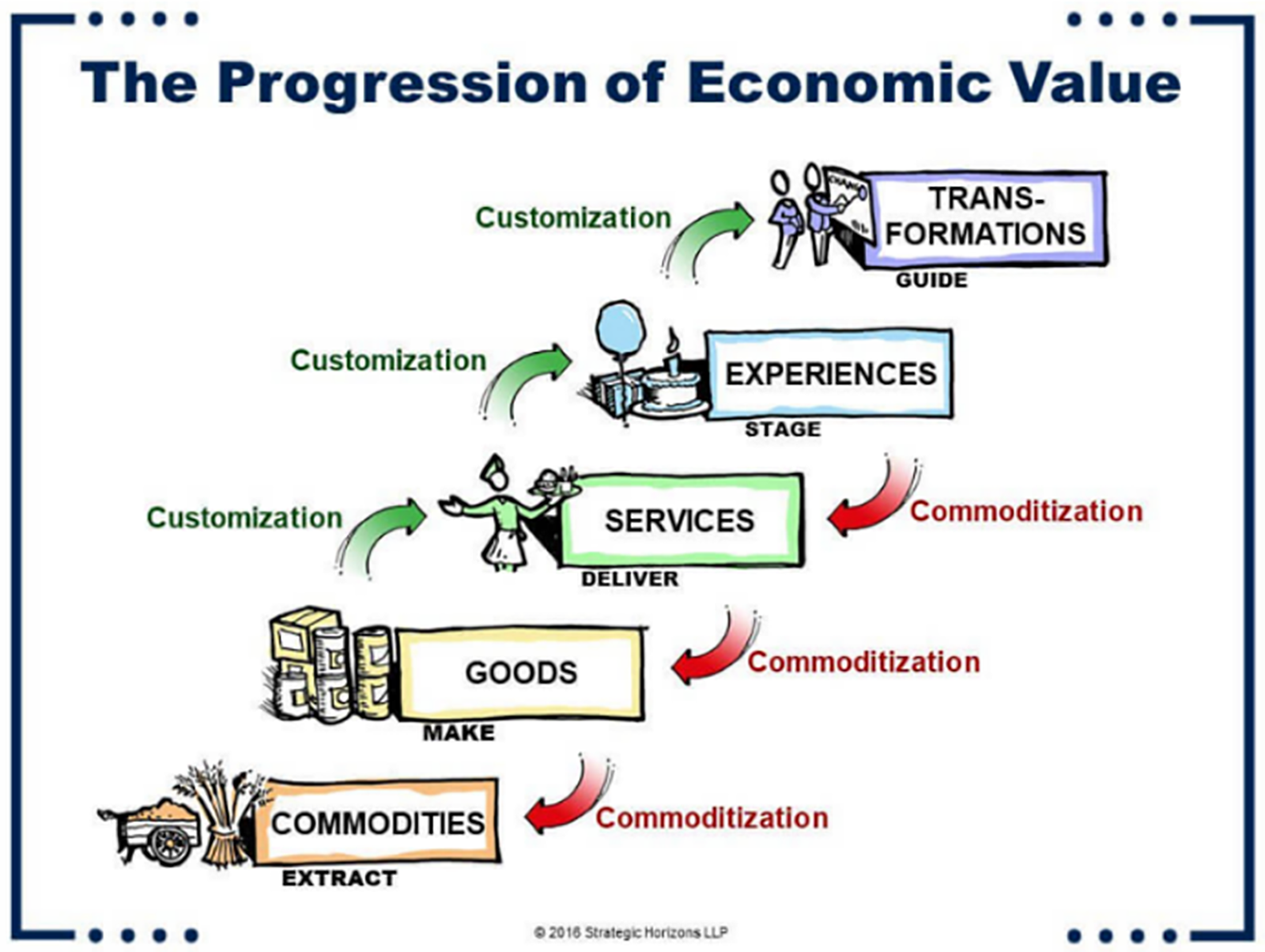
From Services to Experiences to Transformations

illustration of the progression of economic value

Every client interaction is an opportunity.

By Rory Henry
The Holistic Guide to Wealth Management

In tracing the trajectory of economic evolution, each phase represents a profound transformation, often driven by technological advancements. For instance, the Industrial Revolution transformed the U.S. from an agrarian economy to a manufacturing economy that created tangible assets (i.e., finished goods) out of raw materials. In recent decades, the U.S. went through a digital revolution, moving us from a manufacturing economy to a service-based economy that produces intangible assets.

MORE: How Behavioral Finance Works | Manage Change through A PACT | Marketing Strategies for Wealth Management Services | An Accountant’s Role in Exit Planning | Trust and Estate Planning Is for Clients of All Ages | Help Clients Manage and Embrace Investment Risk | Tax Advisory Services: A Pathway to Greater Financial Freedom | Leverage AI to Grow and Protect Revenue: Six Steps | Four Ways to Provide Wealth Management in Your Accounting Practice | What Multiples Mean to Accounting Firms | How Wealth Management Has Evolved | Why Now Is the Time for CPAs to Embrace Wealth Management
GoProCPA.comExclusively for PRO Members. Log in here or upgrade to PRO today.


This shift was emblematic of a broader transition from making tangible goods to delivering intangible services. The service economy burgeoned, with a focus on delivering services, e.g., tax services, financial services and estate planning legal services.

Now, we are in the midst of another paradigm shift. Artificial intelligence (AI) is transforming us from a service economy to one based on providing the consumer with experiences and guiding them through life transformations. The AI era is not just about automating routine tasks, but fostering an environment in which we transcend traditional service delivery.
READ MORE →

How to Prep Daily Reports for Business Managers

Plus five self-assessment questions about the manager/owner’s role.

By Ed Mendlowitz
77 Ways to Wow!

The author contends that almost every business owner or manager is an absentee owner or manager, regardless of the amount of time they spend at their business.

MORE by Ed Mendlowitz
GoProCPA.comExclusively for PRO Members. Log in here or upgrade to PRO today.

While many are ever-present either physically or virtually by phone, texts and emails, they are not managing but rather working in their business on what needs to be done at that moment or that day. They are responding to normal business routines; customer, supplier and personnel requests or problems; and myriad other situations that demand their time, such as banking relationships, cash flow planning, HR issues including hiring, discharging and compliance, interactions with outside professionals, including their attorneys and accountants, and regulatory and occupancy issues. Some have partner issues and if they are managing a not-for-profit organization, then board and possibly funding and development issues. They are functioning as a necessary and essential employee and are not really running the business or organization – as if they were not there or were in another part of the country.
READ MORE →