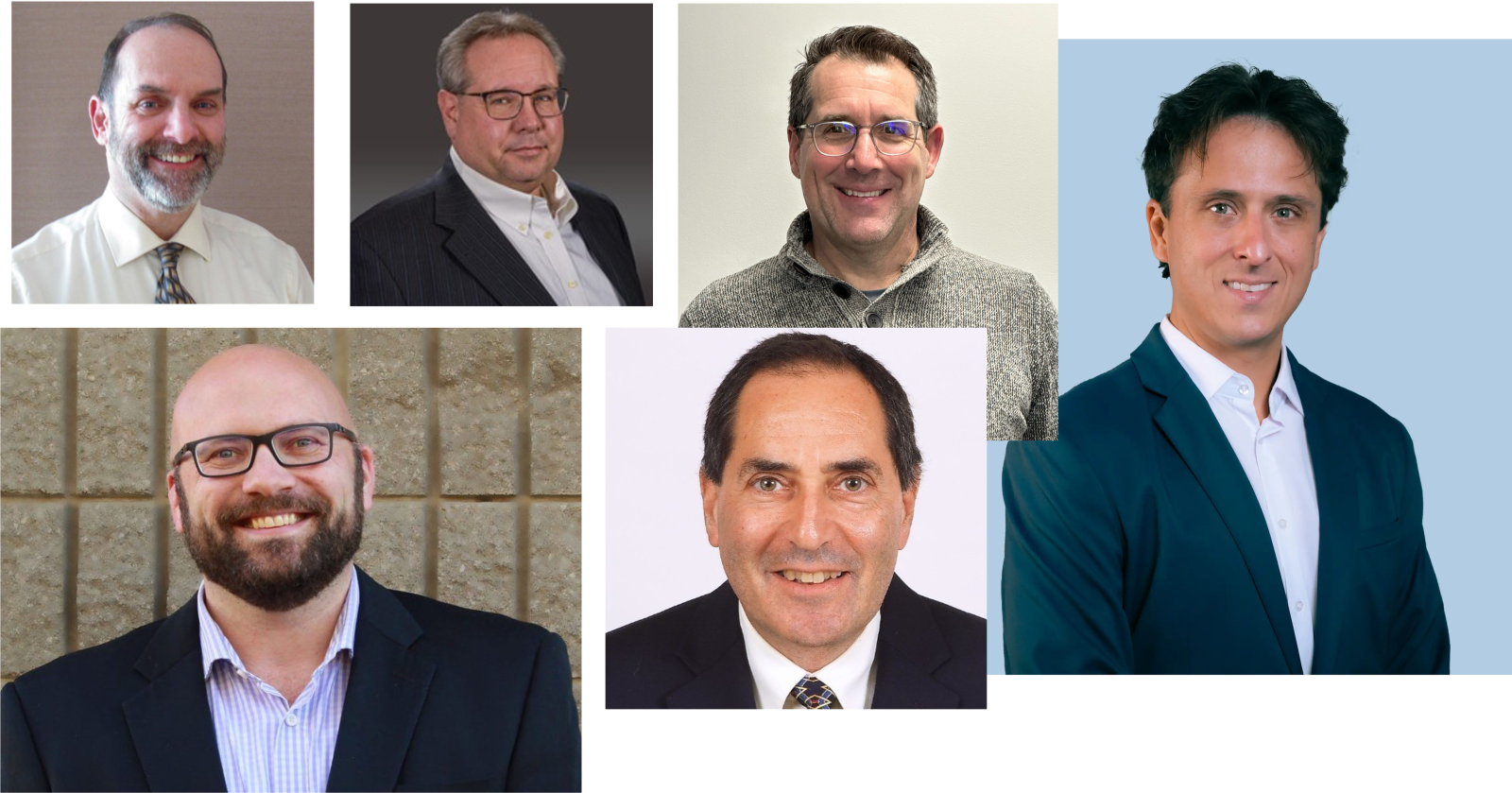
On the front lines (clockwise from top left): Winke, Sosinski, D’Angelo, Parent, Kaplow, Gehring
By CPA Trendlines Research
Across the profession, accountants heading into the 2026 Busy Season are not sounding alarms, nor are they celebrating breakthroughs. Instead, they are settling into a steady, almost restrained confidence.
The latest Busy Season Barometer reveals that firms’ sense of readiness bears a striking resemblance to where they stood a year ago. For some, this signals resilience. For others, it signals stagnation. The portrait that emerges is a profession caught between incremental improvements and persistent operational friction.
New honesty and ethics ratings place accountants near historic lows.
Accountants rank seventh out of 21 professions measured by Gallup, trailing all healthcare professions and teachers, and clustering near other mid-tier trust occupations.
By CPA Trendlines
Accountants remain among the more trusted professions in American life — but barely, and increasingly precariously.
In Gallup’s newest Honesty and Ethics of Professions survey, only 35% of Americans rate accountants’ honesty and ethical standards as “very high” or “high.” That places the profession in the middle tier of public esteem and, according to Gallup, statistically close to its lowest point since the polling series began in 1976.
The new poll comes with a broader warning label: Americans’ ethics ratings have fallen across many occupations, and the average across Gallup’s core set of professions has slid to a historic low. Accountants are not isolated — but they are exposed. Their work is built on trust, and their public standing appears to be eroding at the exact moment the profession is asking clients and regulators to accept more complex roles for CPAs, including AI-enabled advisory services, outsourced finance, and expanded assurance responsibilities.
Expect strong demand for tax planning, business advisory and bookkeeping cleanup work.
By CPA Trendlines Research
The CPA Trendlines Busy Season Barometer indicates that tax and accounting leaders anticipate growth in their own firms, even as they prepare for anxious business clients, persistent inflation, and a policy environment that keeps planning on edge.
About half of all accountants in the survey are bracing for a deteriorating economy, with a third expecting rosier scenarios, for a net negative 17.2 percentage points. For small and mid-sized businesses, accountants are at a negative 9.3 points.
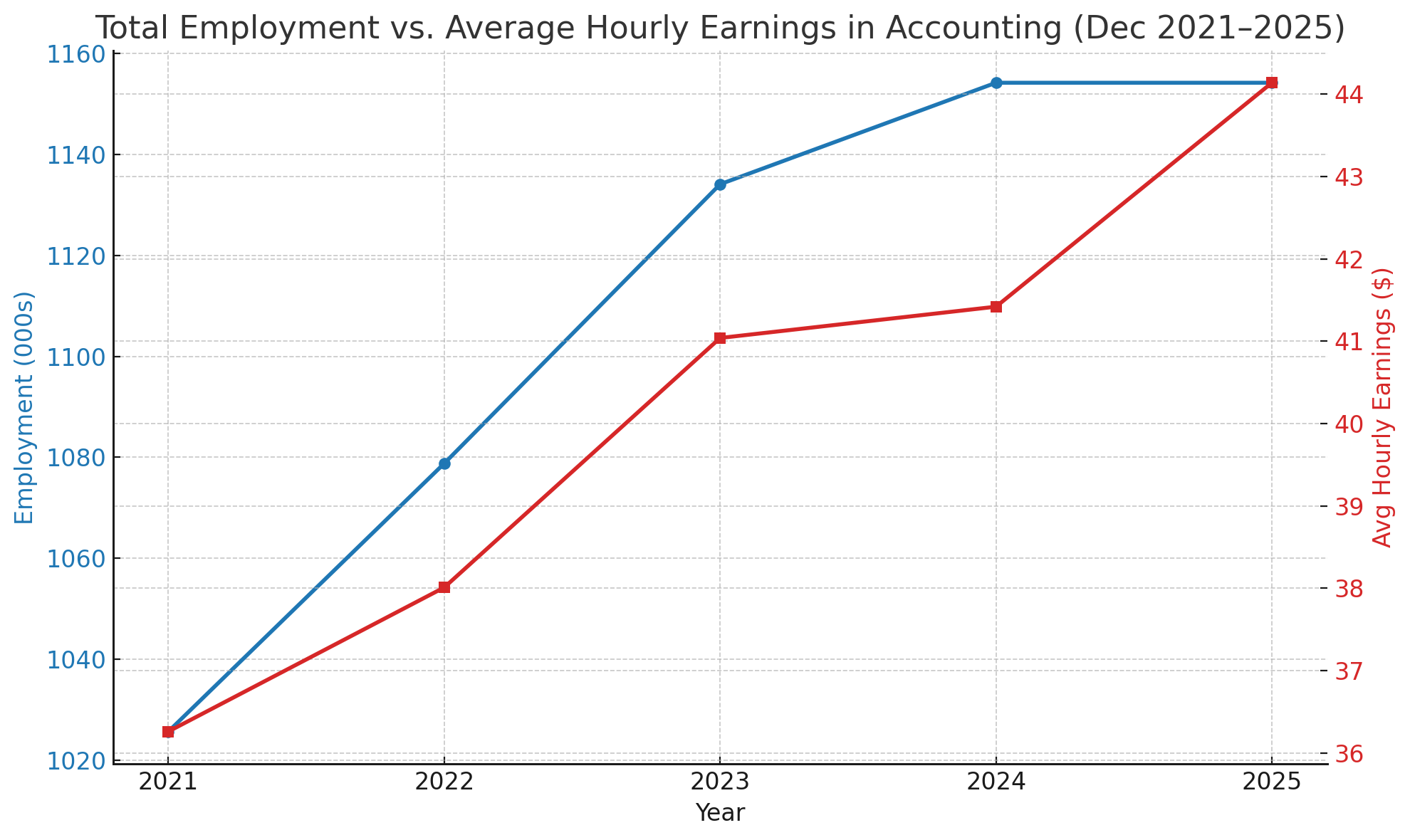
Pivoting with the Paradigm: Staff salaries are rising sharply even as job growth plateaus.
New jobs data signal fundamental pivot for accounting firms.
By CPA Trendlines Research
The year 2026 may be long remembered as the paradigm-shifting moment when accounting firms were forced to pivot everything from their business models to their budgets.
The reason: Salary and pay increases are accelerating even as hiring momentum stalls.
Going into 2026, labor costs have been cleaved from labor supply. The new, structurally higher staffing line is forcing firms to rewrite their budgets as well as business models.
Experience, complexity, and scarcity redefine the market
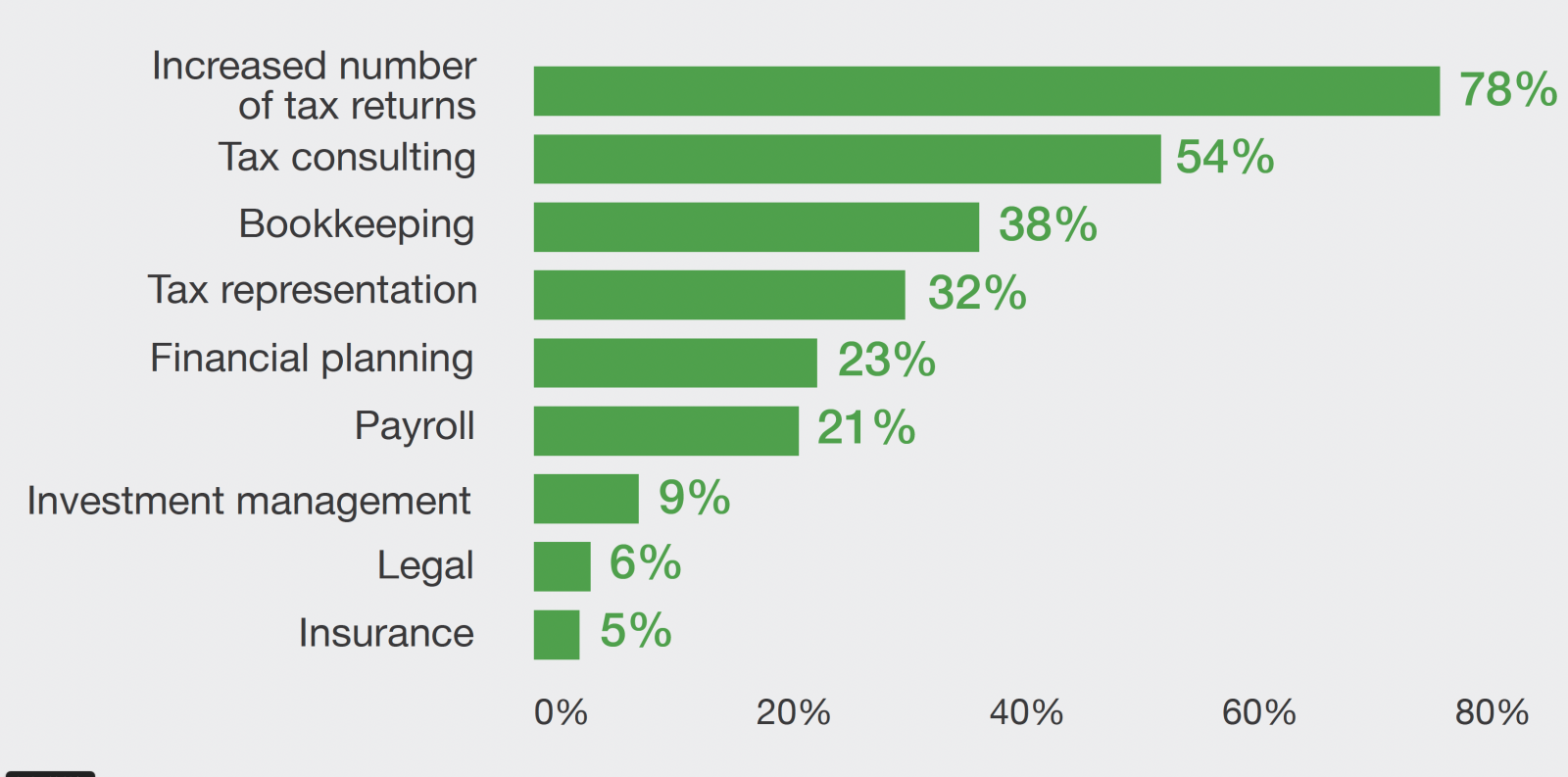
Volume and consulting drive growth: Of the 48% of firms reporting advances, 78% credit more business and 54% credit higher-grade services. Source: NATP
By CPA Trendlines
Tax preparation is getting markedly more expensive in 2026, and not in the slow, incremental way many firms have long assumed they can explain away.
In a widely used pricing model, the National Association of Tax Professionals reports the average base charge for a Form 1040 with Schedules is $236, up from a 2024 average of $162 reported in the same study series. That’s a 45.7% nominal increase in two years for the profession’s signature product, before a single schedule, state filing, or complexity premium is added.
The U.S. tax preparation market is not merely more expensive. It is increasingly stratified, with pricing that clearly distinguishes between complex professional work and the lower tiers of retail and do-it-yourself alternatives.
Across multiple independent pricing measures, certified public accountants and credentialed tax professionals command fees that are substantially higher than the base costs advertised by major retail chains, software platforms, and dwindling government-sponsored free filing options. The result is a world of tax preparation pricing that reflects not only the complexity of engagement but also client expectations, risk management, service delivery models, and clear segmentation of value. READ MORE →

 Expect strong demand for tax planning, business advisory and bookkeeping cleanup work.