Today's Features

Jeremy Dubow: Raising the Bar for Talent | Big 4 Transparency

Why equity is the new standard for talent retention.

This is a preview. The complete video episode, with commentary and transcript, is first available exclusively to PRO Members | Go PRO here
Sponsored by The Balanced Millionaire: The Advisor Edition by Dr. Jackie Meyer | See Today’s Special Offer.

Subscribe to CPA Trendlines podcasts anywhere: AppleGoogle/YouTubeSpotifyiHeartDeezer, Amazon Music, AudiblePlayer FMAudacy, RSS.
Build a 7-figure firm in just 4 hours a week!
.

Big 4 Transparency
By Dominic Piscopo, CPA
For CPA Trendlines

Jeremy Dubow, CEO and co-founder of Chicago-based, private-equity-backed Prosperity Partners, explains how entrepreneurship in accounting has shifted from demand-driven to capacity-constrained, and why transparent equity programs are becoming the new standard for talent retention.

MORE Dominic PiscopoMORE Private EquityMORE Pay & Compensation

Dubow joins Dominic Piscopo on Big 4 Transparency to discuss how accounting-firm entrepreneurship and the operating model required to scale have changed since he co-founded NDH in 2003. NDH later sold to private equity and rebranded as Prosperity Partners, which Dubow described as a case study in how firms are adapting to labor constraints, expanding client complexity, and rising expectations around technology and talent strategy.

Quotables
“The demand for accounting services is greater than it ever has been. The challenge is providing the service at a high level in a labor-constrained environment.”
“AI in and of itself is not right now the solution to solve all our problems. Using automation and offshoring gives us the operational leverage to create that capacity.”
“I recognize that my people are being attempted to be poached every single day of the year.”
“Why have a stock price if you don’t disclose what it is?”
“‘’If I worked that 80-hour week, you should too.’ Well, guess what? That doesn’t work anymore.”

Dubow argues the profession has shifted from a demand constraint to a capacity constraint. Client needs continue to expand, but firms increasingly struggle to staff and deliver services proactively at scale.

READ MORE →

Four Benefits of Progress Billing

smiling man working at laptop in office with glass walls

How to set up your system, starting with progress reports.

By August Aquila
MAX: Maximize Productivity, Profitability and Client Retention

There are many things that are critical for a successful client service engagement. In my mind, there are two that should be at the top of your list. Number one is providing the client with a progress report or reports. Number two is making sure that you progress bill and provide a change order if the scope of the engagement changes. Doing both ensures that you will have a happy client and get paid promptly for your services.

MORE by August J. Aquila
GoProCPA.comExclusively for PRO Members. Log in here or upgrade to PRO today.


Progress reports are an essential tool for professional services firms, and they keep the client informed about the status of the engagement. They also serve to help you communicate with the client, especially when there are changes in the scope of the engagement. They also help clients keep track of their projects and ensure that they are on track to meet their goals.
READ MORE →

Five Steps to Building a Team That Lightens Your Load

woman mentoring man in office

Plus 10 elements for your staff guidelines.

By Jackie Meyer
The Balanced Millionaire: Advisor Edition

Hiring someone is just the beginning. What you do after they join is what truly determines whether you get the benefits of having a team.

MORE by Jackie Meyer
GoProCPA.comExclusively for PRO Members. Log in here or upgrade to PRO today.

Many entrepreneurs struggle with letting go of control. It’s natural – this practice is your baby! But micromanaging or failing to properly delegate will squander your investment in a new hire and frustrate both of you. Here’s how to build a team that actually lightens your load:

  • Delegate Effectively: Delegation is not throwing a task over the fence and hoping for the best. It involves clear instructions, the right resources and appropriate authority given. When you delegate, be explicit about the outcome you expect, any important parameters, and deadlines. For example: “Please reconcile Client X’s bank accounts for September and October and note any discrepancies or unusual items for my review by Friday.” Provide context too: “They had an issue last month with a missing deposit, so keep an eye out for that.” As your team member proves themselves, you can delegate in broader strokes. Early on, check in periodically (but try not to hover). Think of delegation as a skill you practice – you’ll get better at it over time.

READ MORE →

With Congress Stalled, Tax Professionals Take Control of Preparer Standards

Why Tax Pros Are Imposing Standards on Themselves.

By CPA Trendlines Research

Scott Artman, NATP: New credentialing program

As the 2026 filing season begins, the National Association of Tax Professionals is launching a formal credentialing program for taxpayer representation.

JOIN the Busy Season Barometer daily pulse check for top trends, best practices, and emerging opportunities

MORE Tax, Busy Season, The Next Circular 230

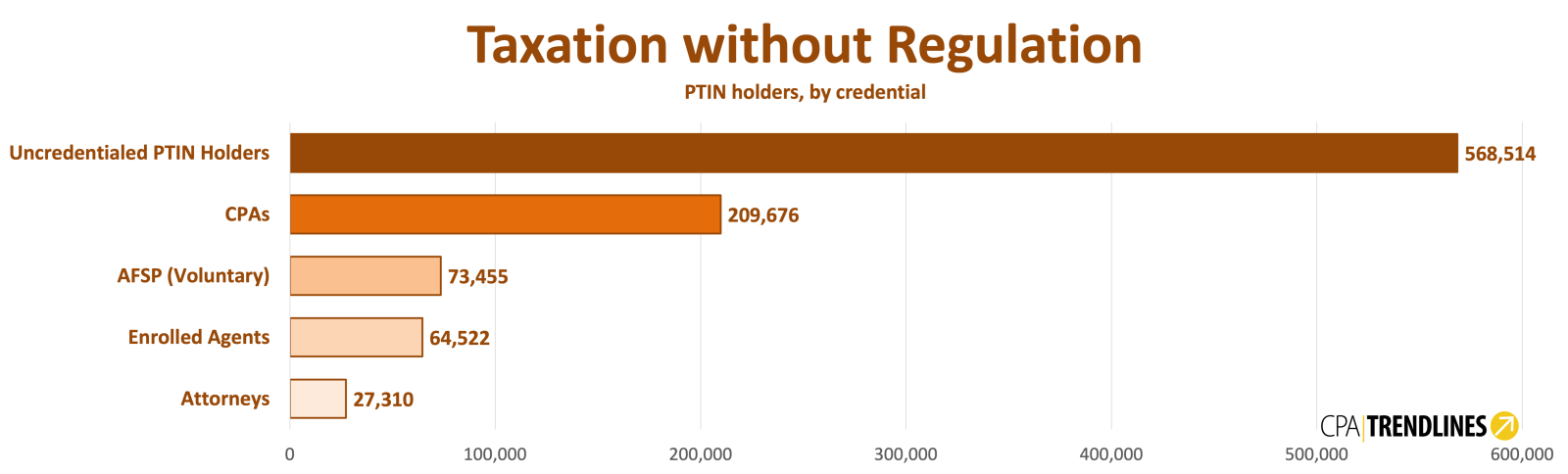
The NATP is stepping into a regulatory void left by years of congressional inaction, leaving more than 500,000 paid preparers operating without national standards, even as IRS and GAO data show higher error rates on paid-prepared returns than on do-it-yourself filings, and Congress is delaying action.

READ MORE →

How the $25K Rule Works in Pricing

Toss the timesheets and give your clients more value.

By Jody Padar
The Radical CPA

Consider the $25K Rule.

Because this method requires heavy lifting on the front end, a good rule of thumb is to only value-price engagements of $25,000 or more. If the client falls below $25,000, they are eligible for a fixed price or fixed price plus a value add. This rule is important because if your client is a small business, it doesn’t matter how much value they perceive in your services; they will not be able to afford value pricing above a certain level.

MORE by Jody Padar
GoProCPA.comExclusively for PRO Members. Log in here or upgrade to PRO today.

Most services are fixed-priced, but based on conversations with the client, those prices may drop or be raised accordingly. Some of the data points used to set pricing are the PITA factor (pain in the a#%) and the client’s gross revenue.
READ MORE →