Expect strong demand for tax planning, business advisory and bookkeeping cleanup work.
By CPA Trendlines Research
The CPA Trendlines Busy Season Barometer indicates that tax and accounting leaders anticipate growth in their own firms, even as they prepare for anxious business clients, persistent inflation, and a policy environment that keeps planning on edge.
About half of all accountants in the survey are bracing for a deteriorating economy, with a third expecting rosier scenarios, for a net negative 17.2 percentage points. For small and mid-sized businesses, accountants are at a negative 9.3 points.
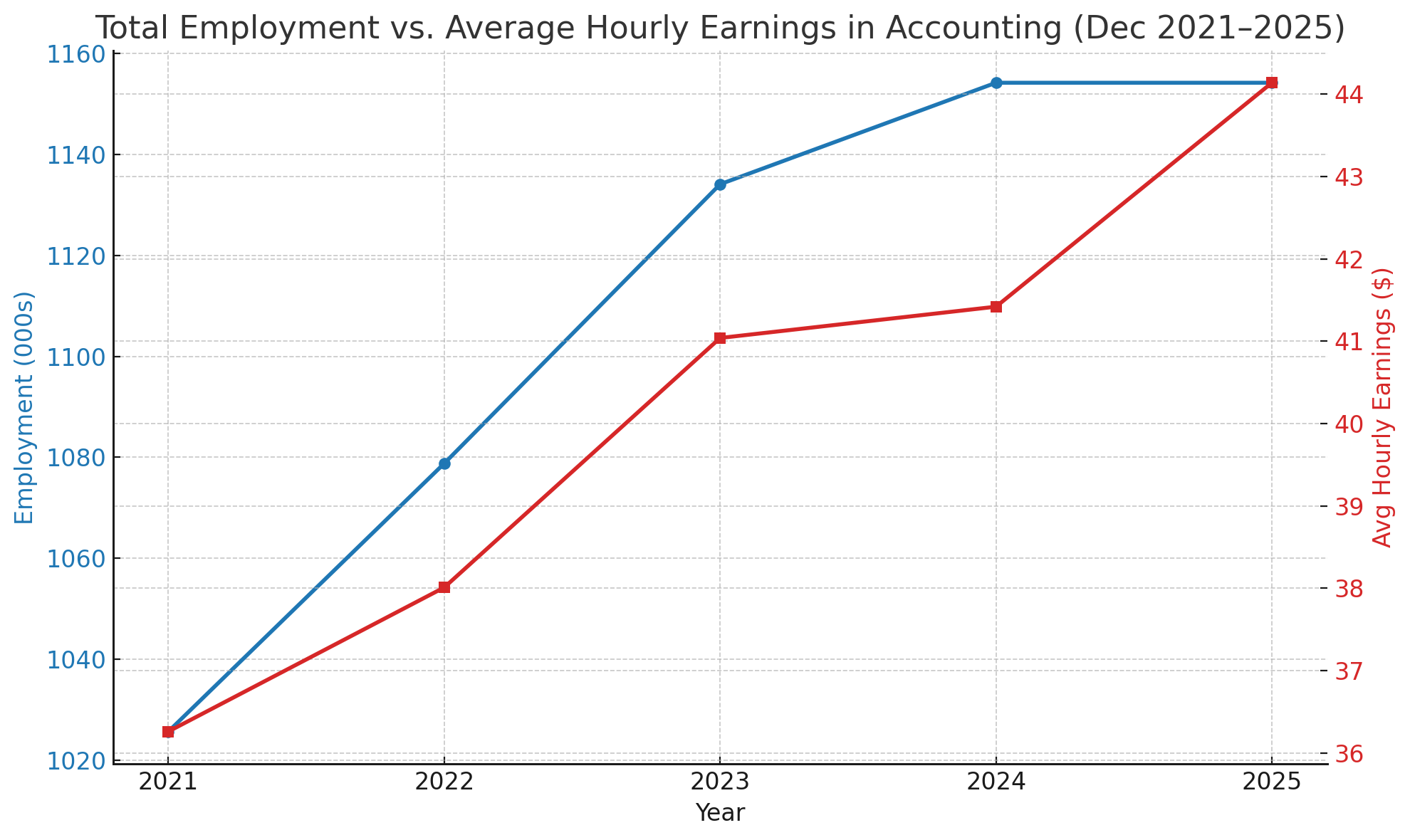
Pivoting with the Paradigm: Staff salaries are rising sharply even as job growth plateaus.
New jobs data signal fundamental pivot for accounting firms.
By CPA Trendlines Research
The year 2026 may be long remembered as the paradigm-shifting moment when accounting firms were forced to pivot everything from their business models to their budgets.
The reason: Salary and pay increases are accelerating even as hiring momentum stalls.
Going into 2026, labor costs have been cleaved from labor supply. The new, structurally higher staffing line is forcing firms to rewrite their budgets as well as business models.
As artificial intelligence transitions from a buzzword to a business imperative, CPA firms across the U.S. are quietly beginning to deploy generative AI assistants, machine learning tools, and “agentic” AI platforms to automate audits, prepare taxes, and provide financial insights.
With the astonishing surge in AI adoption, firm leaders say we’ve reached a tipping point where those not investing in AI risk being left behind.
In this Cornerstone Report, accounting firms show how they are leveraging AI to transform their operations, the benefits and challenges they are encountering, and what it all means for the future of the profession, including:
Why AI adoption in CPA firms has hit a tipping point
How agentic AI is transforming tax, audit, and advisory work
The real productivity, ROI, and revenue gains firms are reporting
What AI means for staffing, skills, and firm economics
The risks, governance challenges, and regulatory implications ahead
How firm leaders can deploy AI without falling behind
Record High: Tax and accounting industry hits 1,163,600 jobs, an annualized growth rate of 2%, and a new all-time high.
By CPA Trendlines Research
The full tax and accounting industry—which includes accounting, tax preparation, bookkeeping and payroll services—has hit a new record high with 1,163,600 jobs, representing an annualized growth rate of 2%, which is measurably stronger than the year-over-year 1.23% gain, according to new data examined by CPA Trendlines. But a choppy economy and political volatility have accountants and observers alike wondering if the trends can continue in 2026
CPA offices managed to add 1,700 jobs over the past year, keeping the segment on a slow but positive trajectory. Employment at offices of certified public accountants is holding steady at 544,300 positions, matching the month-before figure. The revision from the previous estimate of 544,600 marks a modest 0.06% downgrade. The year-over-year trend improved slightly to 0.3%, up from 0.2% in the prior report. READ MORE →
Experience, complexity, and scarcity redefine the market
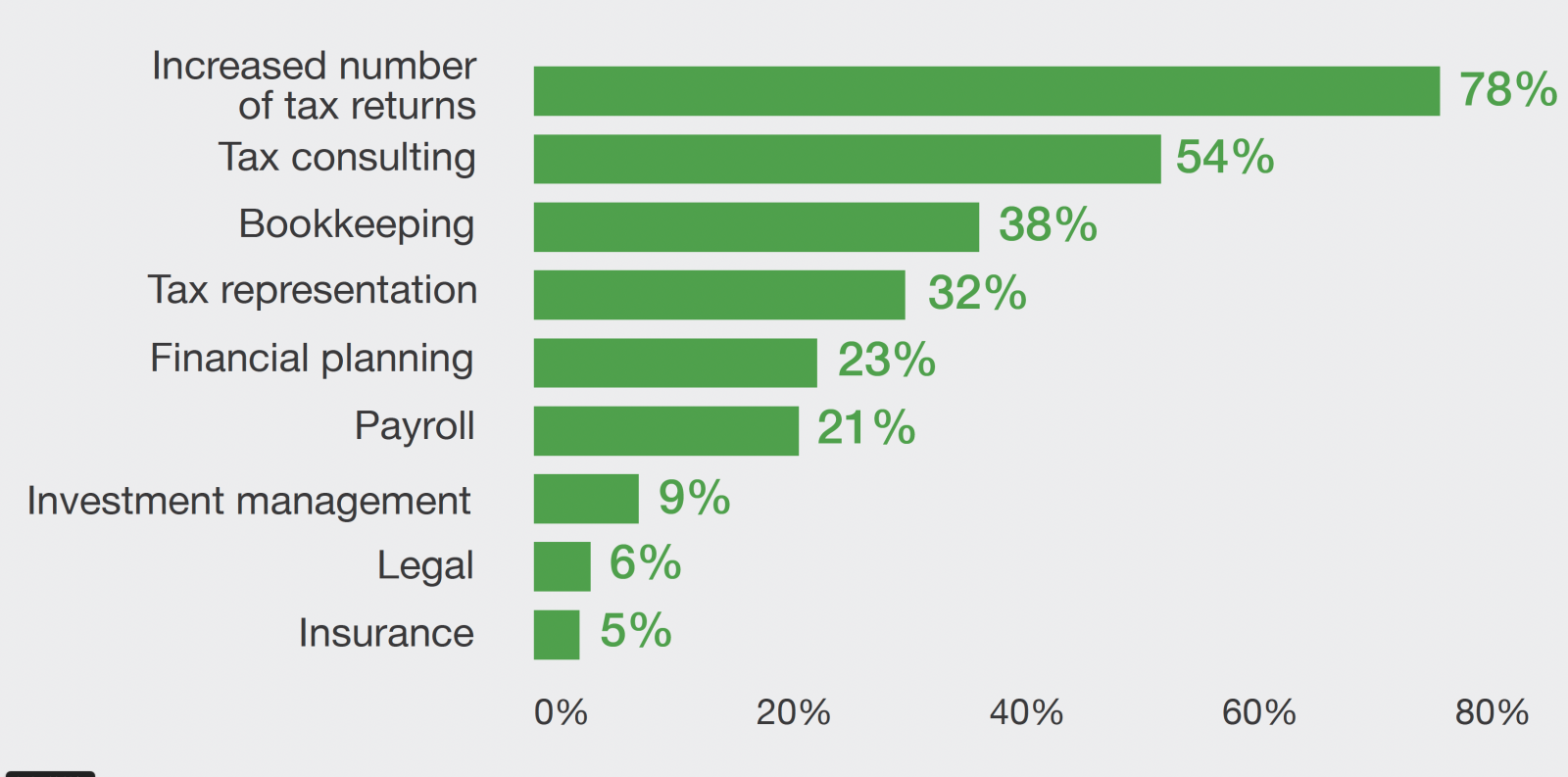
Volume and consulting drive growth: Of the 48% of firms reporting advances, 78% credit more business and 54% credit higher-grade services. Source: NATP
By CPA Trendlines
Tax preparation is getting markedly more expensive in 2026, and not in the slow, incremental way many firms have long assumed they can explain away.
In a widely used pricing model, the National Association of Tax Professionals reports the average base charge for a Form 1040 with Schedules is $236, up from a 2024 average of $162 reported in the same study series. That’s a 45.7% nominal increase in two years for the profession’s signature product, before a single schedule, state filing, or complexity premium is added.
The U.S. tax preparation market is not merely more expensive. It is increasingly stratified, with pricing that clearly distinguishes between complex professional work and the lower tiers of retail and do-it-yourself alternatives.
Across multiple independent pricing measures, certified public accountants and credentialed tax professionals command fees that are substantially higher than the base costs advertised by major retail chains, software platforms, and dwindling government-sponsored free filing options. The result is a world of tax preparation pricing that reflects not only the complexity of engagement but also client expectations, risk management, service delivery models, and clear segmentation of value. READ MORE →
 Expect strong demand for tax planning, business advisory and bookkeeping cleanup work.