CPA PE Deal Tracker™: 10 Years. 500-Plus Deals. $49 Billion. [May 2026]
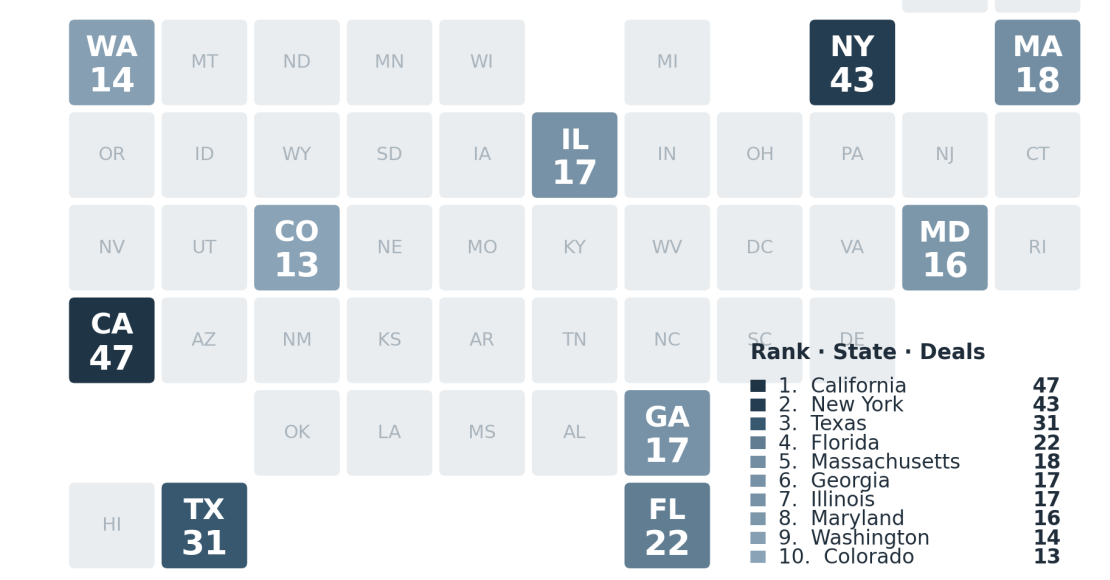
Top ten platforms take 52% of the deals.
By CPA Trendlines Research
Top ten platforms take 52% of the deals.
By CPA Trendlines Research
Five steps turn vision into execution.
Gear Up for Growth
With Jean Caragher
For CPA Trendlines
On the latest episode of “Gear Up for Growth,” host Jean Caragher interviews Matt Rampe, partner at Rosenberg Associates and author of the forthcoming book, “CPA Firm Strategic Planning: Your Roadmap for Long-Term Success,” about how accounting firms can move beyond ad-hoc retreats to a disciplined, accountable planning process that sticks.
Rampe, who advises firms on strategy, succession, partner development, and profitability, said the book grew out of years of facilitation and coaching with firms of all sizes. “The book was in my brain for a long time before it got put on paper,” he says. “When I started writing, it actually came pretty quickly—but I learned there’s a lot more to making a book than a Word document.”
More Jean Caragher here | Get her best-selling handbook, The 90-Day Marketing Plan for CPA Firms, here | More Gear Up for Growth
Rampe argues that the profession has reached a disruption point, citing converging pressures including private equity, technology, staffing shortages, succession for retiring Baby Boomers, and a shift toward advisory services. “What worked for us 10 years ago isn’t going to work for us 10 years in the future,” he says. “The old model, where a few partners disappear into a room and come out with a plan, doesn’t work in this age. We need to be nimble.”
Prove It: PE-Backed Firms Must Now Deliver on Their Big Strategies
| Target | Platform/Buyer | Sponsor | Funding | Strategy |
|---|---|---|---|---|
| Jackson Thornton | Ascend | Alpine Investors | PE-backed | Wealth management, Gulf Coast expansion |
| Jefferson Wells U.S. | Sikich | Bain Capital involvement | Institutionally backed | Consulting and staffing capabilities |
| Copeland Buhl | Frazier & Deeter | General Atlantic | PE-backed | First Midwest footprint |
| Price Kong | Aprio | Charlesbank | PE-backed | Arizona and cannabis specialization |
| SWKJD | Citrin Cooperman | Blackstone | PE-backed | South Florida expansion |
| Gorfine Schiller & Gardyn | Sorren | DFW Capital | PE-backed | Mid-Atlantic expansion |
| Gordon Advisors | Cohen & Co. | Lovell Minnick | PE-backed | Michigan expansion |
| ArightCo | Abbott Stringham & Lynch | — | Conventional M&A | CAS and fractional CFO scaling |
| ASO Advisors | Windsor Path | Family-office backed | Private capital | Platform’s second deal |
| GBC Advisory | Springline Advisory | Trinity Hunt Partners | PE-backed | Oklahoma expansion |
| MCA Connect | Grant Thornton Advisors | New Mountain Capital | PE-backed | AI and digital transformation |
| Burke & Associates | Platform Accounting Group / Shoreline | Cynosure Group | Private capital | Massachusetts expansion |
By CPA Trendlines
Marking a new phase in the private equity takeover of the CPA business, the next test for accounting platforms will be proving that serial acquisitions can be converted into integrated firms, not just larger collections of offices, partners and legacy systems.
MORE CPA-PE DEAL TRACKER™: How Big Buyouts Are Turning the Profession into a Platform | PE Wars: The CPA Platform Economy Is Concentrating Fast | Alan Whitman: Why the Next Big CPA Firms Won’t Look Like CPA Firms | The PE Takeover: Audit Problem? What Audit Problem? | 1,000 Deals Show Where PE Money in Accounting Really Goes. | The 7.6x Machine: How Grassroots Firms Are Taking Private Equity for a Ride | Deal Tracker(™): PE Platforms Accelerate the Grab for CPA Firms | With Apax Sale, CohnReznick Starts Building a National Platform | PE Deal Tracker™ for Feb. 2026: 57 deals in 60 days | PE Deal Tracker™ Update: Alan Whitman Plants a Flag in the Private Equity Landscape | Alan Whitman: Breaking the Mold with PE Backing
MORE Private Equity
Call it: The Implementation Imperative. It’s the place where grand schemes on paper meet the concrete realities of running a business. The first phase was acquisition. The second was consolidation. The next is all about making it work.
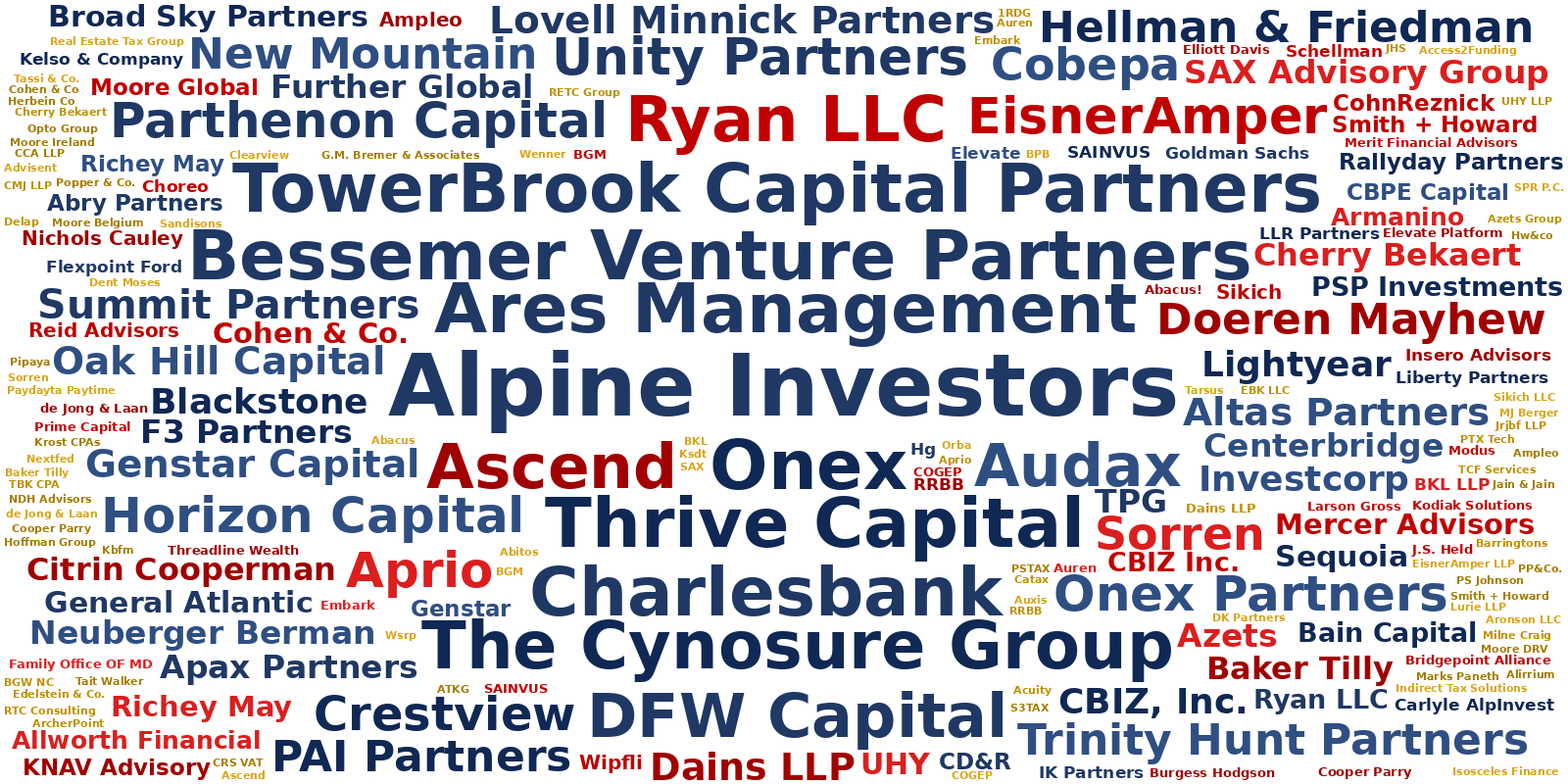
The May 2026 edition of the CPA Trendlines CPA-PE Deal Tracker™ illustrates the change. And a CPA Trendlines survey in April shows 44% of accountants are eager, open or already closed on a deal.
Venture capital crashes the private equity party in accounting.
By CPA Trendlines Research
Private equity’s push into accounting is entering a new and more complicated phase: platform building, sponsor recycling, technology investments, blended tax and wealth services — and now, a new pipeline of cash from venture capital.
MORE PE Wars: The CPA Platform Economy Is Concentrating Fast | Alan Whitman: Why the Next Big CPA Firms Won’t Look Like CPA Firms | Gear Up for Growth | The PE Takeover: Audit Problem? What Audit Problem? | 1,000 Deals Show Where PE Money in Accounting Really Goes. | The 7.6x Machine: How Grassroots Firms Are Taking Private Equity for a Ride | Deal Tracker: PE Platforms Accelerate the Grab for CPA Firms | With Apax Sale, CohnReznick Starts Building a National Platform | PE Deal Tracker for Feb. 2026: 57 deals in 60 days | PE Deal Tracker Update: Alan Whitman Plants a Flag in the Private Equity Landscape | Alan Whitman: Breaking the Mold with PE Backing | Holistic Guide
MORE Private Equity
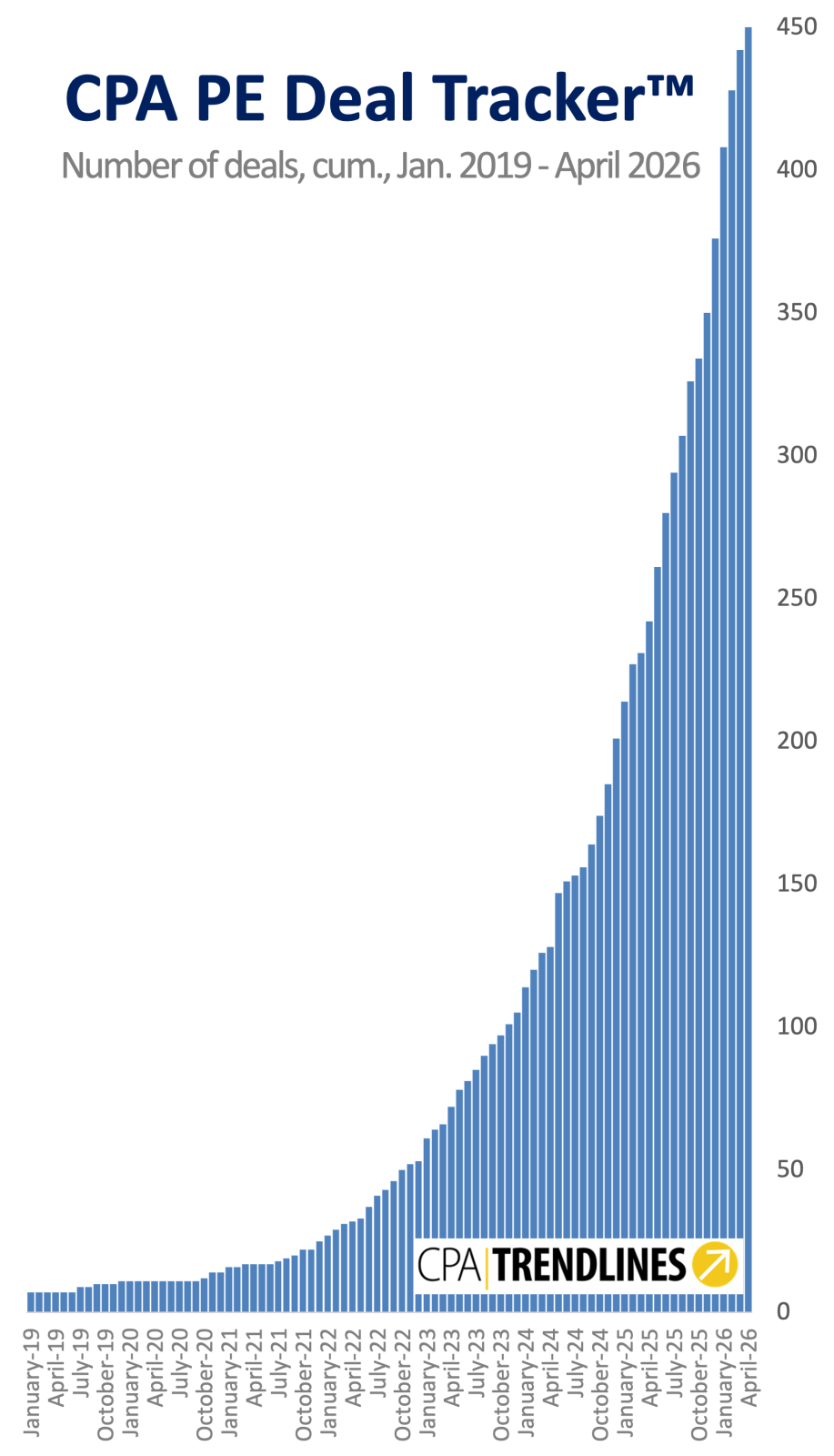
This month’s CPA Trendlines CPA-PE Deal Tracker™ shows nine new deals in April, down from the first-quarter deal-closing frenzy but bringing the year-to-date deal count through April 30 to 78, well ahead of the 44 logged in the same window of 2025.
The broader verified dataset now includes 452 in-scope events, giving CPA Trendlines a clearer view of what private capital is doing after its first wave of accounting-firm investments.
The latest data does not show a retreat. It shows a transformation. The new gambits go well beyond roll-ups, and include service line extensions, corporate carve-outs, cross-industry tie-ups, recapitalizations, continuations and a buzzy new venture-backed startup.
World domination
The deal models are sprawling in all directions as big money battles for a dwindling number of prime firms and squeezes for synergies in the firms they’ve acquired.
In the mix, accounting is morphing from a profession into a platform. A launchpad from which to sell a growing, and traditionally conflict-laden, range of products and services. From tax planning to wealth management, from outsourced accounting systems to internal audit, and from risk management to insurance sales.
A once incongruous, even contradictory, collection of services are being acquired, aligned and advanced. The ambition is market encirclement. The impulse is world domination.

What is a vision you’d be proud of?
By Matt Rampe
You’re building momentum! If you were in an airplane, you’d be at about 10,000 feet and climbing rapidly toward your highest altitude. In the Imagine stage, we’ll take it all the way to 30,000 feet, where the big picture emerges clearly for all to see.
 Exclusively for PRO Members. Log in here or upgrade to PRO today.
If the Identify stage is about who we are and why we exist as a firm, Imagine is the exciting part where we create alignment around where we want to go together.
READ MORE →

Private equity isn’t just buying CPA firms. It’s rebuilding them—starting with the tech stack.
By CPA Trendlines Research
From ERP systems to AI-powered audit tools, PE-backed accounting platforms are undergoing technology overhauls at a pace never before seen in the profession. The result is a widening gap between capitalized firms and traditional partnerships still running legacy software.
In CPA Trendlines’ benchmark dataset, independent firms average about 4% of revenue on technology, versus about 10% at PE-backed platforms.
MORE Cornerstone Reports | MORE Private Equity
The logic is clear: better technology means faster service delivery, lower costs, and more data-driven decisions. For private equity investors, that translates directly into EBITDA expansion—and higher exit multiples.
At stake: Growth, relevance and survival.
Gear Up for Growth
With Jean Caragher
CPA firm leaders must act decisively on technology, talent strategy and long-term identity or risk falling behind in a rapidly evolving marketplace, Lexy Kessler, Chair of the AICPA and a partner at Aprio, tells JJean Caragher in a new episode of Gear Up for Growth.
MORE Jean Caragher here | Get her best-selling handbook, The 90-Day Marketing Plan for CPA Firms, here MORE Gear Up for Growth | MORE CPA Trendlines Streaming Network here
In a wide-ranging discussion, Kessler focuses on three urgent priorities for firm leaders.

The conversations you should be having right now.
By Hitendra Patil
There is something that consistently gets missed in the private equity conversation, and I have watched it get missed from both sides: the people inside firms that took PE money, and the independent owners watching from outside.
Independent firms hold real structural advantages that the PE model works against by design. For the right clients, those advantages are not a secondary consideration. They are the core of the relationship.
READ MORE →
After hundreds of deals, the data show a gravitational pull toward a handful of buyers now driving the profession’s future.
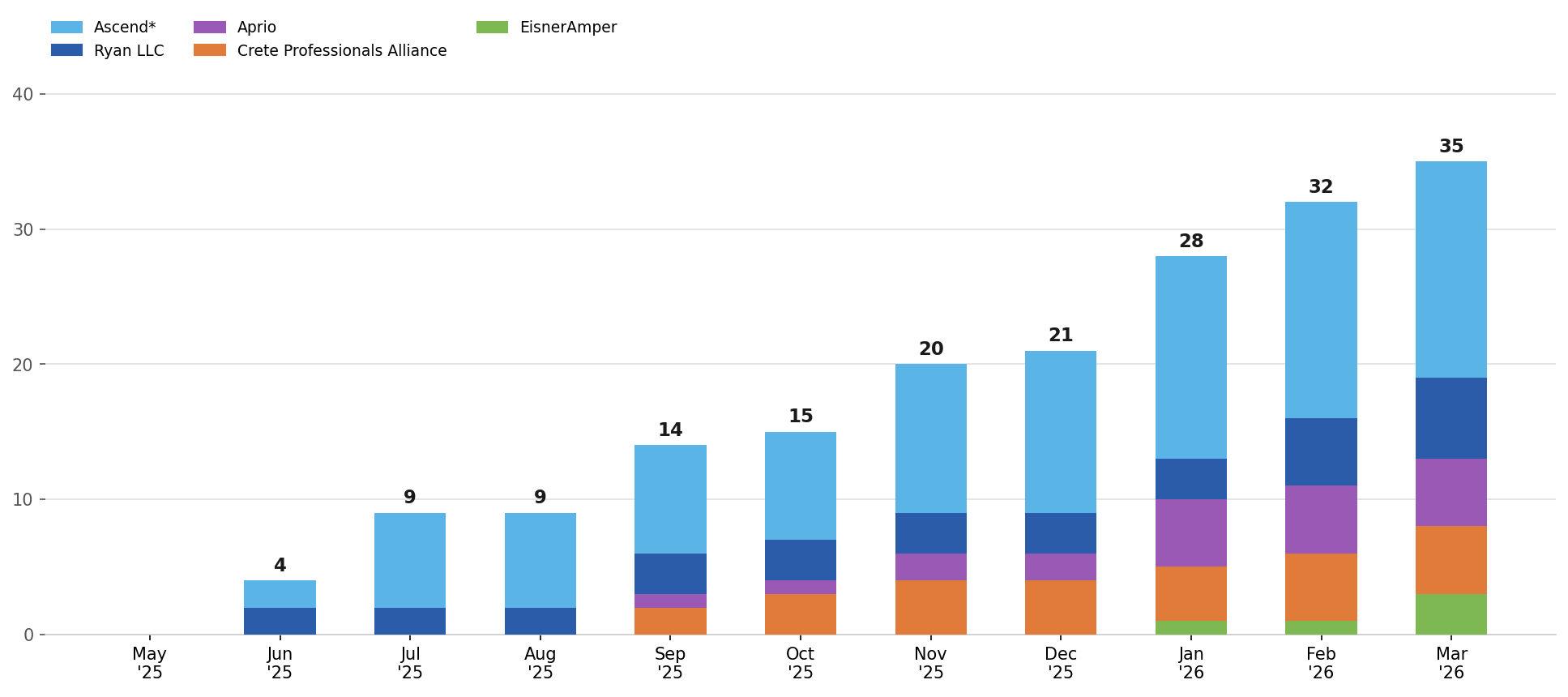
CPA Trendlines PE Deal Tracker: Mega-aggregators dominate the money flow as the race tightens between Ascend, Aprio, Crete, Eisner and Ryan. (Data: March 31, 2026)
By CPA Trendlines Research
The frantic pace of deal-making this past March marks a turning point. What had been described as a consolidation phase has matured into something more defined and more consequential: a platform-driven market in which a relatively small number of repeat acquirers are shaping the profession’s future.
MORE in Private Equity:
As the first quarter of 2026 closes, the story is no longer simply about transactions. It is about structure. The question has shifted from who is buying whom to which investment models, operating systems, and capital strategies will define the next decade of accounting.
For years, the prevailing narrative held that private equity would democratize the profession. Capital, it was said, would spread broadly across hundreds of firms, opening access to institutional funding that had never before been available. But the data tells a different story.
Why private equity may accelerate – not kill – entrepreneurship in accounting.
Big 4 Transparency
With Dominic Piscopo, CPA
Decimal CEO Matt Tait joins Dominic Piscopo to explain why his CAS firm is franchising its playbook, how it drives 50%-plus margins with queue-based delivery and daily book maintenance, and why private equity may accelerate – not kill – entrepreneurship in accounting.
MORE Dominic Piscopo | MORE CPA Trendlines Streaming Network
Tait says the biggest accounting story right now isn’t just AI, it’s the industry’s next operating model.
On the Big 4 Transparency, Tait says Decimal started as a “different” CAS and bookkeeping firm while simultaneously building an internal operating system for running a modern accounting shop. In under six years, Decimal has served 1,000+ businesses and grown to 100+ employees – and now it’s taking its playbook to market through franchising. READ MORE →