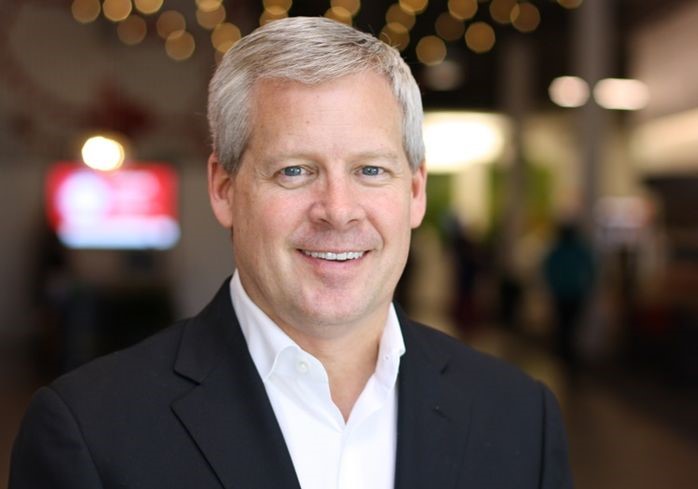
PE Deal Tracker Update: Alan Whitman Plants a Flag in the Private Equity Landscape
Top Trends, Benchmarks, and Deal Points.

By CPA Trendlines Research
Cornerstone Report
Top Trends, Benchmarks, and Deal Points.

By CPA Trendlines Research
Cornerstone Report
Ex-Baker Tilly CEO takes helm at a new “category” of CPA firm.
By Rory Henry CFP®, BFA™
For CPA Trendlines
When CPA firms talk about growth, the conversation often centers on acquisitions, headcount, or revenue targets.
But Alan Whitman, the ex-Baker Tilly CEO and newly named CEO of a private-equity-backed hybrid, says sustainable growth requires something deeper: clarity of strategy, shared language, and systems that enable people to perform at scale.
MORE Alan Whitman Plants a Flag in the Private Equity Landscape | Whitman: Build Culture on ‘Progress,’ Not Change | Moss Adams-Baker Tilly Merger: Bigger Isn’t Better. Better Is Better. | Rory Henry and The Holistic Guide to Wealth Management | The Holistic Guide to Wealth Management |
5 Advis-ROR® Takeaways
- Growth requires a mindset before metrics. Sustainable scale comes from changing how a firm thinks and operates, not just from chasing revenue, headcount, or deal volume.
- Strategy is about direction, not activity. Conferences, outreach, and initiatives only matter when they clearly support how the firm wants to be seen and who it is built to serve.
- Systems enable people to scale. Communication, sales, and talent engines allow firms to grow without relying on individual effort or burnout.
- Language creates alignment. Clarity about who the firm is and what it does helps teams make consistent decisions and reduces confusion as the organization expands.
- Leadership demands clarity over hope. Early success may come from hustle and hope, but long-term growth requires intentional structure, accountability, and shared understanding.
This episode of AFO Wealth Management Forward was recorded shortly before the public announcement of a new professional services platform that combines accounting and advisory firm Nichols Cauley with insurance brokerage Partners Risk Services and transaction advisory firm JGH Consulting. The new platform is supported by a strategic investment from private equity investment firm Madison Dearborn Partners. Whitman was named CEO of the combined platform. Widely known for his role in helping scale Baker Tilly into a national firm, Whitman says his leadership mindset is focused less on outcomes and more on the conditions that enabled growth.
Why equity is the new standard for talent retention.
Big 4 Transparency
By Dominic Piscopo, CPA
For CPA Trendlines
Jeremy Dubow, CEO and co-founder of Chicago-based, private-equity-backed Prosperity Partners, explains how entrepreneurship in accounting has shifted from demand-driven to capacity-constrained, and why transparent equity programs are becoming the new standard for talent retention.
MORE Dominic Piscopo | MORE Private Equity | MORE Pay & Compensation
Dubow joins Dominic Piscopo on Big 4 Transparency to discuss how accounting-firm entrepreneurship and the operating model required to scale have changed since he co-founded NDH in 2003. NDH later sold to private equity and rebranded as Prosperity Partners, which Dubow described as a case study in how firms are adapting to labor constraints, expanding client complexity, and rising expectations around technology and talent strategy.
Quotables
“The demand for accounting services is greater than it ever has been. The challenge is providing the service at a high level in a labor-constrained environment.”
“AI in and of itself is not right now the solution to solve all our problems. Using automation and offshoring gives us the operational leverage to create that capacity.”
“I recognize that my people are being attempted to be poached every single day of the year.”
“Why have a stock price if you don’t disclose what it is?”
“‘’If I worked that 80-hour week, you should too.’ Well, guess what? That doesn’t work anymore.”
Dubow argues the profession has shifted from a demand constraint to a capacity constraint. Client needs continue to expand, but firms increasingly struggle to staff and deliver services proactively at scale.
Most firms aren’t. Here’s how to change that.
The Disruptors
With Liz Farr
Brannon Poe, founder of Poe Group Advisors, says the key to a successful firm transaction is fit.
“I think having a good deal is really about having a good fit,” he says. Besides technical skills, “you have to have management styles that mesh well, you have to have client service philosophies that are aligned,” he explains.
MORE STREAMING: Oliver: Build a Biz that Runs Without You | Daiber: Use Succession as a Growth Strategy | Cannon: Busy Season is Self-Inflicted | Carroll: When One Person Can Break the Firm | Rampe: Build a Roadmap Even When the Road’s Not There | Chang: Killing SALY, One Agent at a Time | Vanover: 5-Star Firms Don’t Bill by the Hour | Kless: Profit Is a Result. Flourishing Is the Purpose | Whitman: Build Culture on ‘Progress,’ Not Change | Shein: No PE? No M&A? No Problem | Hood and Weber: Time to RISE | Proctor: Turn Dumb Ideas into Brilliant Solutions | Carter-Gray: How 1 Poor Review Strengthened the Firm | Hartman: Upwork to “40 Under 40” in 3 Years |
Exclusively for PRO Members. Log in here or upgrade to PRO today.
For sellers, choosing the right buyer matters as much as the price. “I find that the sellers in particular, who keep their focus on fit and choose the right buyer, usually are the happiest with their exit.”
The last few years have created favorable conditions for accounting firm sales, but not for everyone.