The CPA PE Deal Tracker™ from CPA Trendlines Research now follows 525 events, including 473 acquired firms, across about 72 platforms and 69 capital sources. All reaching back to 2016.
The consolidation now represents $49 billion in transacted enterprise value, on about $24 billion in annual revenue and close to 96,000 working accountants and staff.
Venture capital crashes the private equity party in accounting.
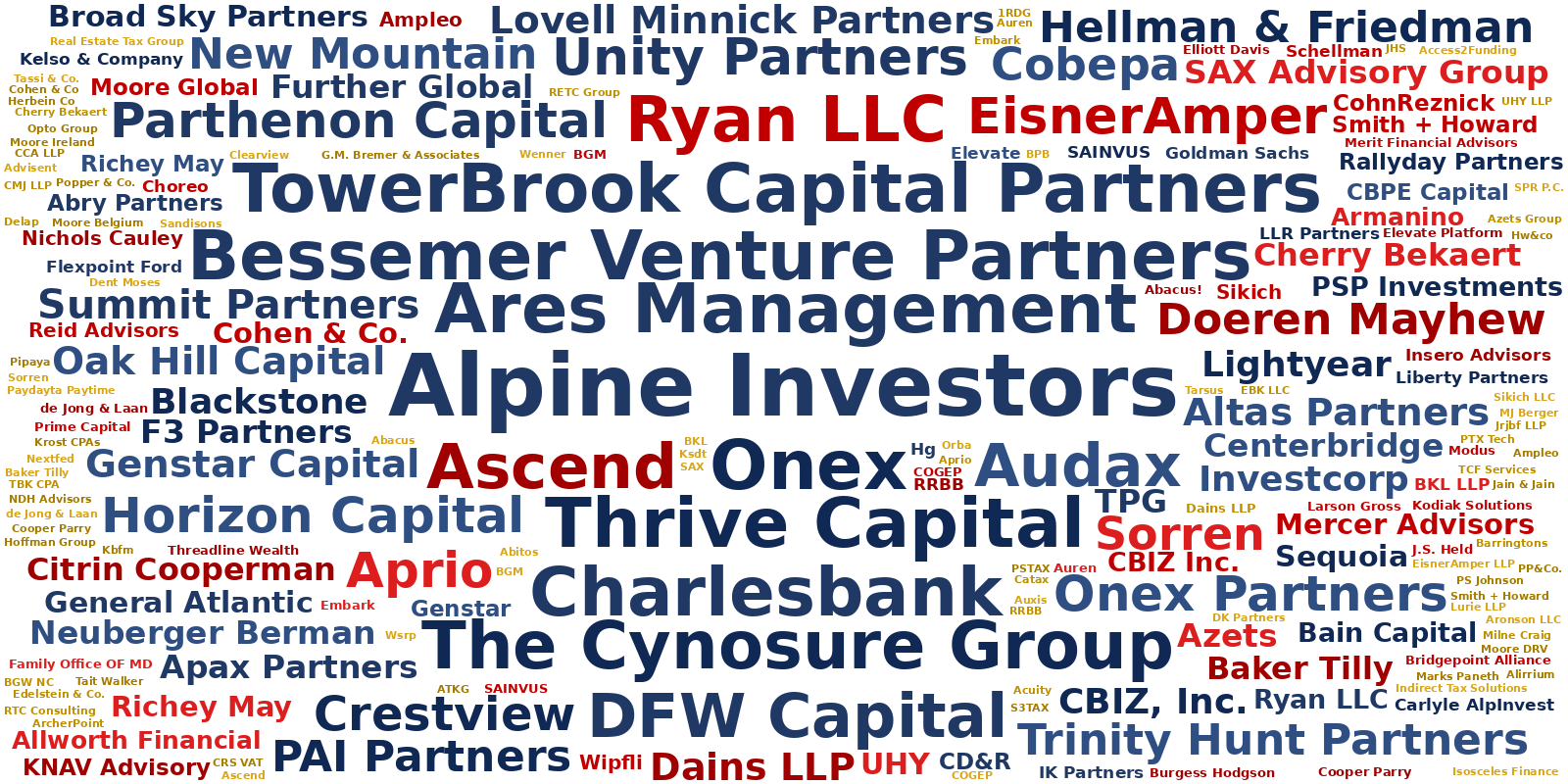
Consolidation constellation: Sponsors in blue, platforms in red, targets in gold.
By CPA Trendlines Research
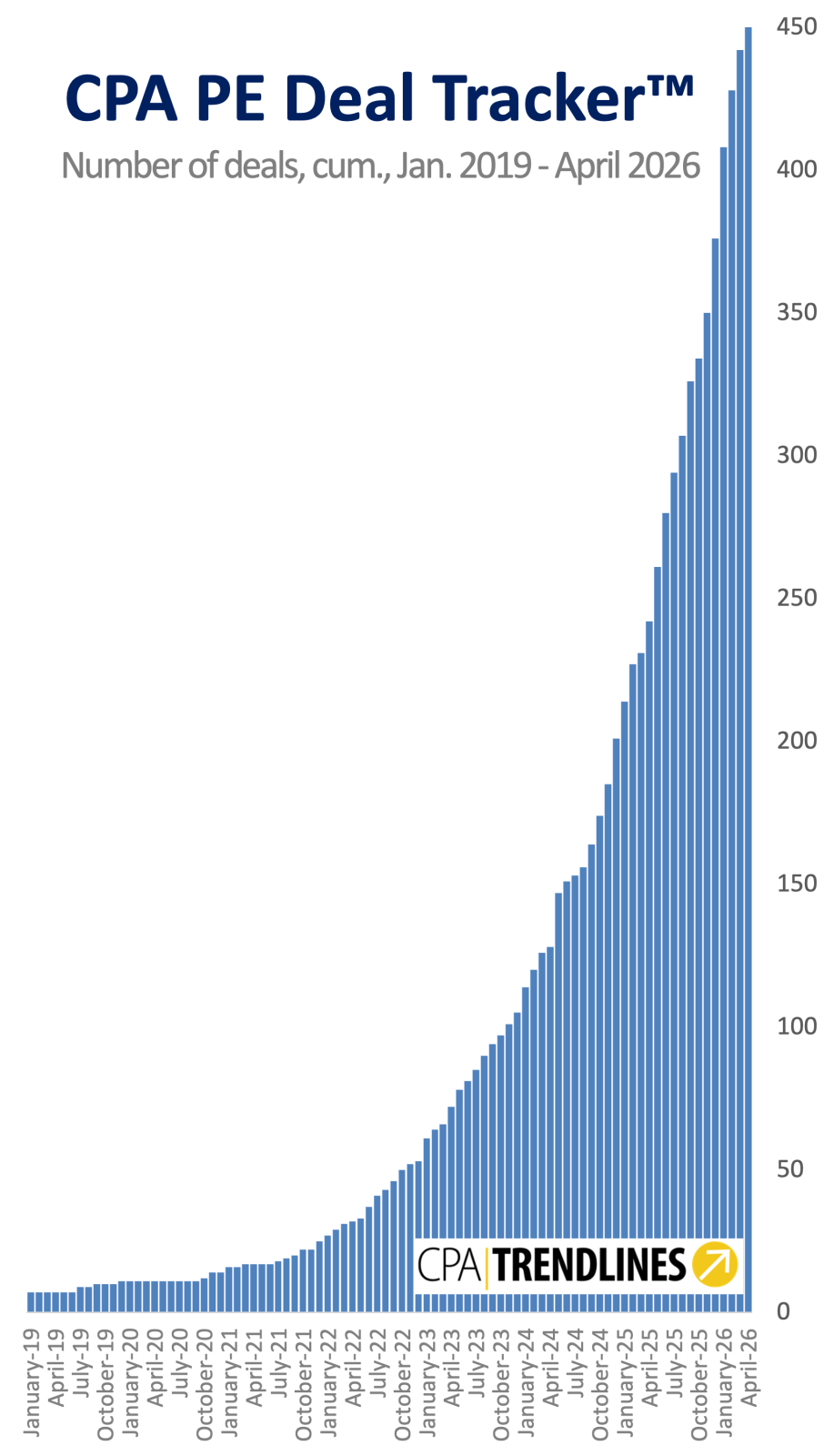
The CPA Trendlines CPA PE Deal Tracker™ shows the steep rise in deal flow, hitting more than 450.
Private equity’s push into accounting is entering a new and more complicated phase: platform building, sponsor recycling, technology investments, blended tax and wealth services — and now, a new pipeline of cash from venture capital.
This month’s CPA Trendlines CPA-PE Deal Tracker™ shows nine new deals in April, down from the first-quarter deal-closing frenzy but bringing the year-to-date deal count through April 30 to 78, well ahead of the 44 logged in the same window of 2025.
The broader verified dataset now includes 452 in-scope events, giving CPA Trendlines a clearer view of what private capital is doing after its first wave of accounting-firm investments.
The latest data does not show a retreat. It shows a transformation. The new gambits go well beyond roll-ups, and include service line extensions, corporate carve-outs, cross-industry tie-ups, recapitalizations, continuations and a buzzy new venture-backed startup.
World domination
The deal models are sprawling in all directions as big money battles for a dwindling number of prime firms and squeezes for synergies in the firms they’ve acquired.
In the mix, accounting is morphing from a profession into a platform. A launchpad from which to sell a growing, and traditionally conflict-laden, range of products and services. From tax planning to wealth management, from outsourced accounting systems to internal audit, and from risk management to insurance sales.
A once incongruous, even contradictory, collection of services are being acquired, aligned and advanced. The ambition is market encirclement. The impulse is world domination.
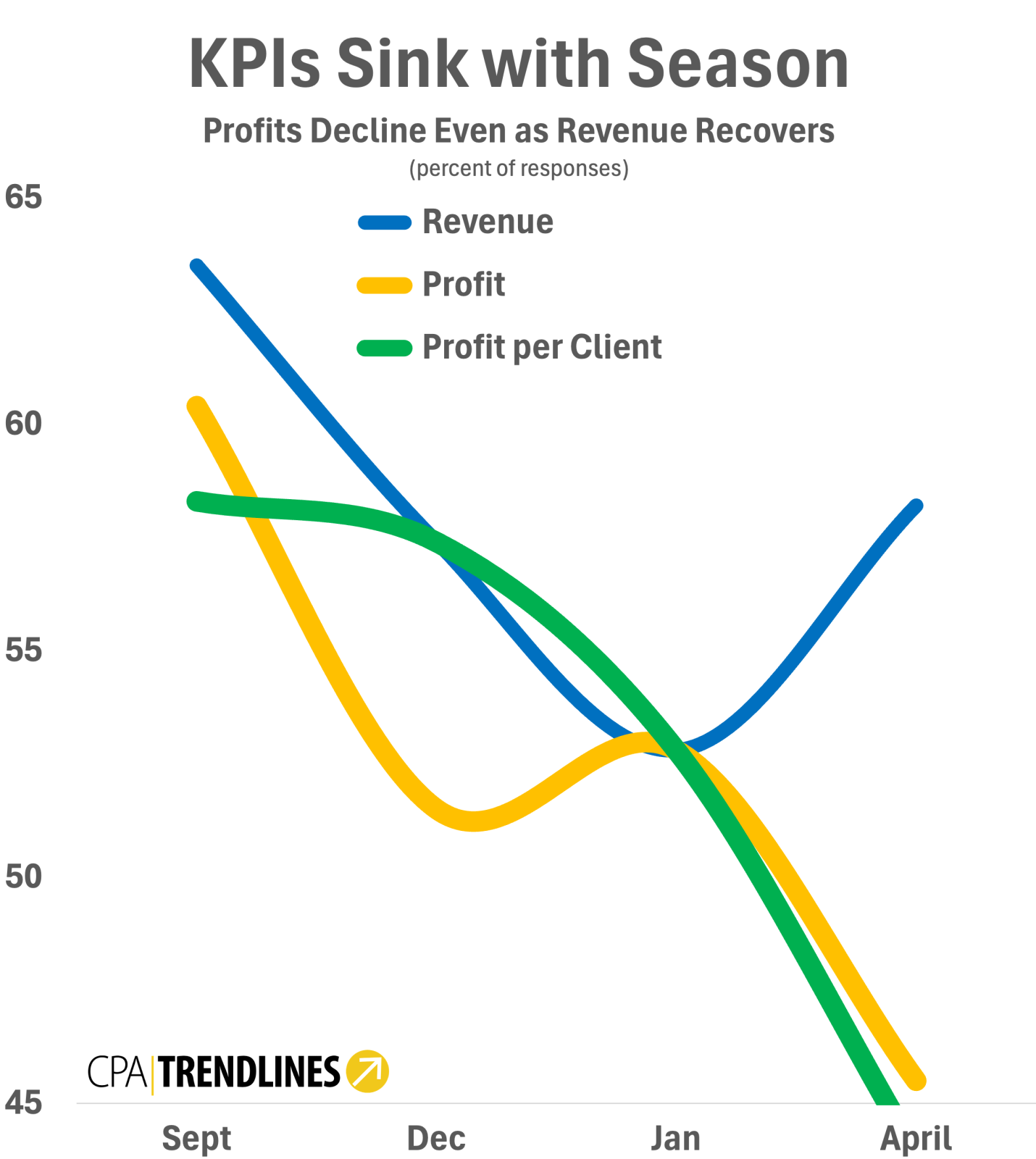
Revenue expectations held through the season, while profit expectations declined sharply, creating today’s widening margin gap. (CPA Trendlines Busy Season Barometer 2026)
By CPA Trendlines
Across every major metric, CPA Trendlines is finding the same pattern: Firms are doing more work and generating more revenue — but keeping less of it.
The dynamic was unearthed in gory detail by the Busy Season Barometer. fron-inr \isteb=ning from The Busy Season Barometer. The numbers through tax season didn’t break all at once. Instead, they had been drifting apart. READ MORE →
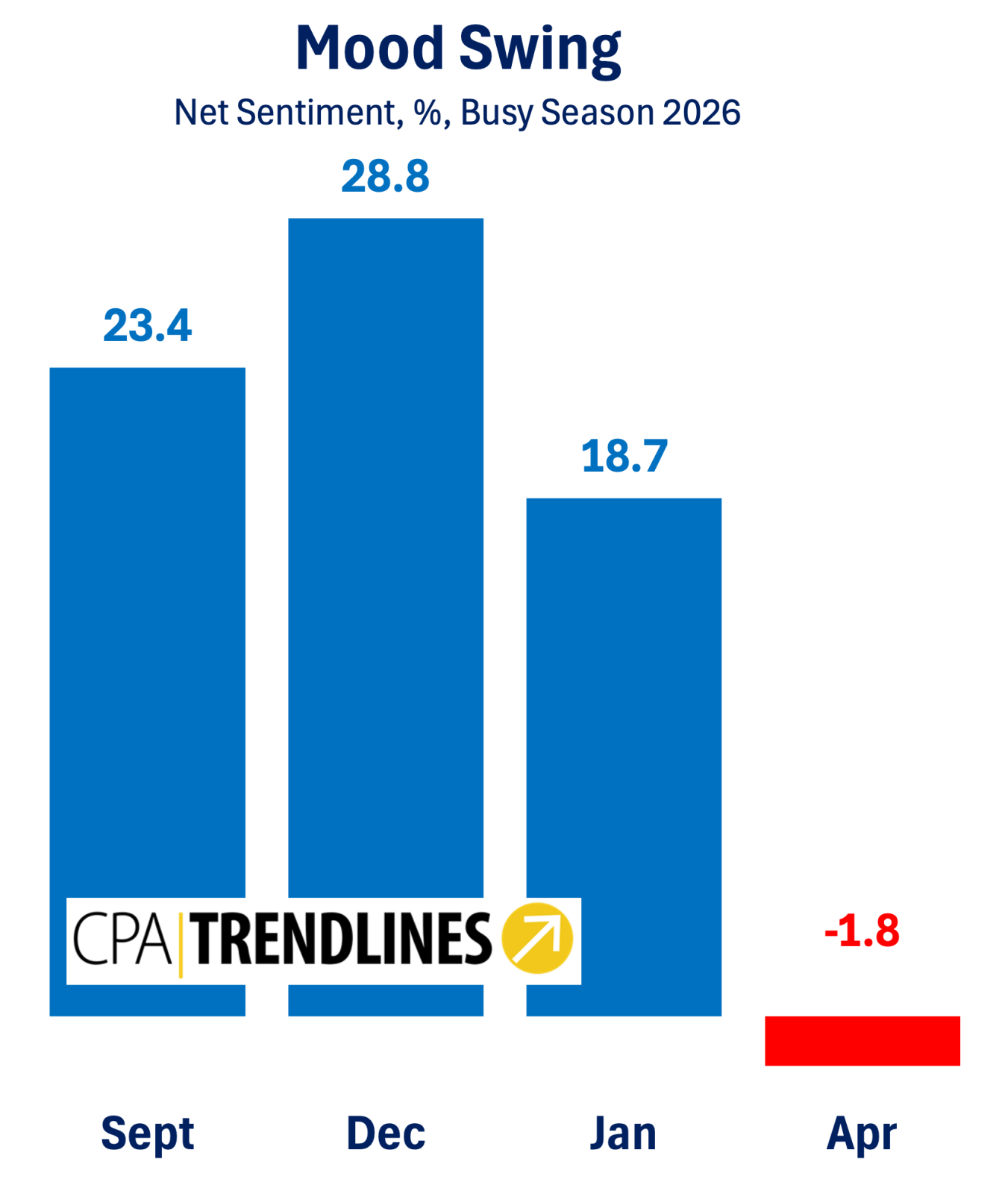
The 30-point swing: Accountants close the season feeling slightly negative, at minus 1.8, a collapse of more than 30 points.
The Busy Season Barometer Shows Exactly When—and Why.
By CPA Trendlines
After starting near historic highs, sentiment among tax professionals fell more than 30 points by April, as workload, client behavior and system failures overwhelmed expectations.
By December, sentiment among tax professionals had climbed to a positive 29.8—the strongest reading in the CPA Trendlines Busy Season Barometer cycle. A majority expected better conditions. Few anticipated what came next.
By April, that optimism had vanished.
Accountant attitudes closed the season slightly negative, around -1 to -1.8, marking a swing of more than 30 points in four months.
It was one of the sharpest same-season reversals in the Barometer’s 24-year history, and it followed a pattern practitioners have seen before: expectations rising in the fall, then breaking under the weight of the season itself.
The difference in 2026 was the speed—and the causes.
There is a ritual to tax season. It begins with anticipation dressed as control.
Practitioners tally the risks — the IRS, the law, the clients who will not deliver on time — and tell themselves this year will be different. Then the season starts. And it isn’t.
The CPA Trendlines Busy Season Barometer tracks that ritual across waves of surveys from September 2025 through April 2026 with more than 300 respondents.
The data show not a profession in crisis, but a profession under stress. Where pressures no longer arrive one at a time but stack up on each other. Where external shocks have been absorbed, and internal limits have come into view.
Tax season is full of noise, chaos and confusion. But a close look at the Busy Season Barometer from this year – and going back more than 20 years – can cut through the fog for the patterns, trends, insights and, most of all, the tough lessons learned.
Tax season 2026 gives us at least 21 essential takeaways.
Busy Season 2026 sets up a year of tough decisions about monumental transformations.
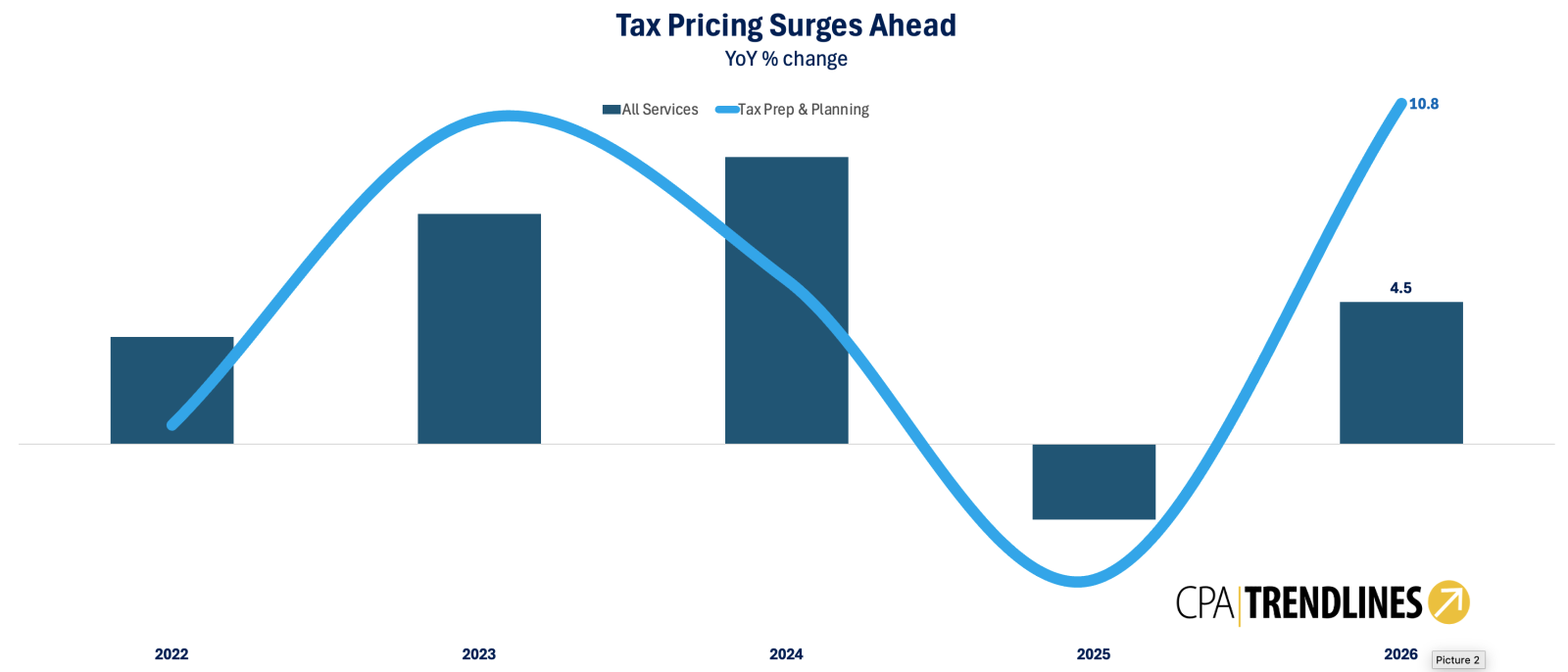
Busy Season 2026: Billing rates for tax prep and planning are increasing at a 10.8% year-over-year rate, rushing past the average tax and accounting fee increase of 4.5%.
By CPA Trendlines
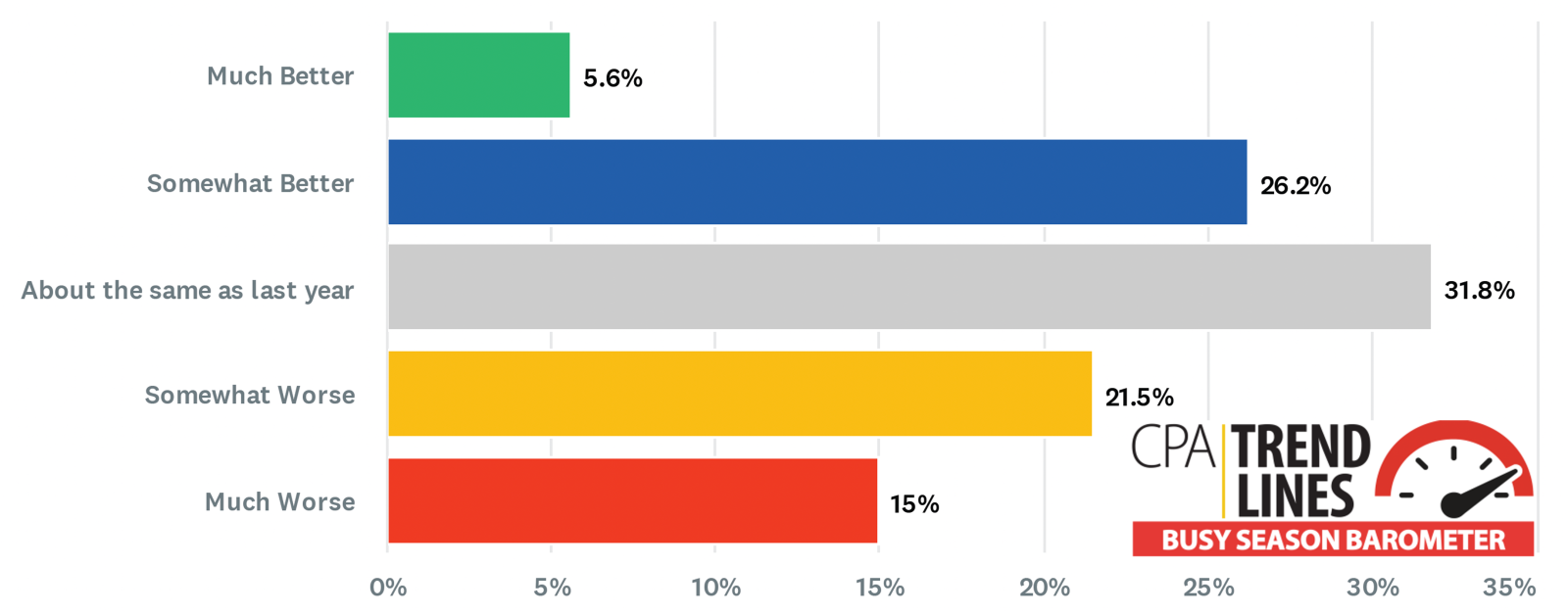
Busy Season 2026: Tax professionals struggle to improve systems and metrics, with “much worse” beating “much better” by three to one.
As tax season 2026 comes to a close, new data show that price hikes for tax prep and planning are running at double-digit rates, even as billing rates for most other accounting services are flattening out, according to new CPA Trendlines research in conjunction with the annual Busy Season Barometer.
Tax practitioners are finishing the season as a divided profession, with fewer than 6% reporting a “much better” year, against almost three times that many reporting a “much worse” year.
Coming out of tax season, many firms are facing major decisions in the coming months driven by new artificial intelligence investments, a fundamental shift in staffing models, and private equity disruptions.
New workflow systems expected to cut labor problems and shore up profit margins.
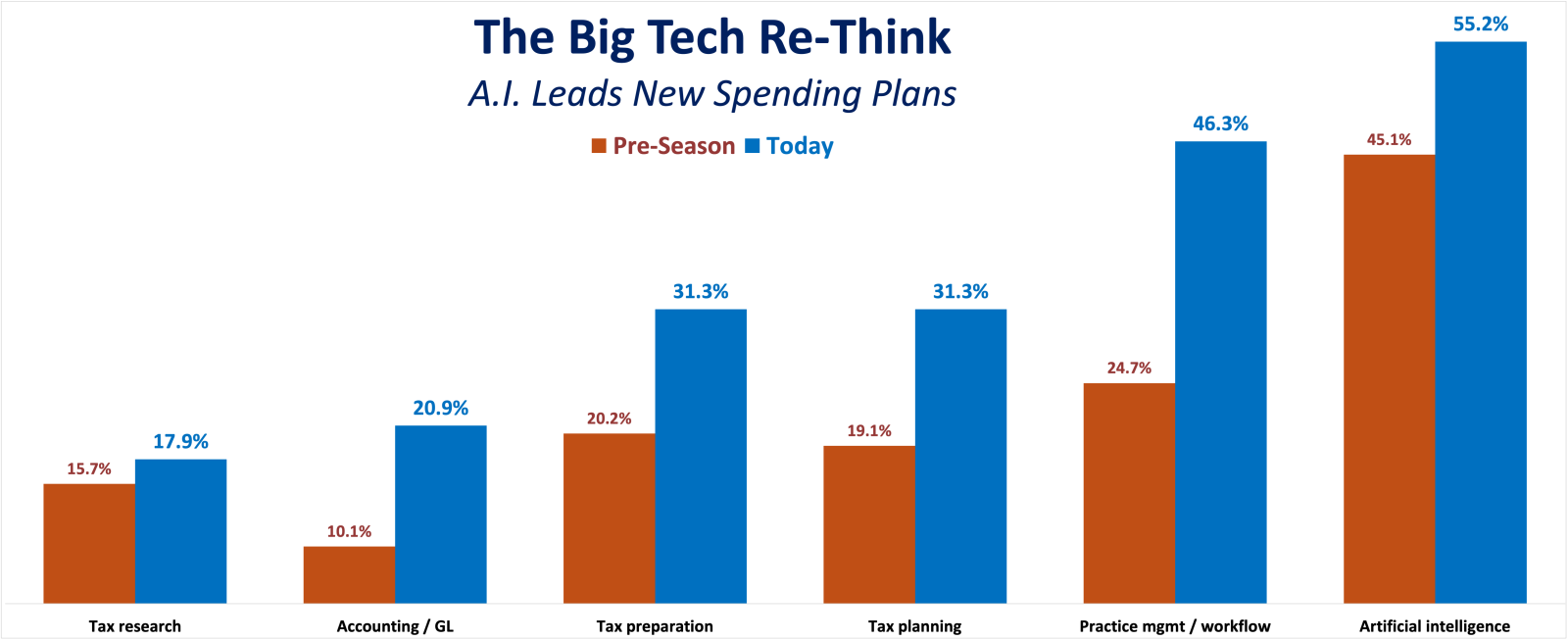
Coming out of tax season, more than 55% of firms are looking for new artificial intelligence solutions, up 10 points from before the season. The scramble for practice management and workflow solutions has almost doubled. (CPA Trendlines Research)
By CPA Trendlines Research
The CPA Trendlines Busy Season Barometer shows accounting firms are already planning changes to their technology and workflows, aiming to address the same pressures that defined this year’s busy season.
The research points to a profession broadly aligned with what needs to change, but much less aligned with how quickly those changes can be put into practice.
Firms across the spectrum, whether reporting a better or worse tax season, identify similar priorities: improving efficiency, reducing manual work and making better use of technology.
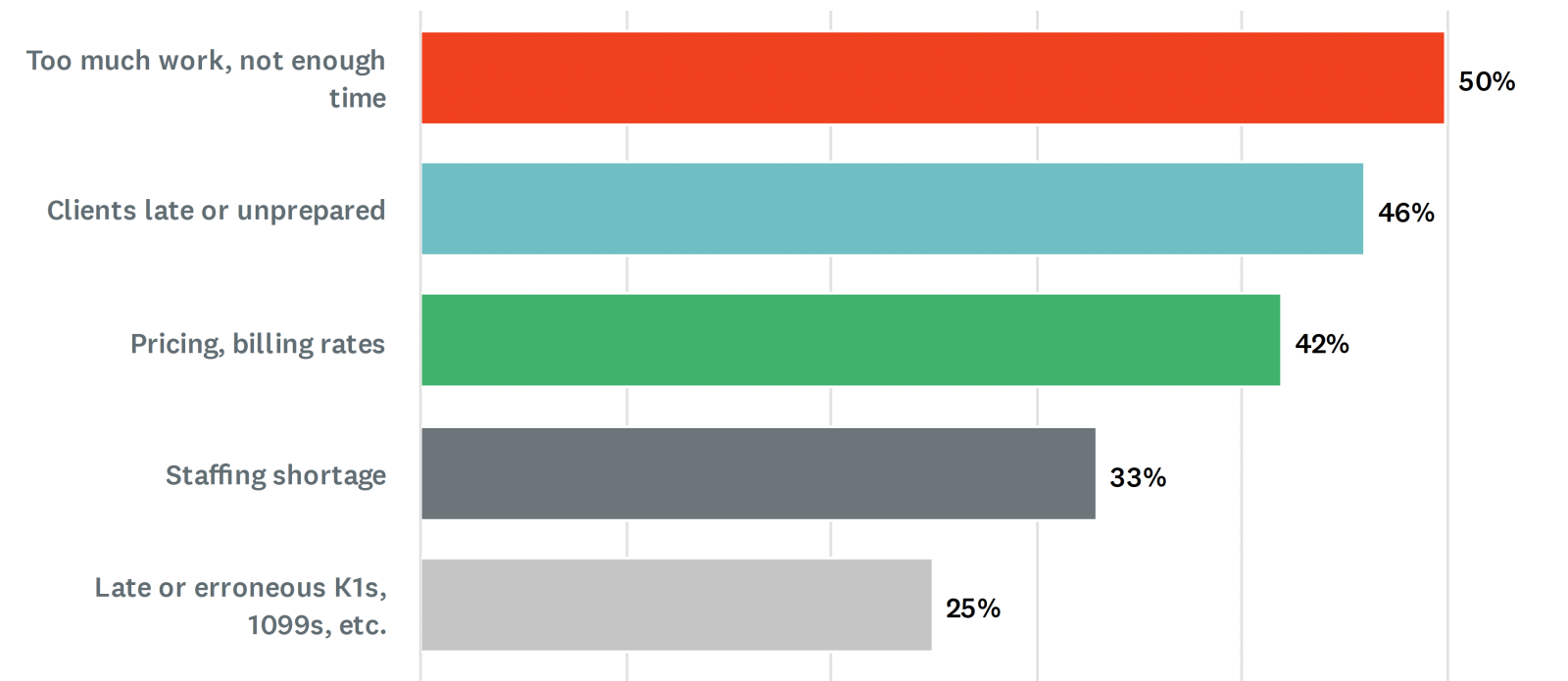
Top concerns: “The returns aren’t harder—they’re just later.” (CPA Trendlines Busy Season Barometer)Join the survey. Get the results.
By CPA Trendlines Research
The 2026 tax season shows some gradual improvement for certain firms, but most practitioners report conditions that remain largely unchanged from a year ago, according to the latest data from the CPA Trendlines Busy Season Barometer.
The good news is: 2026 hasn’t turned into the disaster some were expecting with a new tax law and diminished IRS. The bad news is: 2026 is turning into a relatively routine year — without the advances in workflow or the better margins from higher-value services that some were hoping for.
After hundreds of deals, the data show a gravitational pull toward a handful of buyers now driving the profession’s future.
Five Top Power Players
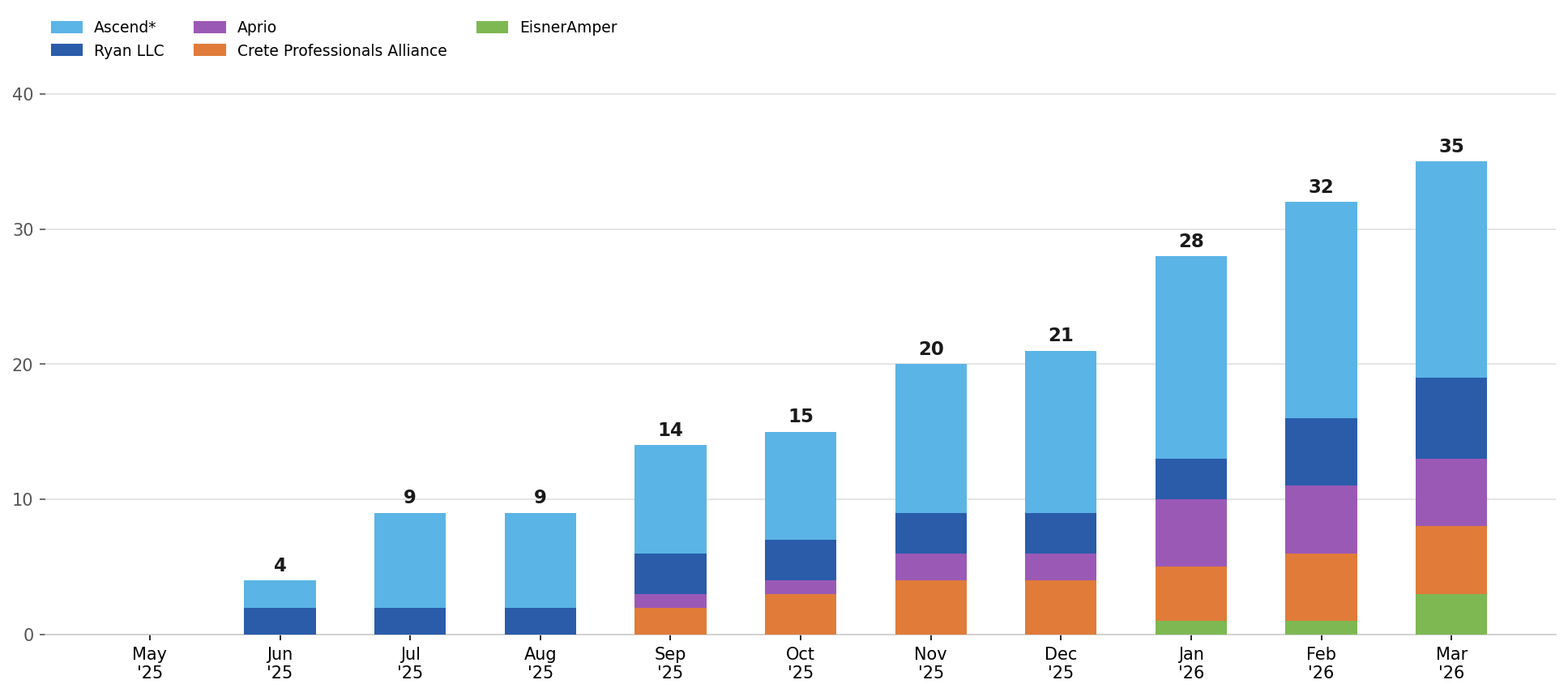
CPA Trendlines PE Deal Tracker: Mega-aggregators dominate the money flow as the race tightens between Ascend, Aprio, Crete, Eisner and Ryan. (Data: March 31, 2026)
By CPA Trendlines Research
The frantic pace of deal-making this past March marks a turning point. What had been described as a consolidation phase has matured into something more defined and more consequential: a platform-driven market in which a relatively small number of repeat acquirers are shaping the profession’s future.
As the first quarter of 2026 closes, the story is no longer simply about transactions. It is about structure. The question has shifted from who is buying whom to which investment models, operating systems, and capital strategies will define the next decade of accounting.
For years, the prevailing narrative held that private equity would democratize the profession. Capital, it was said, would spread broadly across hundreds of firms, opening access to institutional funding that had never before been available. But the data tells a different story.
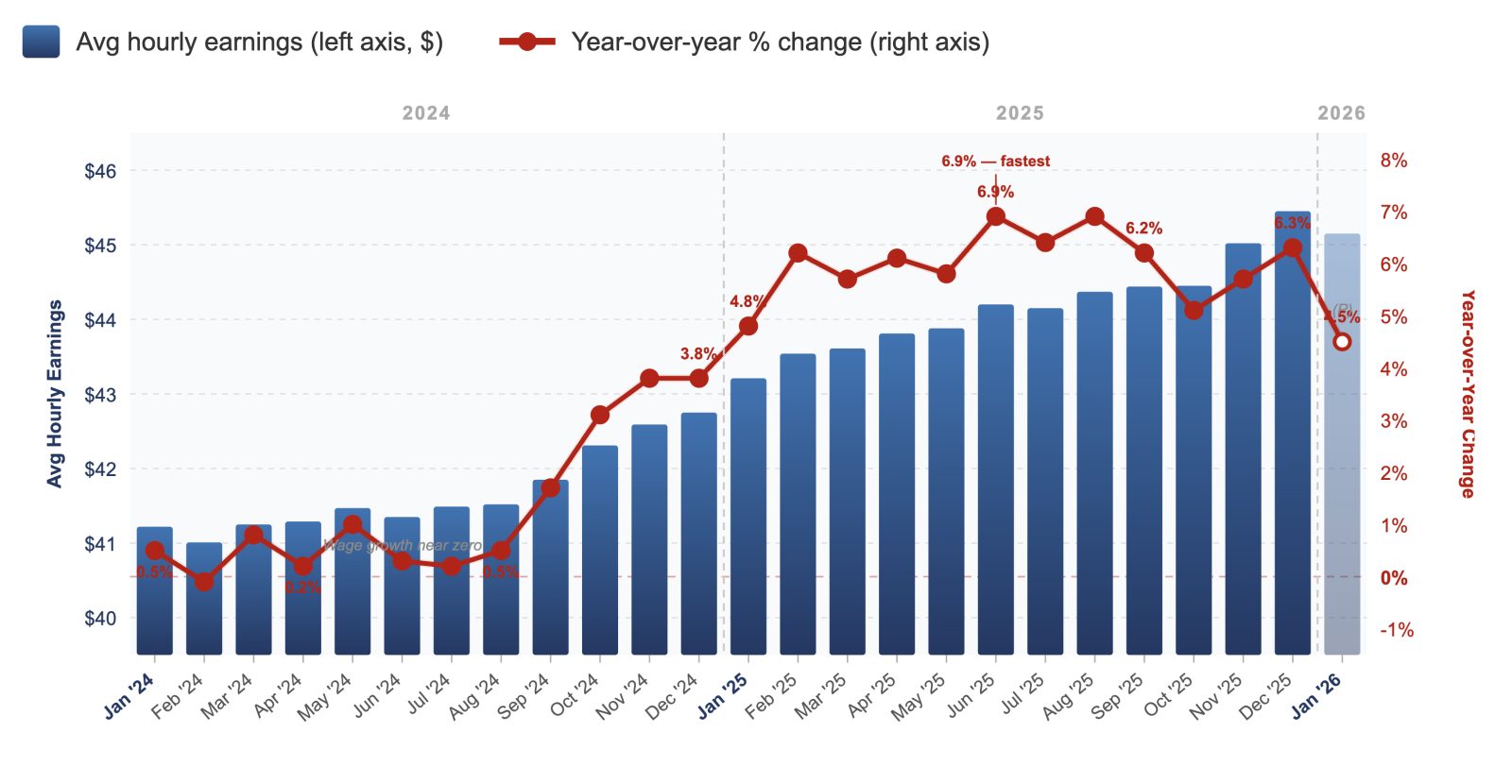
Wages for accountants and tax preparers are rising far faster than hiring as the 2026 filing season begins, even as early filing volumes trail last year’s pace.
Average hourly earnings in the accounting and tax preparation sector rose roughly 4 percent to 6 percent year over year, pushing pay for many accountants above $45 per hour, while employment across the tax and accounting sector is increasing only a few tenths of a percent.
If current trends hold, the accounting industry will process about 150 million individual tax returns in 2026 — roughly 0.4 percent more than last year — with nearly the same number of workers..
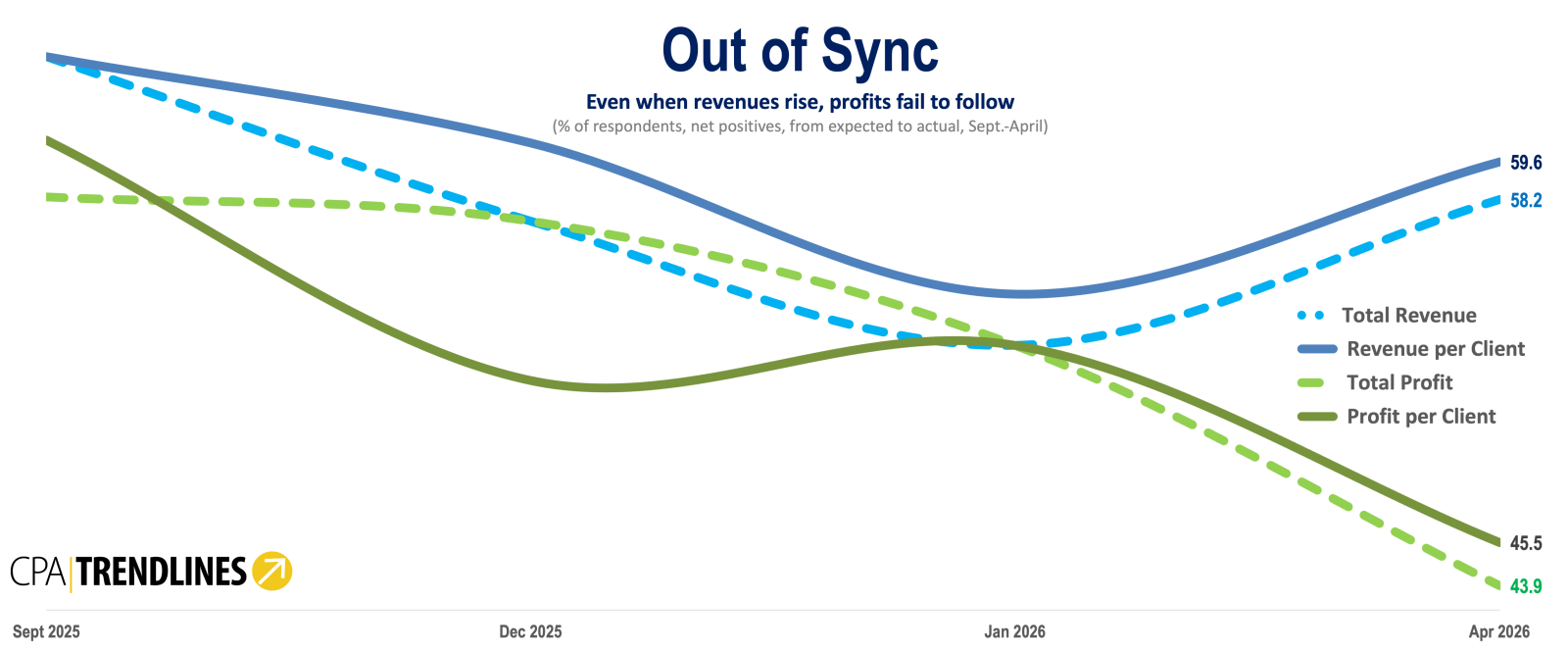
 Across every major metric, CPA Trendlines is finding the same pattern: Firms are doing more work and generating more revenue — but keeping less of it.