Jen Cryder: From Membership Model to Market Maker | Big 4 Transparency

State societies can evolve into engines of innovation, education, and workforce resilience.

This is a preview. The complete video episode, with commentary and transcript, is first available exclusively to PRO Members | Go PRO here
Sponsored by The Balanced Millionaire: The Advisor Edition by Dr. Jackie Meyer | See Today’s Special Offer

Subscribe to CPA Trendlines podcasts anywhere: Apple, Google/YouTube, Spotify, iHeart, Deezer, Amazon Music, Audible, Player FM, Audacy, RSS.
Build a 7-figure firm in just 4 hours a week!
.

Big 4 Transparency
By Dominic Piscopo, CPA
For CPA Trendlines

At a time when the accounting profession is undergoing its most rapid transformation in decades, Jen Cryder, CEO of the Pennsylvania Institute of Certified Public Accountants (PICPA), is quietly redefining what a state CPA society can (and arguably should) become. 

MORE Dominic Piscopo | MORE Private Equity | MORE Pay & Compensation

In this episode of the Big 4 Transparency Podcast, Cryder joins host Dominic Piscopo to discuss how advocacy, revenue diversification, and technology investment are converging to reshape the future of the CPA profession. 

Cryder, who spent 15 years in public accounting before joining PICPA more than a decade ago, now finds herself at the center of national conversations around licensure reform, continuing professional education (CPE), and the evolving definition of what it means to be a CPA. While state societies have historically focused on a relatively narrow set of services, Cryder argues that the profession’s accelerating rate of change has expanded that mandate dramatically. “For most of our 130-year history, the definition of a CPA was fairly static,” she notes. “In just the last few years, that list of issues has become infinite.” 

READ MORE →

Three Tech Priorities with Rapid ROI

Build advisory capacity without waiting for outside capital.

By Hitendra Patil

The technology gap between private equity-backed and independent firms is real, and it is also smaller than it appears from the outside.

Here is something I have consistently observed: PE-backed firms invest heavily in technology during their first 18 to 24 months post-acquisition because they have to. They are merging systems from multiple firms, migrating client data and standardizing workflows across a larger organization. That investment is substantial, but a meaningful portion of it solves problems that independent firms do not have, because they were never acquired in the first place.

MORE by Hitendra Patil
GoProCPA.comExclusively for PRO Members. Log in here or upgrade to PRO today.


The independent firm’s technology challenge is different: deliberate modernization at a pace that does not disrupt client service. That is a more tractable problem than integration at scale, and the firms that treat it as a sequenced project tend to close the gap faster than they expected.
READ MORE →

Make Clients Feel Seen, Heard and Helped

three magnifying glasses leaning on sidesUse a three-lens model for CAS conversations.
By Hitendra Patil

Many client accounting services professionals are eager to offer “advisory,” but they sometimes struggle to make their conversations truly feel like advice. The tools are available, and the data is clean, yet something still feels a bit off.

MORE by Hitendra Patil
GoProCPA.comExclusively for PRO Members. Log in here or upgrade to PRO today.


Why? Because most client interactions rely on reactive reporting, when they should be guided by proactive exploration, and that’s the problem. CAS is far more than just about what you say. It’s about how your insights meet your client’s world.
READ MORE →

Make Your Clients Look Forward to Meeting with You

illustration of the progression of economic value

Every interaction is an opportunity.

By Rory Henry
The Holistic Guide to Wealth Management

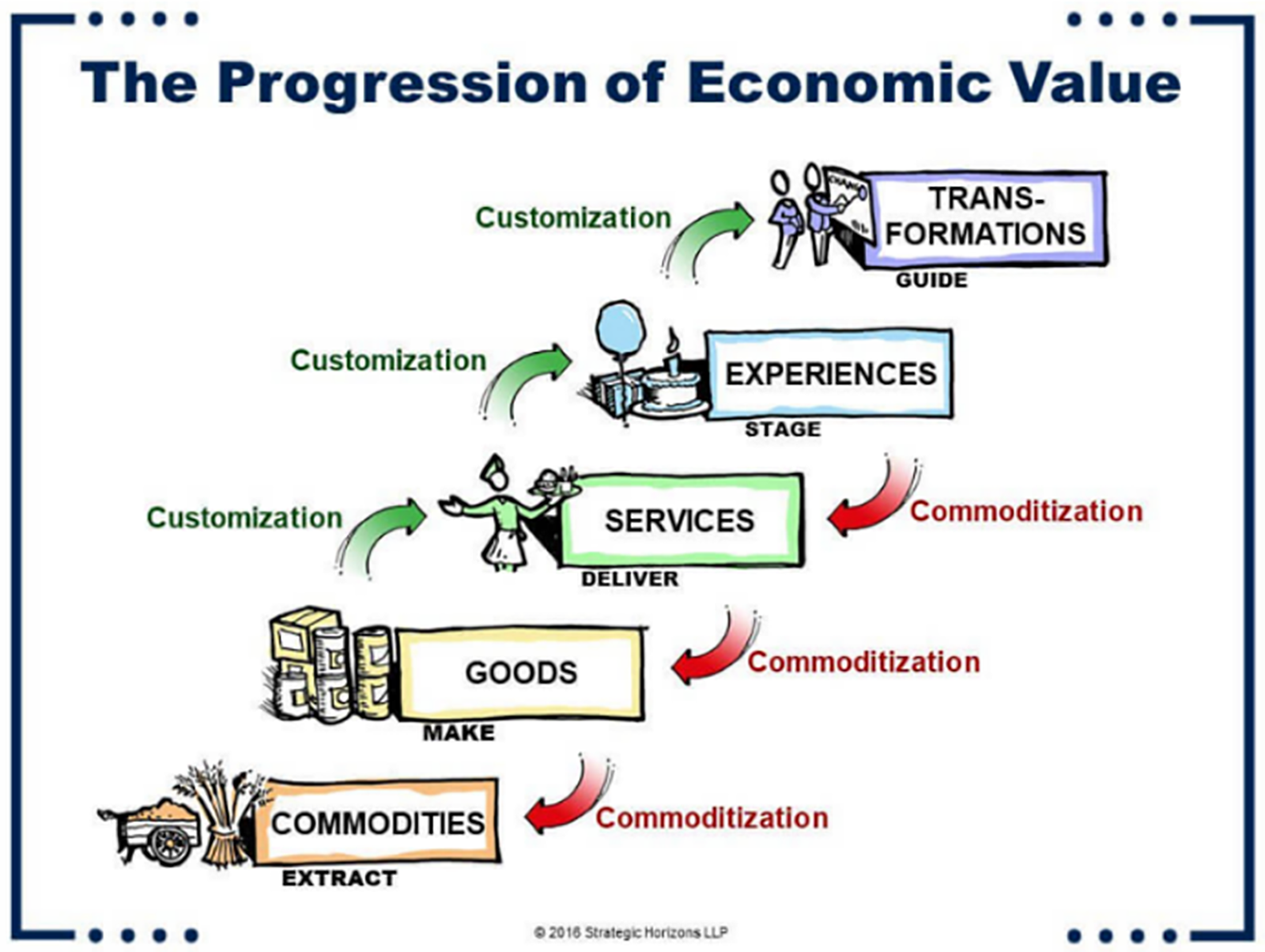
In tracing the trajectory of economic evolution, each phase represents a profound transformation, often driven by technological advancements. For instance, the Industrial Revolution transformed the U.S. from an agrarian economy to a manufacturing economy that created tangible assets (i.e., finished goods) out of raw materials. In recent decades, the U.S. went through a digital revolution, moving us from a manufacturing economy to a service-based economy that produces intangible assets.

MORE Rory Henry and The Holistic Guide to Wealth Management
GoProCPA.comExclusively for PRO Members. Log in here or upgrade to PRO today.


This shift was emblematic of a broader transition from making tangible goods to delivering intangible services. The service economy burgeoned, with a focus on delivering services, e.g., tax services, financial services and estate planning legal services.

Now, we are in the midst of another paradigm shift. Artificial intelligence (AI) is transforming us from a service economy to one based on providing the consumer with experiences and guiding them through life transformations. The AI era is not just about automating routine tasks, but fostering an environment in which we transcend traditional service delivery.
READ MORE →

The Google Playbook for Young Accountants | Accounting Conversations

Networking, timing, and intentional career planning help candidates stand out in competitive hiring processes.

Sponsored by True Advisor: The Definitive Success Guide for Client Advisory Services by Hitendra Patil |
See Today’s Special Offer

Subscribe to CPA Trendlines podcasts anywhere: Apple, Google/YouTube, Spotify, iHeart, Deezer, Amazon Music, Audible, Player FM, Audacy, RSS.
The step-by-step operating guide for firms building, pricing, and scaling advisory services that clients value—and pay for.

Accounting Conversations
With Chayton Farlee
Center for Accounting Transformation

For many accounting students, the profession can seem narrowly defined by tax returns, audit rooms, and busy season deadlines. But according to Mike Manalac, CPA, accounting can also become a pathway into some of the world’s most innovative companies and industries.

In a recent episode of Accounting Conversations, host Chayton Farlee speaks with Manalac about how young accounting professionals can strategically leverage public accounting experience to build careers at companies like Google, Tesla, Uber, and Salesforce. 

MORE Podcasts

Manalac, an accounting manager at Google, currently leads a distributed team working on Google Search and YouTube advertising contracts. His role involves collaborating with engineering, legal, sales, finance, and compliance teams across the organization.

Farlee, an assurance associate at CliftonLarsonAllen, says conversations like these are important because many students are not exposed to the full range of accounting career opportunities.

READ MORE →