

Ask CPA Trendlines
Now, with smarter search, deeper analysis, more detailed responses (v.2.7).

Independence vs. Transacting: The Facts Behind Each Pathway,
with Bob and Doug Lewis, Visionary Group
May 13, 4-5 pm ET
Register here | Learn more
New report finds outdated systems are limiting growth.

From CPA Trendlines
Sponsored by Ace Cloud Hosting
Now, with smarter search, deeper analysis, more detailed responses (v.2.7).
The Numbers Explain Why 2026 Feels So Difficult.
By CPA Trendlines
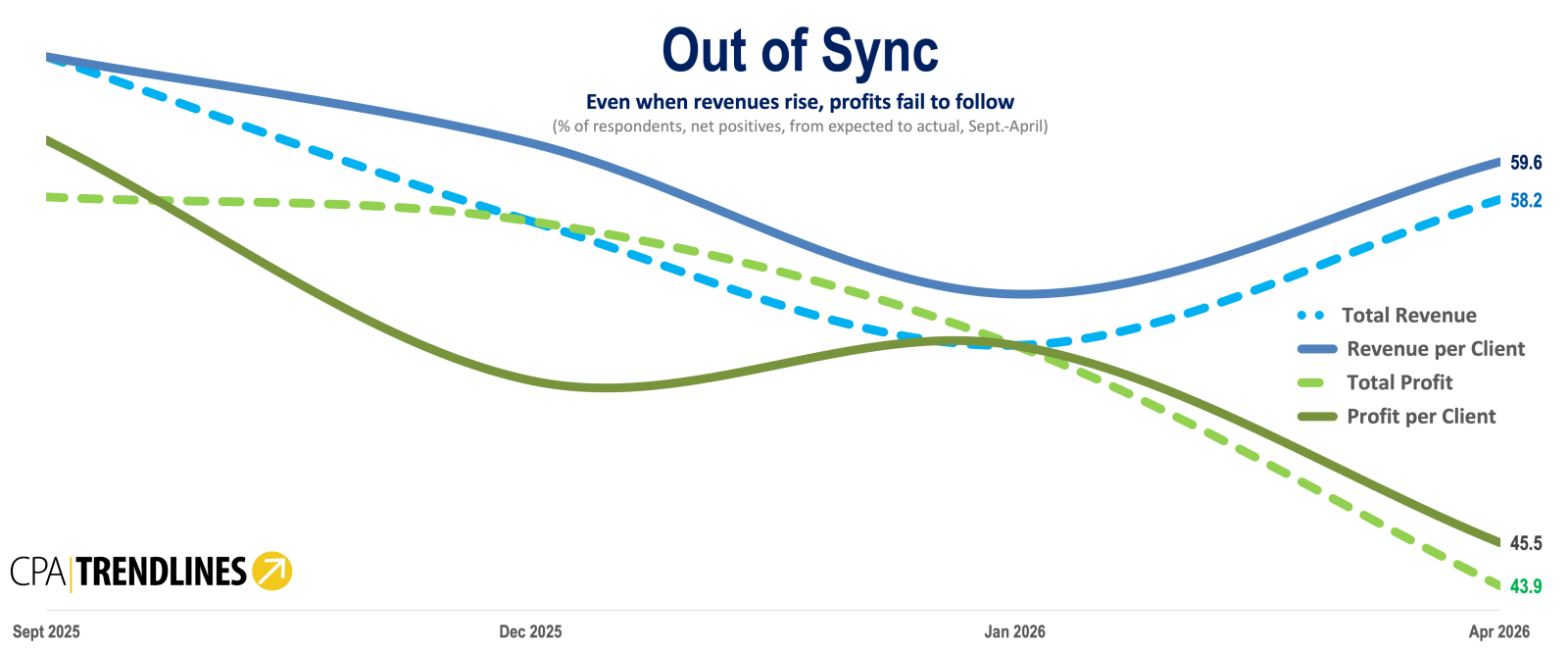
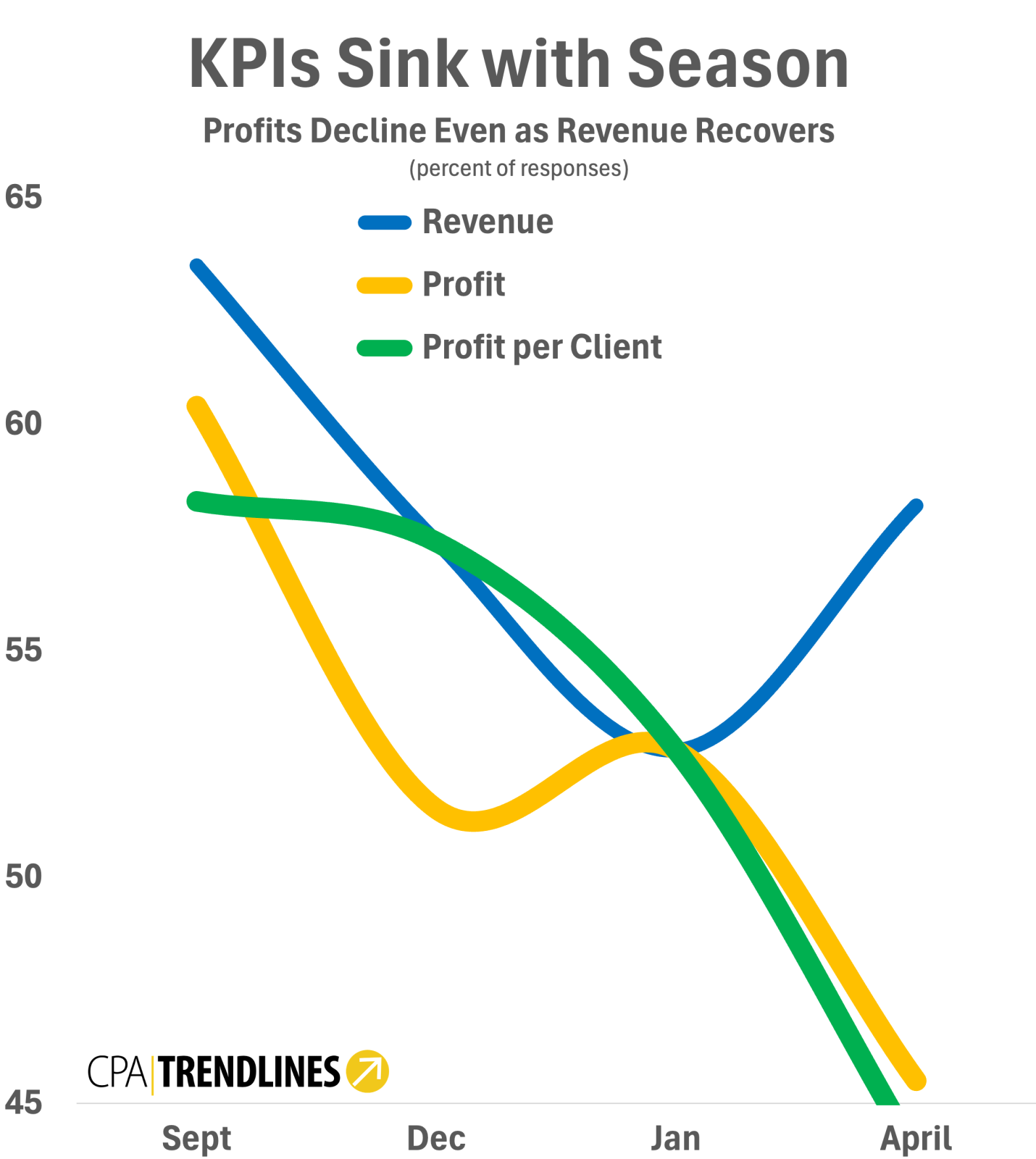
 Across every major metric, CPA Trendlines is finding the same pattern: Firms are doing more work and generating more revenue — but keeping less of it.
The dynamic was unearthed in gory detail by the Busy Season Barometer. fron-inr \isteb=ning from The Busy Season Barometer. The numbers through tax season didn’t break all at once. Instead, they had been drifting apart. READ MORE →
The Busy Season Barometer Shows Exactly When—and Why.
By CPA Trendlines
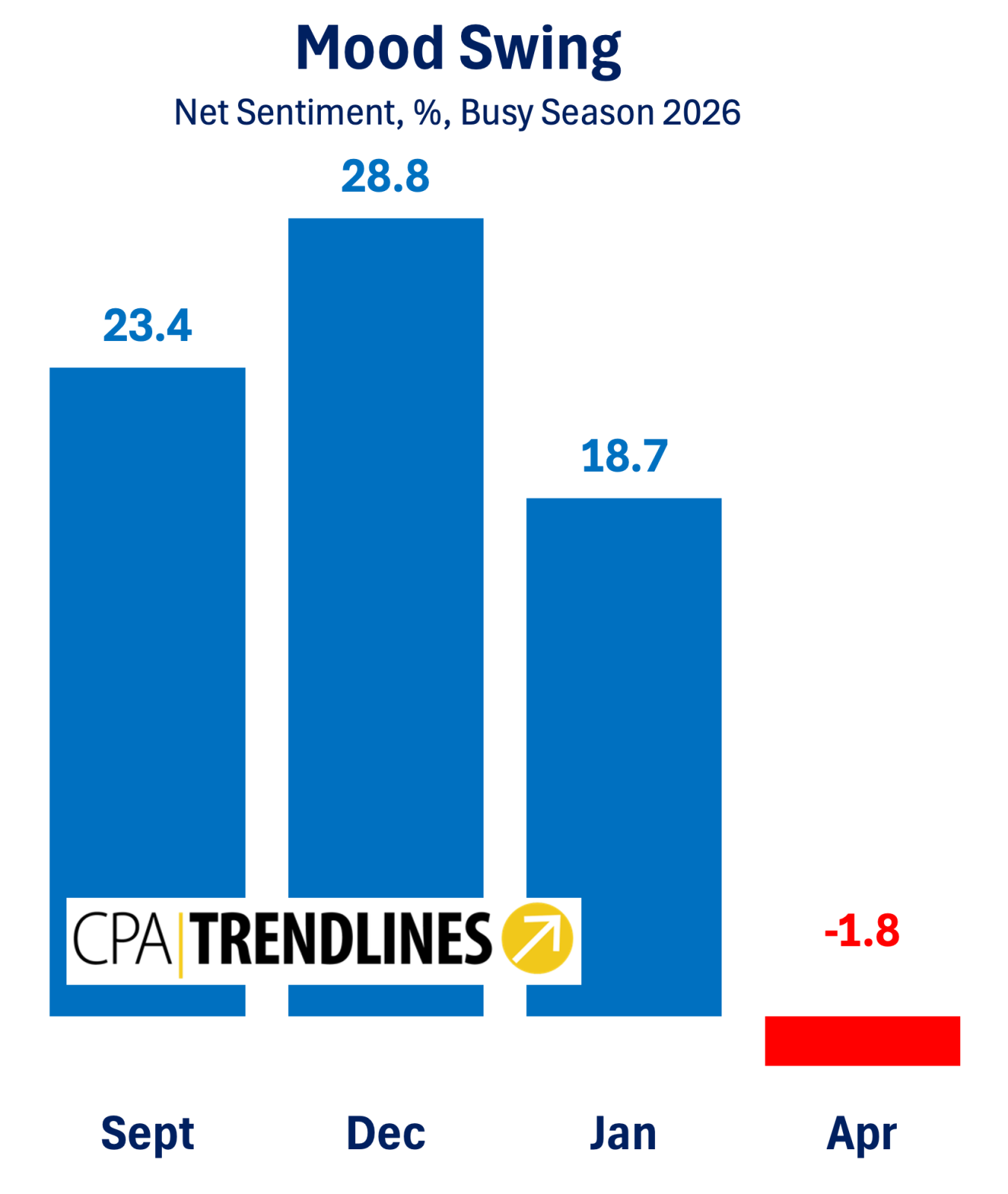
After starting near historic highs, sentiment among tax professionals fell more than 30 points by April, as workload, client behavior and system failures overwhelmed expectations.
MORE Busy Season Barometer | Join the survey. Get the results
The 2026 tax season began with confidence.
By December, sentiment among tax professionals had climbed to a positive 29.8—the strongest reading in the CPA Trendlines Busy Season Barometer cycle. A majority expected better conditions. Few anticipated what came next.
By April, that optimism had vanished.
Accountant attitudes closed the season slightly negative, around -1 to -1.8, marking a swing of more than 30 points in four months.
It was one of the sharpest same-season reversals in the Barometer’s 24-year history, and it followed a pattern practitioners have seen before: expectations rising in the fall, then breaking under the weight of the season itself.
The difference in 2026 was the speed—and the causes.
And What 20 Years of Data Say Comes Next
By CPA Trendlines Research
There is a ritual to tax season. It begins with anticipation dressed as control.
Practitioners tally the risks — the IRS, the law, the clients who will not deliver on time — and tell themselves this year will be different. Then the season starts. And it isn’t.
MORE Busy Season Barometer | Join the survey. Get the results
The CPA Trendlines Busy Season Barometer tracks that ritual across waves of surveys from September 2025 through April 2026 with more than 300 respondents.
The data show not a profession in crisis, but a profession under stress. Where pressures no longer arrive one at a time but stack up on each other. Where external shocks have been absorbed, and internal limits have come into view.
Tax season is full of noise, chaos and confusion. But a close look at the Busy Season Barometer from this year – and going back more than 20 years – can cut through the fog for the patterns, trends, insights and, most of all, the tough lessons learned.
Tax season 2026 gives us at least 21 essential takeaways.
Busy Season 2026 sets up a year of tough decisions about monumental transformations.
Two-thirds now see tough times ahead.
By CPA Trendlines Research
After processing hundreds, if not thousands, of tax returns for wage earners and small business owners, U.S. accountants’ confidence in the nation’s economy is in a state of collapse, according to the latest CPA Trendlines Busy Season Barometer.
While practitioners entered the winter with relatively stable expectations, the reality of “busy season”—which provides a granular look at the financial health of American businesses—has apparently triggered a sharp reversal.
MORE Busy Season
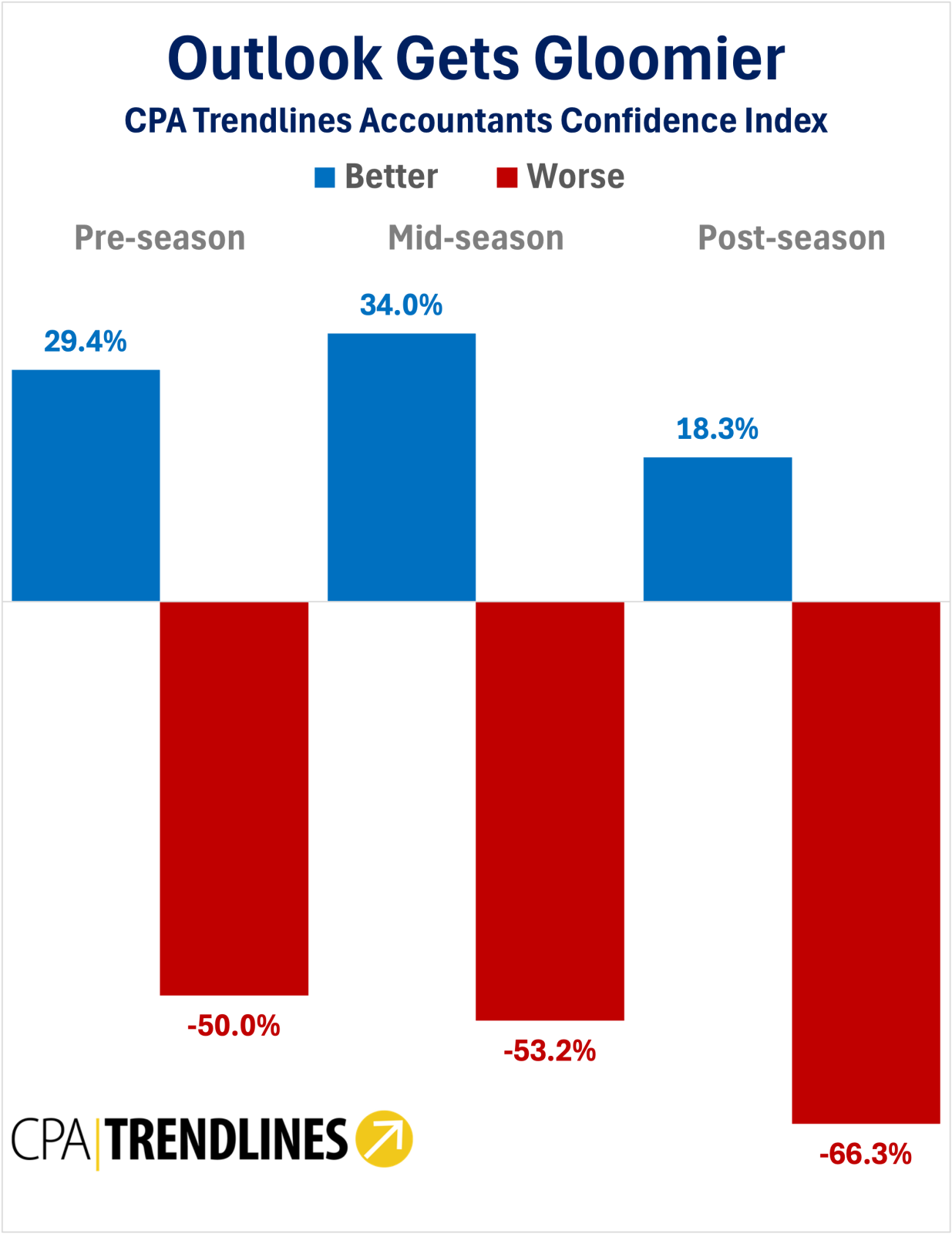
With the end of the 2026 filing cycle, roughly two-thirds of CPAs are predicting that national business conditions will worsen over the next 12 to 18 months, a startling increase from the beginning of the cycle, when only half held a negative outlook. Conversely, the number of optimists dwindled to about 18%, down from nearly 30 points from earlier in the year.
“We’re looking at higher costs and too much uncertainty for our small-business clients,” one sole proprietor noted in the survey, shifting his rating to “much worse.”
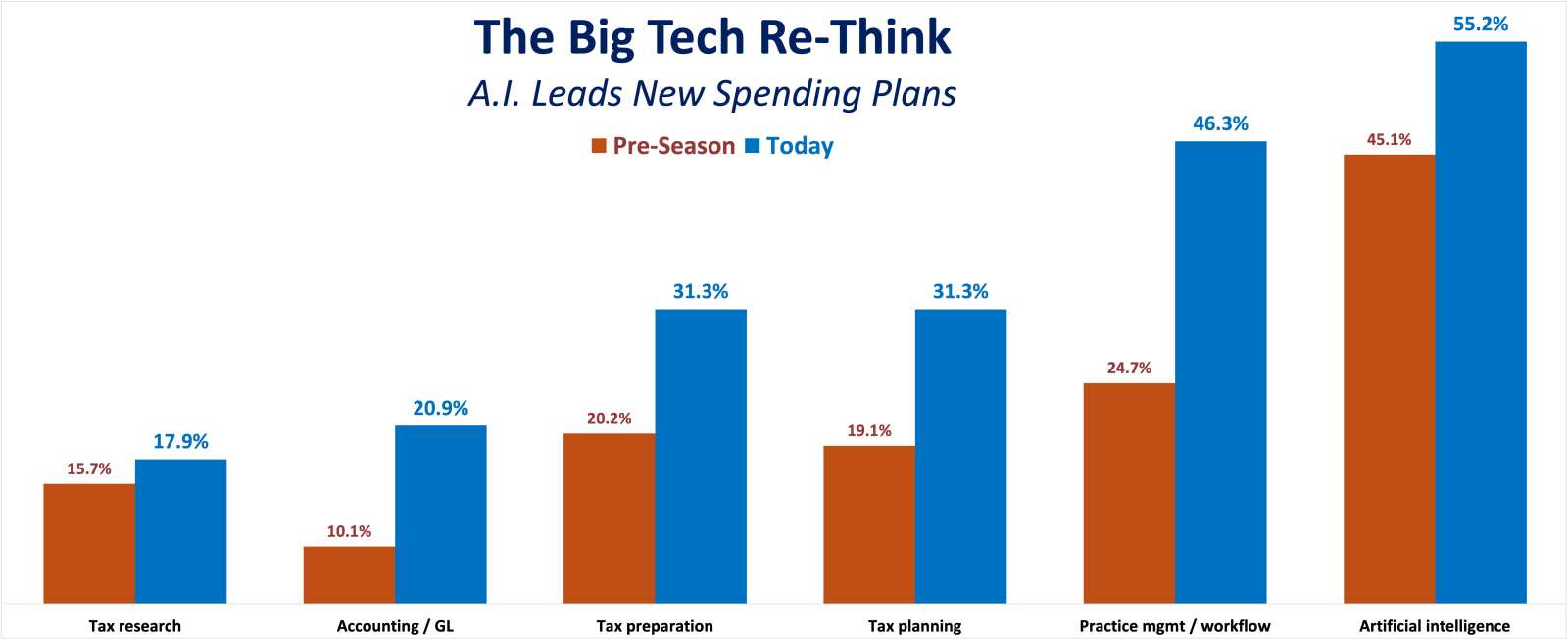
New workflow systems expected to cut labor problems and shore up profit margins.
By CPA Trendlines Research
The CPA Trendlines Busy Season Barometer shows accounting firms are already planning changes to their technology and workflows, aiming to address the same pressures that defined this year’s busy season.
The research points to a profession broadly aligned with what needs to change, but much less aligned with how quickly those changes can be put into practice.
MORE Busy Season Barometer Join the survey. Get the results. | MORE Busy Season | MORE Tech and AI
Firms across the spectrum, whether reporting a better or worse tax season, identify similar priorities: improving efficiency, reducing manual work and making better use of technology.
When accountants and AI agents work side-by-side
By Seth Fineberg
For CPA Trendlines
“Managing partner-in-residence” is not a standard role in accounting, and that was the first point of friction when Kenji Kuramoto was asked to explain his new job at Basis, the accounting AI agent company. What does that actually mean?
The answer goes beyond one hire. It points to a shift now underway in accounting: artificial intelligence is moving out of experimentation and into operations, and firms are not yet prepared for what that requires.
MORE Kenji Kuramoto: Behind Sorren’s Roll-Up: $170 Million, 1,000 Employees, 85 Partners | Kenji Kuramoto: Rules? What Rules? | Getting Real: Accounting Tech Decisions You Need to Make Today
MORE CPA Trendlines Streaming Network
Basis, at getbasis.ai, says that Kuramoto, founder of cloud pioneer Acuity, joined full-time to help firms transition to AI-enabled operations, working directly with customers and shaping the product. The company made clear this was not a symbolic role. “Kenji isn’t here to advise from the margins,” CEO Matthew Harpe says. “He’s a full-time member of this team… creating the product with us.” Kuramoto is embedded with the company, not observing from the outside.
CPA Trendlines Busy Season Barometer: Modest Gains, Mixed Outlook, Cautious Tech Upgrades Ahead
By CPA Trendlines Research
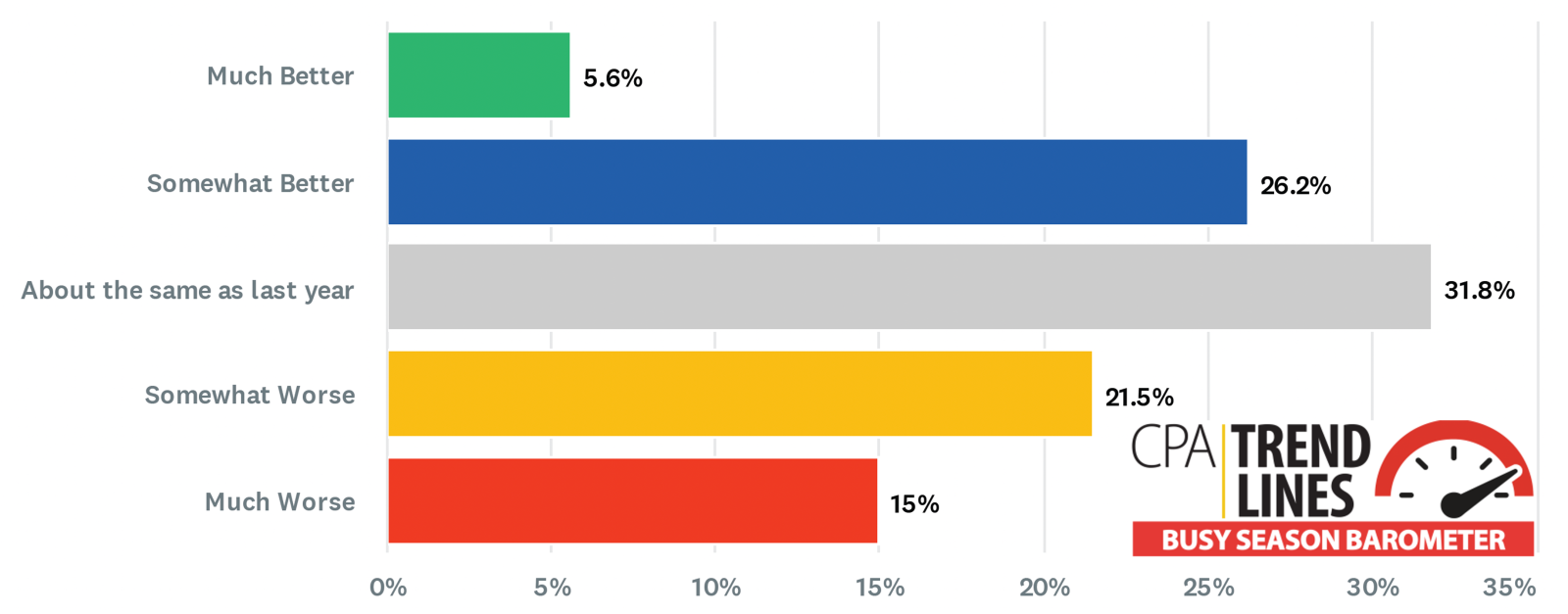
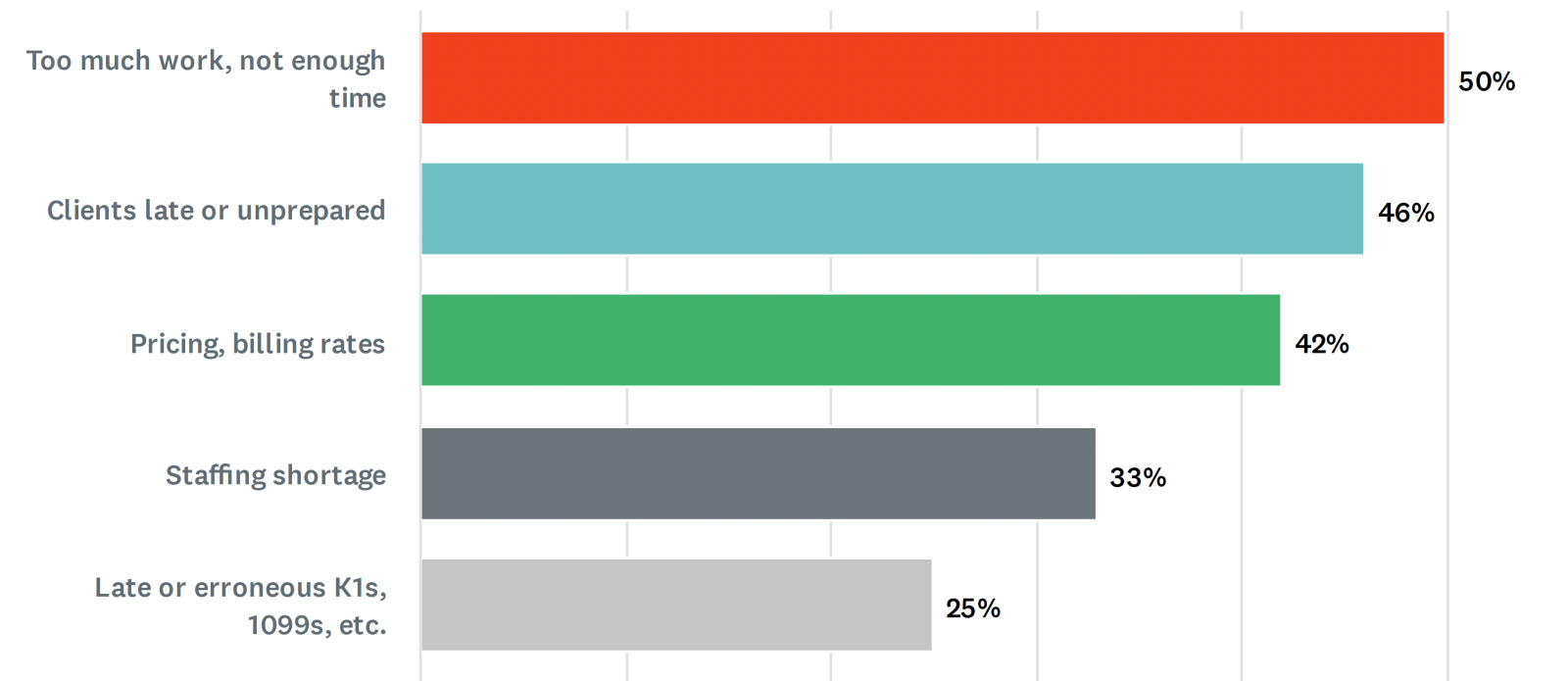
The 2026 tax season shows some gradual improvement for certain firms, but most practitioners report conditions that remain largely unchanged from a year ago, according to the latest data from the CPA Trendlines Busy Season Barometer.
For More Busy Season Trends and Strategies: Join the survey. Get the results.
MORE Tax Season 2026
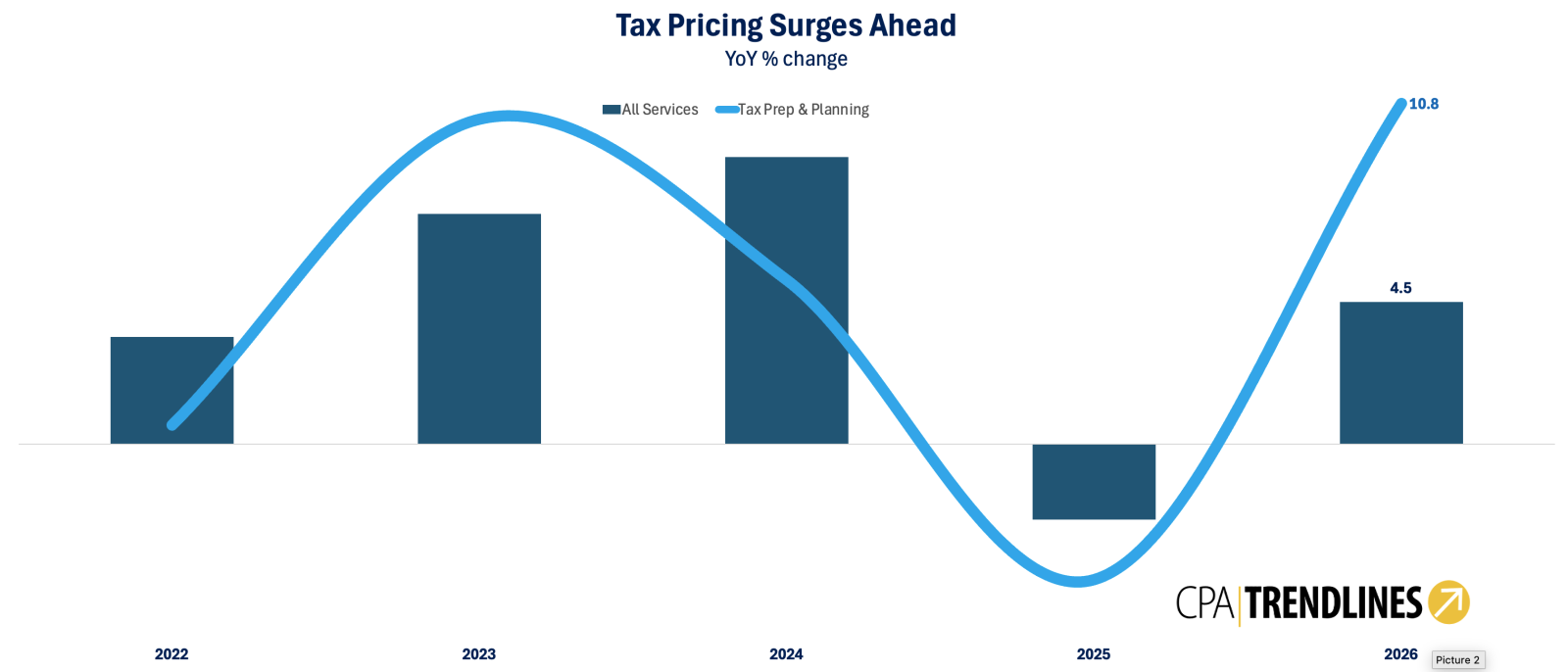
The good news is: 2026 hasn’t turned into the disaster some were expecting with a new tax law and diminished IRS. The bad news is: 2026 is turning into a relatively routine year — without the advances in workflow or the better margins from higher-value services that some were hoping for.
Big 4 Transparency founder Dominic Piscopo makes featured appearance on Bloomberg.
By CPA Trendlines
Accounting firms are being forced to rebalance compensation structures—shifting pay and incentives away from entry-level staff and toward managers and reviewers—as artificial intelligence reshapes how work gets done, according to Dominic Piscopo, host of Big 4 Transparency on the CPA Trendlines Streaming Network.
MORE Dominic Piscopo and Big 4 Transparency | MORE CPA Trendlines Streaming Network
Piscopo’s full discussion on AI, compensation trends, and the future of accounting talent is available on Bloomberg Tax’s Talking Tax podcast. His ongoing analysis of salary data and workforce trends is featured on the Big 4 Transparency show, streaming on CPA Trendlines.
“Having transparency in those models and being willing to talk about it with people —not just have this very kind of cold process where a number is thrown out—can make all the difference, even if the number is exactly the same,” Piscopo tells Bloomberg Tax reporter Jorja Siemons.
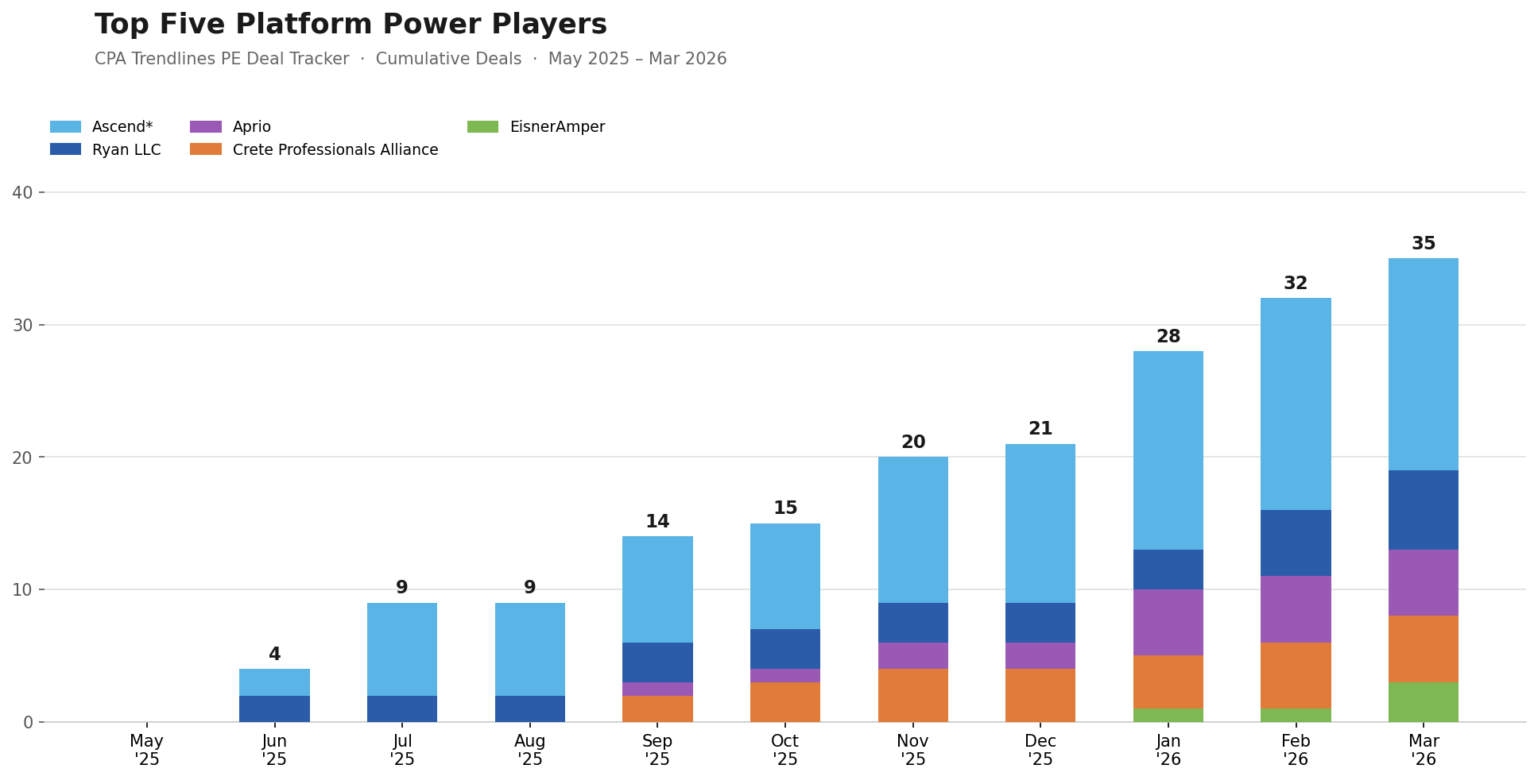
After hundreds of deals, the data show a gravitational pull toward a handful of buyers now driving the profession’s future.
By CPA Trendlines Research
The frantic pace of deal-making in March has officially transitioned the accounting industry from a “consolidation phase” into a “platform war.”
As the first quarter concludes, the narrative is no longer just about who is buying whom, but about which investment philosophy—and which technology stack—will dominate the next decade.
The conventional narrative about private equity in accounting says capital is flooding in, the profession is democratizing, and every CPA firm in America can access institutional money for the first time. But the cold, hard data tells a different story.
MORE in Private Equity | Alan Whitman Plants a Flag in the Private Equity Landscape | The PE Takeover: Audit Problem? What Audit Problem? | The 7.6x Machine: How Grassroots Firms Are Taking Private Equity for a Ride | Why the Next Big CPA Firms Won’t Look Like CPA Firms
Of the 427 transactions logged in the CPA Trendlines PE-CPA Deal Tracker™ since 2016, more than 200 — nearly half — are concentrated in just 10 platforms. That challenges the notion of a market open to all.
The idea that PE would spread evenly across hundreds of firms, like a broad revolution, is, in the actual deal flow, a rapid gravitational implosion around a handful of mega-aggregators that are vacuuming up firms faster than the rest of the market combined. The acceleration curve alone should unsettle anyone clinging to the idea that this market is still nascent. READ MORE →
|
|
Christine Simone is the CEO & co-founder of Caribou, a software solution for the finance industry to include health care costs and plan optimization in financial plans. |
Reduce client stress and build stronger financial futures.
By Christine Simone
The Holistic Guide to Wealth Management
Financial advisors are well suited to help clients with all the important decisions in their lives. But that doesn’t mean advisors always recognize the areas in which clients need the most help.
 Exclusively for PRO Members. Log in here or upgrade to PRO today.
Take health insurance, a big concern for people across all income groups. According to a 2021 report from Spectrem Group (now part of CEG Insights), two-thirds of affluent investors (65%) say they want their advisors to help them with health insurance, but only 4 percent said their financial advisors are providing it to them (see bar chart). Further, among people who don’t have financial advisors, the top areas for which they would want guidance are retirement income planning, Social Security planning and Medicare advice.
READ MORE →

It might not be just one person.
By Jody Grunden
Building the Virtual CFO Firm in the Cloud
You may have heard about virtual CFO services. It’s a concept that’s been around for a while now that allows CPAs and accounting firms to offer CFO services to smaller businesses that may not yet be able to afford a full-time CFO.
Exclusively for PRO Members. Log in here or upgrade to PRO today.What is a Virtual CFO?
Virtual CFO (or VCFO for short) stands for a virtual chief financial officer. A VCFO provides outsourced accounting services at a high level for businesses.
READ MORE →
Faster, Leaner, Closer to the Client, and Two Hours to an Engagement Letter
Big 4 Transparency
With Dominic Piscopo, CPA
Former Deloitte colleague Stewart Spiers tells Dominic Piscopo about leaving the Big 4 partner path to help build a tax planning practice at TAAG – why SMB clients pulled him back, what changes in speed and autonomy, and how partner economics differ between large and small firms.
Spiers spent roughly 15 years at Deloitte, starting as a co-op and rising through Private Company Services, before making a move many Big 4 professionals debate but rarely execute: stepping off the partner track to double down on the SMB clients he’s always gravitated toward. In this new episode of the Big 4 Transparency show, Spiers tells host Dominic Piscopo that his decision wasn’t driven by a bad experience at Deloitte, but by a career crossroads and a clearer answer to one question: What kind of work does he want to be doing in the future?
MORE Dominic Piscopo | MORE CPA Trendlines Streaming Network
For Spiers, the most energizing part of the job has consistently been working with owner-managed businesses, entrepreneurs, second-generation operators, and local companies where the accountant-client relationship is long-term and high-trust.
While Deloitte can deliver immense value, he described a growing friction between Big 4 structures and what many smaller businesses actually need. The firm’s push upmarket, bundled service-line model, and high billable rates can make it harder to serve “everyday” businesses where the ask is often bookkeeping, core accounting, and practical succession and planning – not ERP implementations and multi-service-line engagements.

The conversations you should be having right now.
By Hitendra Patil
There is something that consistently gets missed in the private equity conversation, and I have watched it get missed from both sides: the people inside firms that took PE money, and the independent owners watching from outside.
Exclusively for PRO Members. Log in here or upgrade to PRO today.
Independent firms hold real structural advantages that the PE model works against by design. For the right clients, those advantages are not a secondary consideration. They are the core of the relationship.
READ MORE →